

DULUTH — Two providers have opened their own clinics as part of an emerging direct primary care industry in the Northland.
In April, Dr. Nyasha Spears and Dr. Kristin Lusian opened Amity Creek Primary Care at 5931 E. Superior St., following
challenging the enforcement of a noncompete clause with Aspirus St. Luke’s.
Last month, Dr. Jay Joseph Allen opened
at 1118 E. Superior St.
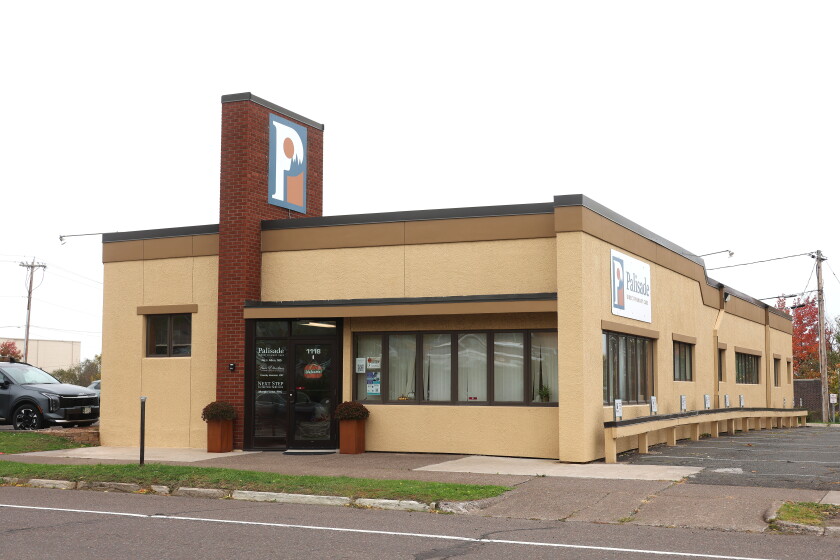
Palisade Direct Primary Care is located at 1118 E Superior St.
Wyatt Buckner / Duluth Media Group
The Duluth businesses join
24 other direct primary care providers across the state.
The private health care segment has grown over the past decade. Hint Health’s
2026 Direct Primary Care Trends Report
found that 60% of active memberships are now employer-funded, compared with 21% in 2017.
“I went to medical school. I did not go to business school, so starting a business was a fairly daunting task,” Allen admitted during a “Small Seeds for Growth” business panel held at the Clyde Iron Works event center on Tuesday. “Fortunately, direct primary care is an expanding model all across the United States. So there are a lot of really awesome doctors all over the country who are really excited to help me out.”
Shifts in the traditional medical system, requiring patients to pay more out of pocket as insurance premiums rise, are the reason, according to Allen.
“Because health care costs are rising, and (health insurance companies) have a motive to improve profits for their shareholders, the cost of deductibles and premiums are just skyrocketing every year,” Allen said. “This year, it’s projected another 15-20% increase in health insurance premiums. Honestly, it’s just unsustainable.”
In 2020, Allen began working as a family physician with obstetrics for Essentia Health-Lakewalk Clinic, and taught as a faculty physician at the Duluth Family Medicine Clinic.
“I increasingly heard from my patients that they can’t come back for their follow-up visits because their insurance wasn’t covering them (at least until they hit their $10,000 deductible),” Allen stated on the Palisade DPC website.
Patients asked him to avoid ordering necessary labs for the same reasons, Allen said, adding that affordability and access to health care would worsen with increasing premiums and
“These labs actually cost $3,” Allen said. “That was really the straw that broke the camel’s back for me.”
Allen invested about $30,000 to self-fund his business, took out a home equity line of credit as a safety net, and was awarded a loan from the Duluth 1200 Fund.

Audience members listen to a group of panelists discussing their small-business startups during the “Small Seeds for Growth” business panel.
Brielle Zywicki / Duluth Media Group
Allen also worked with the Entrepreneur Fund on a business plan, joined Business Networking International, and hired a clinical assistant.
He faced additional challenges when his clinic started on fire two weeks before it was set to open in the Fourth Street building shared with Uncle Loui’s Cafe.
Palisade DPC then set up briefly at Lakewalk Surgery Center, later moving to an outbuilding owned by Waters Edge Animal Hospital & Urgent Care for a few months before landing in an old chiropractic clinic.
“The traditional family physician in the system is expected to have 2,000 to 3,000 patients on their panel,” Allen said. “That’s why their appointments are rushed. They are frazzled, and doctors are just getting tired of being pushed in and out of rooms by the schedule keepers.”
Through direct primary care, patients pay a flat monthly membership fee directly to their doctor, bypassing traditional health insurance for routine visits. Amity Creek and Palisade both claim the model allows for smaller patient panels, longer visit times and no insurance constraints.
“With a less restrained schedule, I’ll be able to spend more time educating my patients about their health and empowering them to make the most highly-informed decisions possible,” Allen said.
Allen said he plans to limit his practice to 500 memberships, yet he’ll make the same income he earned in the traditional system.
“I’m not going to keep adding patients,” Allen said.
However, with few providers across the region, rural stretches are left without local access.
The membership model does not replace traditional health insurance or count toward deductibles, so patients must still pay standard insurance premiums to cover specialists, surgeries and emergency room visits. In some cases, Health Savings Account restrictions prevent membership fees from being tax-free, among other nuances.
Half of Palisade DPC patients are uninsured, according to Allen.
“I’m also offering my services as an employee benefit, and I know that there are a lot of small businesses out there that are losing employees to bigger organizations because they don’t offer anything for health care,” Allen said.