
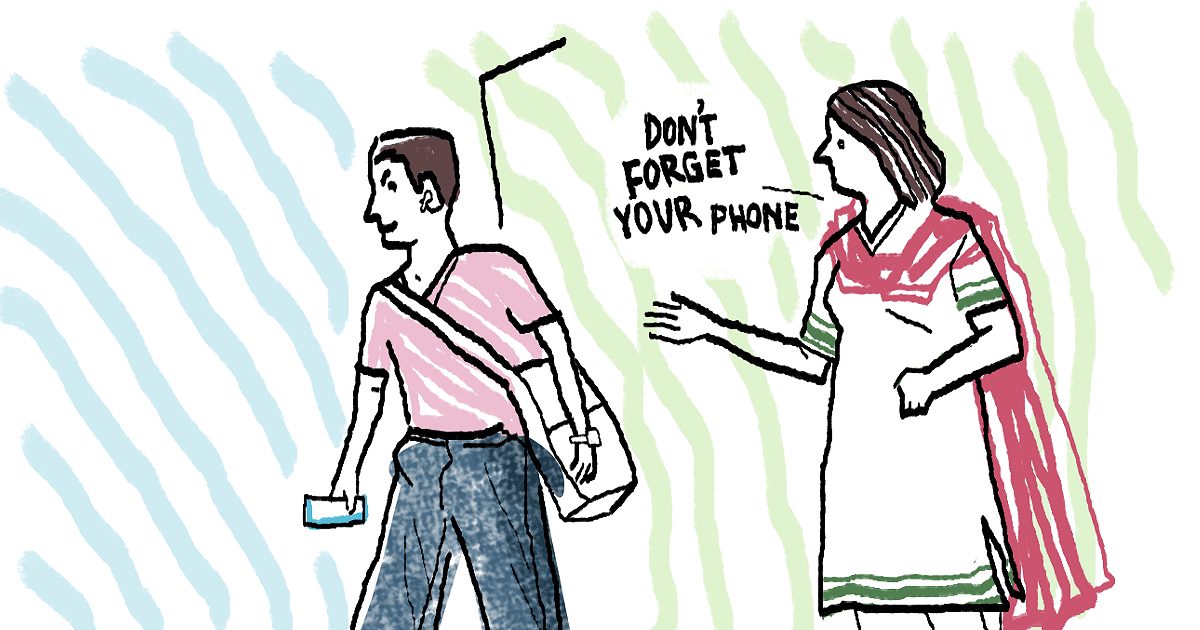
Cash is king no more across Digital India.
Brijesh Haldia recounts his three-day journey across flights, trains and cabs without a wallet, physical ID cards or a single rupee in his pocket.
Illustrations: Dominic Xavier/Rediff
I did not set out to prove that I could travel without a wallet.
When my spouse and I left home recently, we were travelling for a sombre family occasion — to attend a 13th day condolence meeting. Because it was a brief, multi-city trip, we packed light — just our cabin bags, our phones and a few essentials. I didn’t think twice about the fact that I had left my physical wallet behind.
It was only mid-journey that I realised just how completely my travel had moved to my smartphone.
Our itinerary covered flights, trains, local taxis and roadside tea stalls. At every turn, digital public infrastructure smoothly handled what would have traditionally required paper documents, cash or queues at a counter.
The Seamless Ease Of DigiYatra
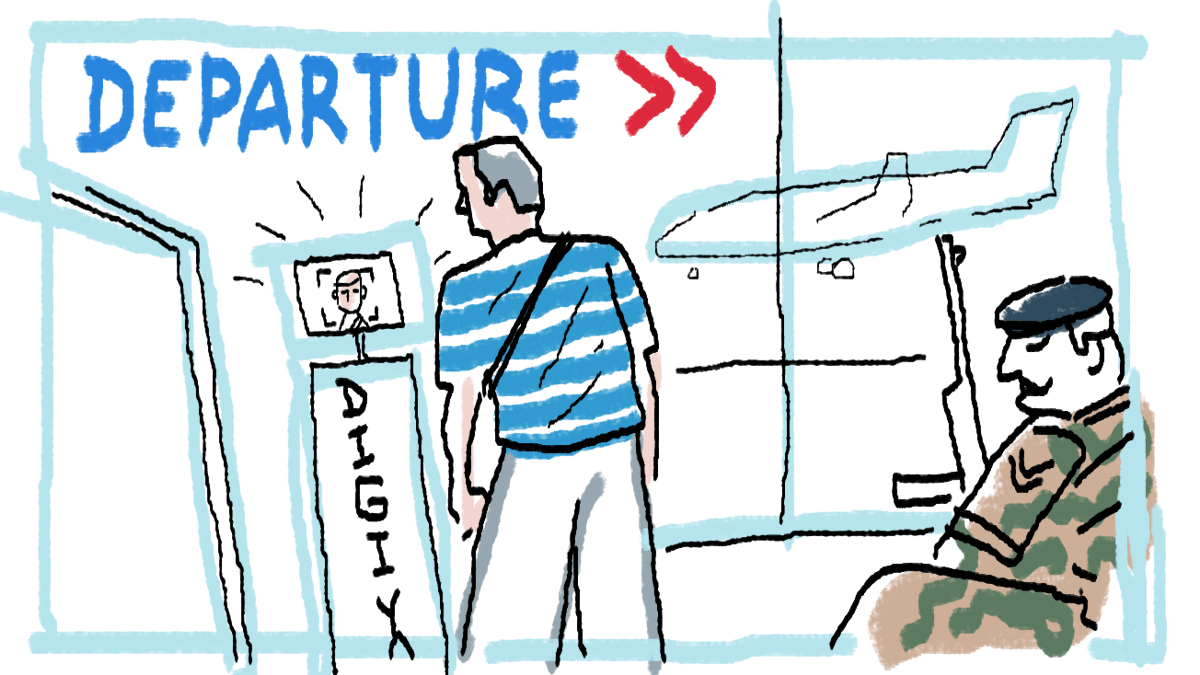
The earliest convenience took place at the airport. After checking in online, I uploaded my boarding pass on the DigiYatra app. Travelling ‘cabin baggage only’ meant we could bypass the check-in counters entirely.
DigiYatra transformed the departure experience — a quick facial biometric scan let us pass through airport gates and head straight toward security without fishing out physical identity cards or paper boarding passes. The process was so seamless that we used it right through our return leg as well.
Zero Train Hassles
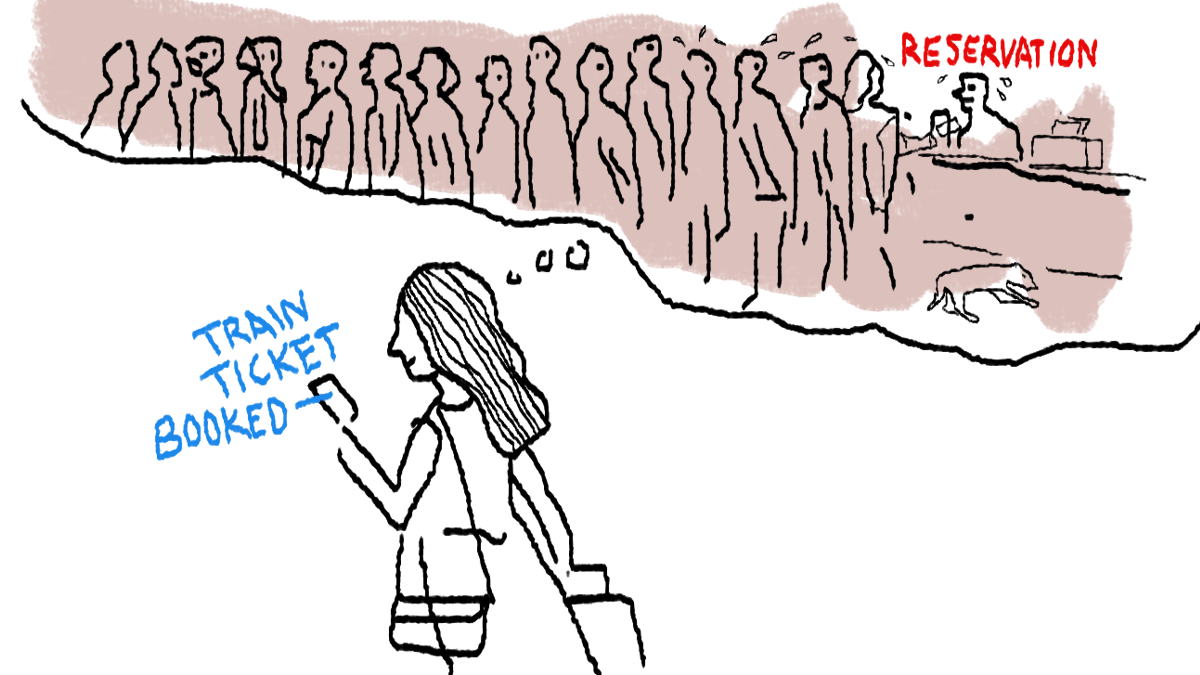
The train part if our rail leg proved just as effortless. Our tickets had been booked online via IRCTC, which explicitly advises passengers to avoid printing tickets.
When the ticket examiner arrived for identity verification, I simply presented my official ID via DigiLocker. There was no rummaging through bags or patting pockets for an Aadhaar or PAN card.
From Cabs To Chai: Total Cash-less-ness

Local commuting was handled on mobile apps like Uber and Rapido, settled through Google Pay. Even quick stops for roadside refreshments were paid for within seconds via UPI QR codes.
That was when the realisation struck: I had not touched physical cash once.
No visits to an ATM.
No haggling or searching for loose change.
No second-guessing whether an auto driver or a corner tea vendor would take a digital payment.
The smartphone had effectively become my boarding pass, my verified identity, my transit repository and my sole financial instrument.
The Quiet Power Of Invisible Tech
This was not a staged experiment or a deliberate attempt to test the limits of Digital India. I was just an ordinary traveller going about my day. Yet, by the time we returned home, I realised an entire three-day journey had unfolded without reaching for a physical wallet once.
Technology is at its most powerful when you stop noticing it. When boarding passes sync automatically, gates open on facial recognition, rail tickets sit verified in cloud vaults and a single scan buys a cup of tea on a highway, tech fades into the background, leaving behind convenience.
I left home without a wallet but returned with firsthand proof of how quietly and completely India’s digital ecosystem has transformed everyday travel.