
Exclusive: ‘Wildcard’ proposal to Infrastructure Fund approved as projects including Cern experiment upgrade lost backing
A government ‘wildcard’ proposal to award £50 million of public investment to a quantum cryogenics facility was fast-tracked through UK Research and Innovation while the national funder was having to shelve four major physics infrastructure projects due to budget constraints, Research Professional News can reveal.
The four projects, which were in line for more than £280m through UKRI’s Infrastructure Fund, included an upgrade to a detector at Cern’s Large Hadron Collider, where UKRI has faced intense criticism over the impact on UK science and its global standing from the withdrawal of funding.
The new details on the process, revealed in emails released in response to a freedom of information request, will raise further questions about how UKRI’s shift to align elements of its portfolio with government priorities is affecting funding decisions.
UKRI’s withdrawal of funding from the LHCb project, studying the “beauty” quark to understand why the universe is made of matter rather than antimatter, brought warnings from European physicists that “the UK risks becoming a sidelined observer in a field it once defined”.
‘Major decision point’
UKRI leadership makes final decisions on which projects gain support from the Infrastructure Fund, after receiving recommendations from an infrastructure advisory committee, which receives project proposals from UKRI’s councils.
Email correspondence released under freedom of information rules shows that, ahead of a meeting of the infrastructure advisory committee in November 2025, UKRI had been asked by the former Department for Science, Innovation and Technology “to consider a new project through their ‘wildcard’ route”, alongside standard proposals submitted by research councils.
The freedom of information release also reveals that the infrastructure advisory committee had been asked to consider the wildcard proposal “due to a requirement by government for an earlier decision to be made in relation to this project”.
Details of the project were redacted, but the release also included feedback from the committee that inclusion of the project “constitutes a major decision point due to a need for rapid project initiation and a high annual cost over a short period of time”.
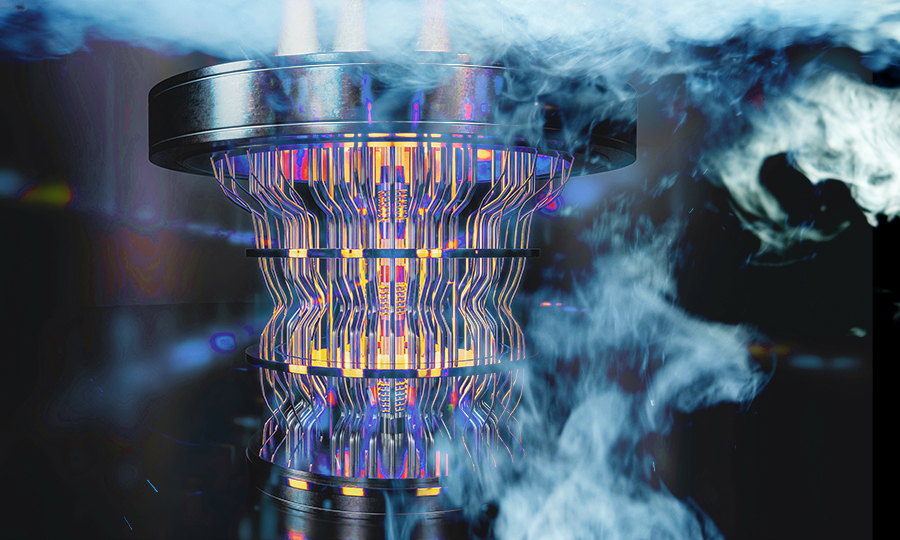
After inquiries by RPN, UKRI confirmed that the wildcard proposal was the National Cryogenic Facility. In March, it was announced that the facility, based at UKRI’s Daresbury Laboratory in Cheshire, would receive £51.2m from the Infrastructure Fund, “to deliver an approximately six-fold increase in cryo-capacity, most notably for scale-up by quantum computing companies like global leaders PsiQuantum”.
PsiQuantum is a US-based company aiming to build the first “commercially useful” quantum computer.
‘Aligned with government priorities’
A UKRI spokesperson said: “The Infrastructure Fund received far more excellent applications than could be funded in 2025, so we had to make some tough choices. The projects selected are aligned with government and societal priorities and are key to economic growth.”
The spokesperson added: “The wildcard route has existed since the creation of the Infrastructure Fund and was used for the National Cryogenic Facility proposal, as a government priority to support quantum.”
The government sees quantum as an area where the UK can press its advantage, and the announcement of the National Cryogenic Facility came within weeks of the then chancellor Rachel Reeves committing to spending £1 billion on commercial-scale quantum computers by the early 2030s.
At the time the facility was announced, the co-founder of PsiQuantum, Mark Thompson, said: “The government’s new investments across the industry—especially in the critical infrastructure at the National Cryogenic Facility in Daresbury—reflect the important role of robust public-private partnerships in building up the infrastructure, innovation and talent that will ultimately deliver utility-scale quantum computing and sharpen the UK’s tech leadership.”
‘Investment decisions a matter for UKRI’
After the November 2025 meeting of the infrastructure advisory committee, three other new projects that had gone through the standard procedure were announced as funded, alongside the National Cryogenic Facility. But four projects that were previously announced in 2024, with investment subject to business case approvals, had their funding stopped.
The withdrawn projects were: an upgrade to the Large Hadron Collider beauty detector at Cern; the UK’s contribution to the Electron-Ion Collider being built in the US; the Relativistic Ultrafast Electron Diffraction and Imaging at the University of Liverpool; and a national facility for mass spectrometry called CMASS.
The freedom of information release reveals that, in late 2025, UKRI was anticipating having to make decisions to stop investing in some projects because of its new budget allocation. The funder told RPN that the four projects were deprioritised because of the overall funding available, with the National Cryogenic Facility only one factor in the decision.
In a report into the former science department’s investment in research infrastructure, published in March this year, the National Audit Office said UKRI had estimated it should be spending around £470m per year on new infrastructure. Yet, following the 2025 spending review, “UKRI only allocated an average of £265m per year…over the four years between 2026‑27 and 2029-30 to the Infrastructure Fund”, the NAO added.
Asked by RPN why the National Cryogenic Facility was fast-tracked over other projects, a government spokesperson said: “Quantum is one of the most important technologies of the coming decade, and our industrial strategy is clear the UK must have the infrastructure to turn world-leading research into British jobs and growth.
“The National Cryogenic Facility will give businesses and researchers working in quantum, fusion, healthcare and green aviation access to testing that isn’t currently available at scale in the UK. It is an open, national facility for a wide range of users, not built for any single company. Investment decisions are a matter for UKRI, following independent expert advice.”