
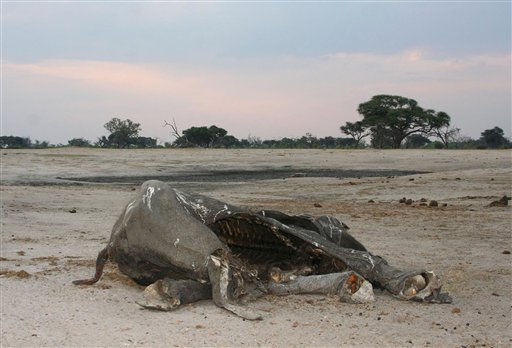
An elephant’s death leaves a footprint that can linger on the land for nearly a decade, scientists say. A study in the Proceedings of the National Academy of Sciences tracked the carcasses of 40 elephants that had died between eight days and eight years earlier in South Africa’s Kruger National Park. Researchers found the massive bodies first wipe out nearby plants by blocking sunlight, creating stark “cold spots” where both plant and microbial diversity plunge under a surge of nutrients like ammonium that can hit 3,000 times the norm, reports the Washington Post. “That amount of ammonium was not on my bingo card,” Kruger National Park employee Tercia Midzi tells BBC Wildlife.
Over time, however, a few hardy grasses move in, packed with nutrients that draw hungry grazers—and their waste—back to the site. The effects were still visible near the oldest carcasses surveyed, suggesting the ecological fallout from one dead elephant can last far longer than that of smaller animals. “These landscapes really carry the footprints of animals well after they’ve disappeared from the landscape,” says University of Florida ecologist Amanda Subalusky, who wasn’t involved in the study.