

Article – RNZ
Phil Pennington Reporter
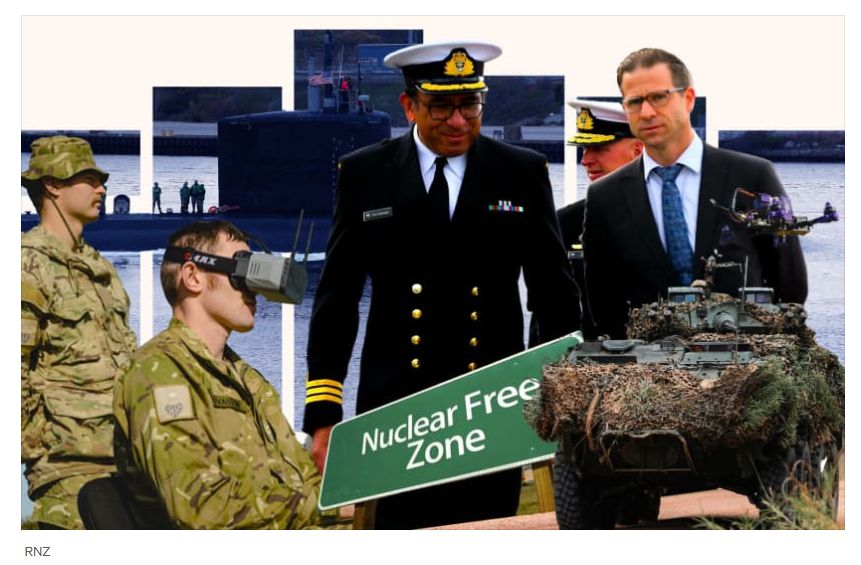
A geopolitical analyst says New Zealand faces tough and costly choices on national security and defence but they’re barely being debated on the election trail.
Associate professor Reuben Steff is visiting from Mendel University in the Czech Republic for the Aspen New Zealand Security Forum in Queenstown on Friday.
He said informed people he talks to say defence spending would have to keep going up beyond its already rising trajectory, of an extra $9 billion up to 2029.
“We could go completely neutral, we could say, ‘Hey, reject all this stuff’. I don’t think it’s going to happen,” Steff told a NZ Institute of International Affairs forum in Wellington on Wednesday.
Higher defence spending was just one among the big choices ahead that political leaders were not talking much about even though polling showed New Zealanders cared about it, he said.
“We’re very good in New Zealand kicking the can down the road, but we have these imminent decision points.
“What are we going to do about the frigates and the renewal of the entire navy? How are we going to fund that?”
What about joining AUKUS Pillar Two – where had that got to, Steff asked.
Smart moves he proffered could include moving closer to a newly militarily awakened Japan perhaps in a trilateral with Australia, and appointing a national security adviser like many countries had.
Attracting expensive AI military technology by offering the country’s unique geography as a testbed for other countries was another option.
The tech tide could not be stopped but had to be tapped.
“We don’t want to be passively dependent on this coming to us and others setting the terms for us.”
Building datacentres, and gaining some sovereignty while spreading them out of their huge and vulnerable concentration in Auckland, was another example.
“If we don’t do this, others countries are going to do it.”
New Zealand was already more a giver than a taker on space launch. On military drones, it was not a question if the country bought them, but where from “and whether we can build a system around them” of doctrine, data, people and industry, Steff said, who recently published a 60-page report on AI and defence.
Inaction was one handicap; lack of speed was another, Steff said in a joint note with retired army officer John Howard put out by the NZ Initiative.
“The problem is not what New Zealand knows but how it decides.”
Steff gave the Wellinton forum a picture of New Zealand where, instead of a slide into a steady loss of autonomy amid the Great Power competition of US versus China, the country assumed the US would always be around in the Pacific, but hedged by focusing on partners and sources of tech – say, frigates from Japan – close to home and strategic zone of Australia and the Pacific islands.
Dr Peter Harris of Victoria University’s Contemporary China Research Centre challenged Steff on whether any country would actually be able to choose a middle ground between the US and China if it came to a war.
Content Sourced from scoop.co.nz
Original url