
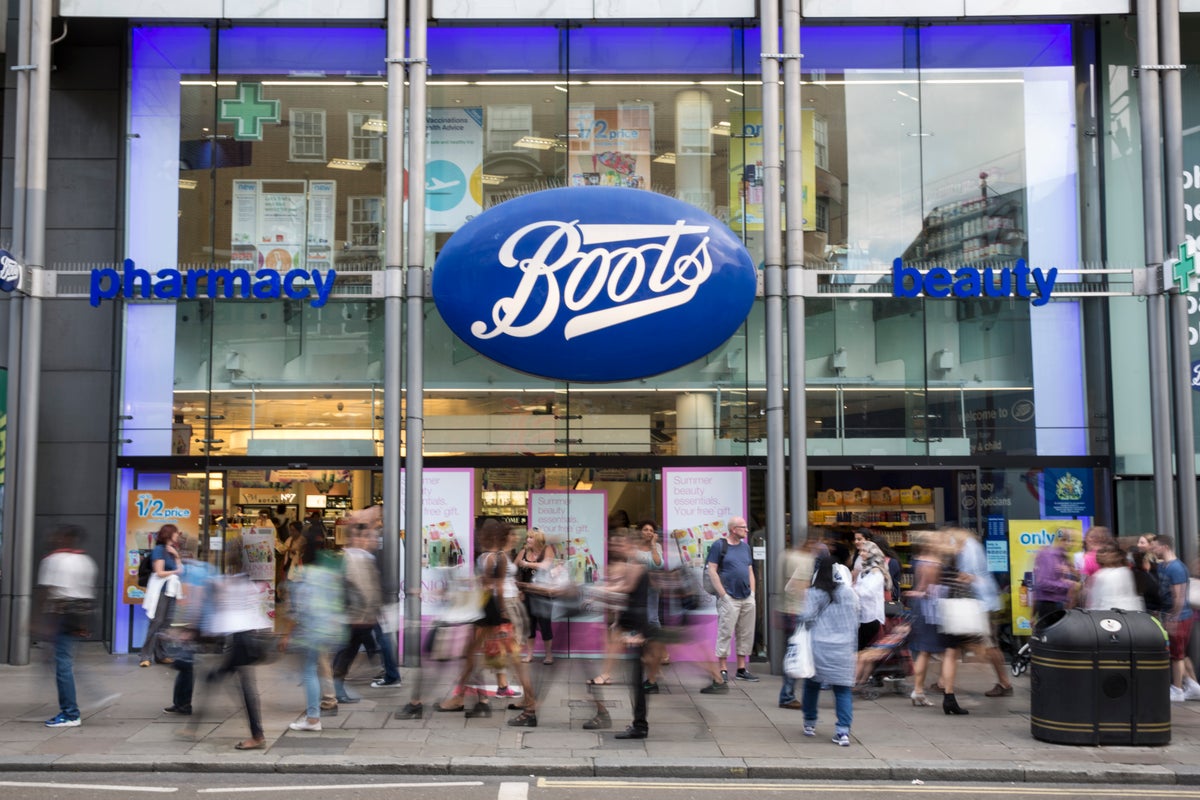

Want to bookmark your favourite articles and stories to read or reference later? Start your Independent Membership today.
Already a member?
Log in
When’s the last time you went into Boots and actually enjoyed the experience? For myself, I’d wager it was at least a decade ago.
A cursory look around my own local branch is enough to confirm the brand’s sad, slow decline. Once the beating heart of the high street, a thriving Mecca for all things health and beauty complete with clean and shiny displays packed over two bustling floors in the middle of town, it’s now a depressing shadow of its former self.
The shopfront is grubby and partially obstructed by scaffolding that seems to have been in place for at least 18 months; the interior is dingy, cursed with bad lighting, scuffed floors, overstuffed shelves, and tired, broken fixtures that have seen better decades, let alone days. There’s barely room to manoeuvre amid the giant cages and pallets stacked with unsightly blue stock crates – now seemingly a permanent fixture at the end of every aisle.
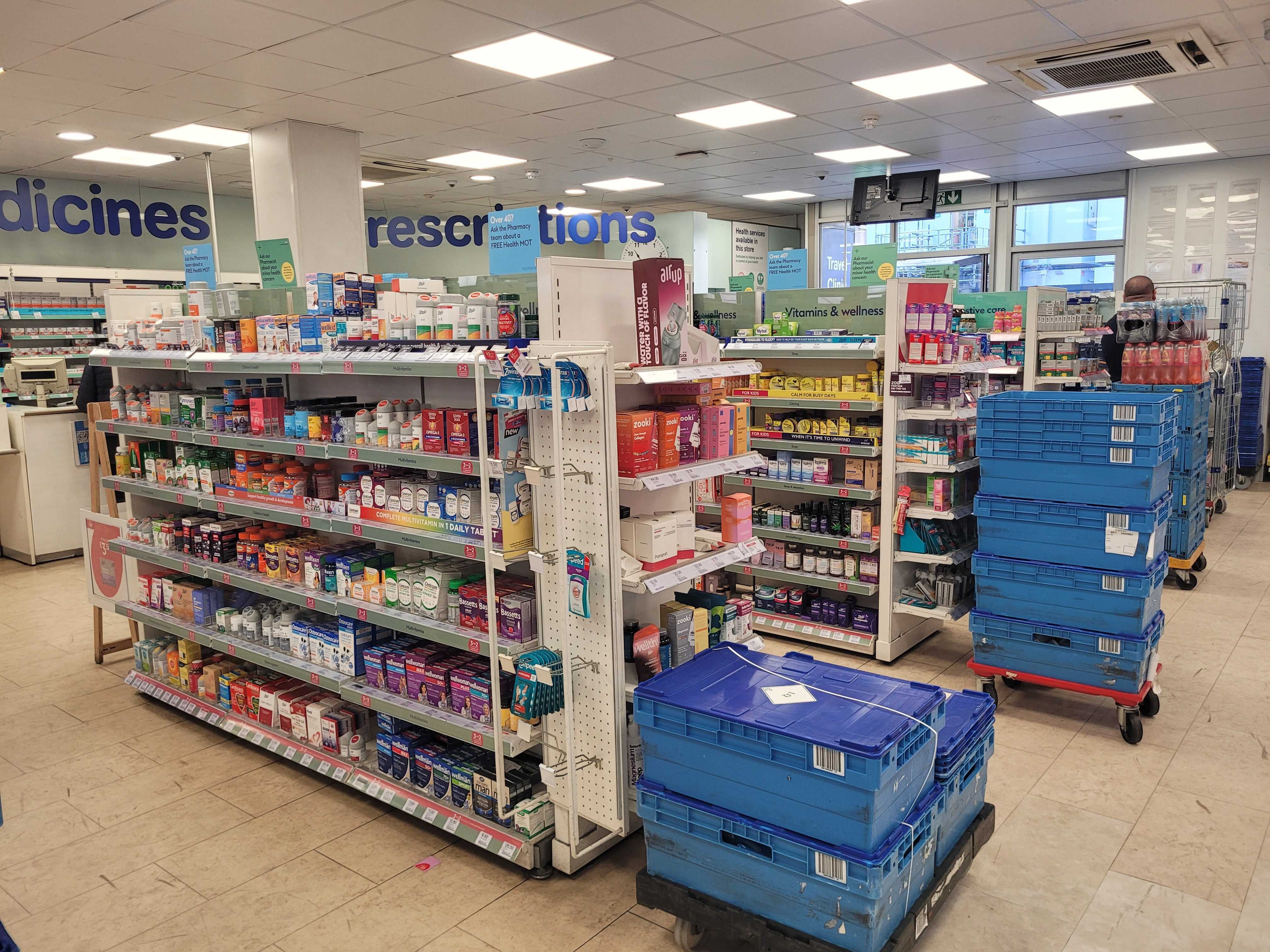 Grimy floors in a generic branch in London (Supplied)
The first floor, meanwhile, has descended into a bizarre ghost town, home to miscellaneous bric-a-brac that no one particularly wants or needs. Strange baby paraphernalia rubs up against ugly photo frames; the optician is tucked sheepishly away in a corner, like a guilty secret.
It’s an issue that one can only hope the business’s new owners, Canada’s billionaire Weston family, will be aware of after it was announced last week that they’re set to acquire Boots for a cool £6.7bn. One can only hope, too, that they’re considering how to actively revitalise this legacy brand – not just how to mercilessly squeeze more money from it.
It wasn’t always like this. The Boots name was once synonymous with quality and innovation; a shining paragon of home-grown British retail. Chemist John Boot started the business in the mid-19th century, opening a small herbal remedy and alternative medicine shop in Nottingham. After his death in 1860, his widow Mary and son Jesse took the reins; it was under the directorship of the latter that the brand really started to expand and take shape.
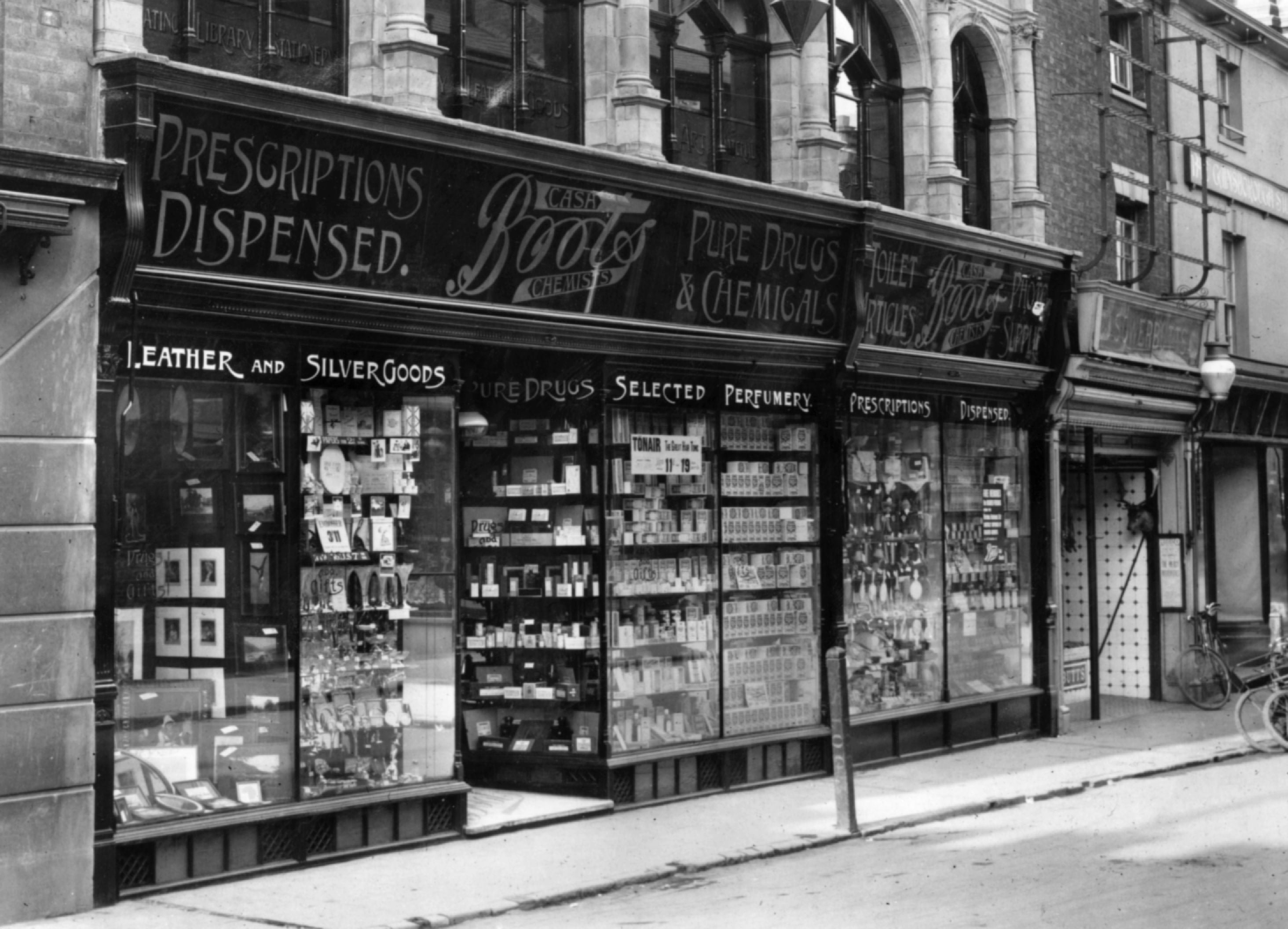 Boots was once the diamond of the high street – it revolutionised pharmacies in the UK (Getty)
Jesse’s legendary vision set the tone for what Boots would become. He leased a larger property and bought surrounding premises, employing a local architect to redesign the building and create an expansive, elegant shop floor. Like any innovator, Jesse disrupted the existing pharmacy model, introducing luxury goods such as perfumes and toiletries, stockings and fine hairbrushes alongside the regular drug dispensary.
Not for nothing are we known as a a nation of shopkeepers. This was a new kind of retail space with a new kind of vibe ; instinctivelyJesse understood the inherent importance of making the shopping experience a pleasurable one. The all-glass frontage flooded the shop with natural light; gold-coloured columns and striking, theatrical window displays beckoned shoppers inside, where they’d find something akin to a luxe department store, with products spread over several floors (accessible by stairs or a swish, hydraulic lift).
Even the pharmacist packaged up medicine attractively, while certain departments had their own upmarket waiting areas. The pièce de résistance was a bougie women’s toilet – one of the first ever in-store loos for shoppers.
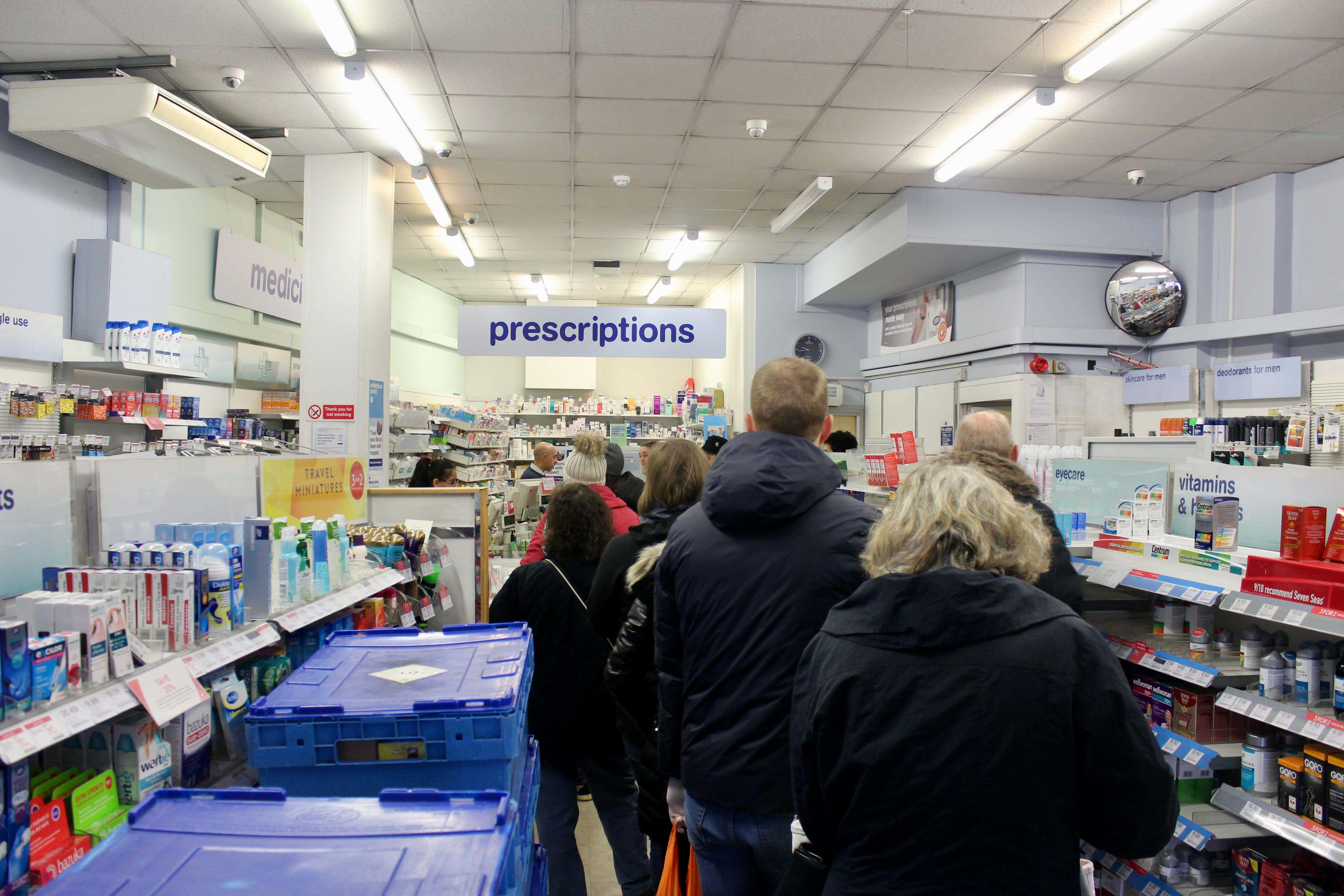 Boots shops are no longer associated with cutting edge, customer-centric design (Alamy/PA)
Cutting-edge, customer-centric design turned out to be a slam dunk. In 1884, further stores were added in Sheffield and Lincoln. Less than 50 years later, Boots had opened over 1,000 shops all over the UK; today, it has around 1,800 and remains one of the largest retailers in the UK and Ireland, boasting annual sales of £7.5bn.
And that initial pioneering spirit went far further than the shop floor. Prior to the First World War, Germany was the global leader in pharmaceuticals; when supplies were cut off, Jesse recruited scientists to successfully develop British-made aspirin and saccharin, and a self-sufficient domestic drug industry was born. In the 1930s, Florence Boot spotted a gap in the market for affordable, quality skincare and cosmetics for working class women, resulting in No7. In the 1960s, Boots researchers were responsible for inventing Ibuprofen, revolutionising pain relief around the world.
But while Boots’s presence on the high street and bottom-line profitability may not have diminished, the lustre of the shops themselves – and the bright spark of innovation that was once embedded into the brand’s DNA – certainly has. Today, just as other former titans of the British high street have deteriorated over the past 30 years, including Wilko, WH Smith and Debenhams, so it seems Boots has succumbed to the same slow, inexorable demise.
While Boots’s presence on the high street may not have diminished, the lustre of the shops themselves certainly has
Perhaps it’s unsurprising, considering the chain’s trajectory this century, which tells its own story of how, in the UK, we seem to be happy to sell off family silver. In 2007, Boots’s parent company became the first ever FTSE 100 company to be sold to a private equity firm; the once proudly British brand was forced to move its headquarters to Switzerland.
By 2014, mega-US pharmacy chain Walgreens had acquired and merged with it to create Walgreens Boots Alliance. Last summer, an American private equity firm bought the whole kit and kaboodle and spun off Boots into a standalone company once more; less than a year later, the brand was back up for sale.
The story of the once great British brand Boots is bigger than simply a cautionary tale demonstrating the “death of the high street”, or the greed of successive owners for whom strip-mining profits trumped any desire to update and improve stores. It feels, in fact, the coughing canary in the coal mine, mirroring a much wider malaise when it comes to the health of the nation – and the extent to which our confidence as a country in terms of pioneering new ideas and making things for ourselves has completely unravelled.
 The Weston family also have controlling ownership of Primark (PA)
Funnily enough, Boots’s first sale to private equity coincided with the global banking crisis and resulting recession, a time in which a government policy of strict austerity saw health and social care funding decimated.
Not 10 years later, the UK voted to leave the European Union, a move that put huge strain on the NHS and caused 1,485 additional deaths per year in the three years following the referendum as a result of EU nurses leaving the country. Just as we were recovering from Brexit, the Covid pandemic popped up to deliver another unprecedented body blow to an already struggling healthcare system.
Speaking of Covid, Boots’s role (or lack thereof) offers a natural comparison to a previous global crisis impacting health: in World War Two, the pharmacy was entrusted by the British government to be responsible for the mass production of penicillin, with its Nottingham factory becoming the biggest antibiotics manufacturing facility in the world.
By the time of the 2020 pandemic, while the brand helped with administering vaccines, it had nothing whatsoever to do with developing or producing them. Boots had already completely stopped the research, development and manufacture of prescription medicine in the 1990s following the safety failure of its congestive heart failure drug, Manoplax. This once revolutionary arm of the business was sold to German conglomerate BASF for £850m in 1995.
The story of Boots is bigger than simply a cautionary tale demonstrating the death of the high street
Since Covid, NHS waiting lists have grown even further, while the UK’s performance on hospital-based care was found to be consistently languishing near the bottom in a public survey of 10 high-income countries conducted by the Health Foundation last year. Bed shortages in hospitals have led to a shocking amount of “corridor care”, with nearly 3,000 A&E patients a day treated in corridors, cupboards and cafes. All this has taken a serious toll: in 2023, UK life expectancy was lower than in almost all comparable countries for males, and the lowest for females.
We have arguably become the literal, as well as figurative, sick man of Europe.
For Boots, at least, another chapter is about to begin. The Westons are no strangers to UK retail, with the British arm holding controlling ownership of Primark through its parent company, Associated British Foods, which owns other well-known brands including Twinings and Ryvita. They also previously owned high-end department store chain Selfridges, before selling it in 2022.
Could the Westons give Boots the injection of new life – and, crucially, cash – the high-street stalwart it so desperately needs to regain its former glory? The latest acquisition does at least offer a glimmer of hope; let’s hope it’s not too long before the same can be said about the rest of the nation.