
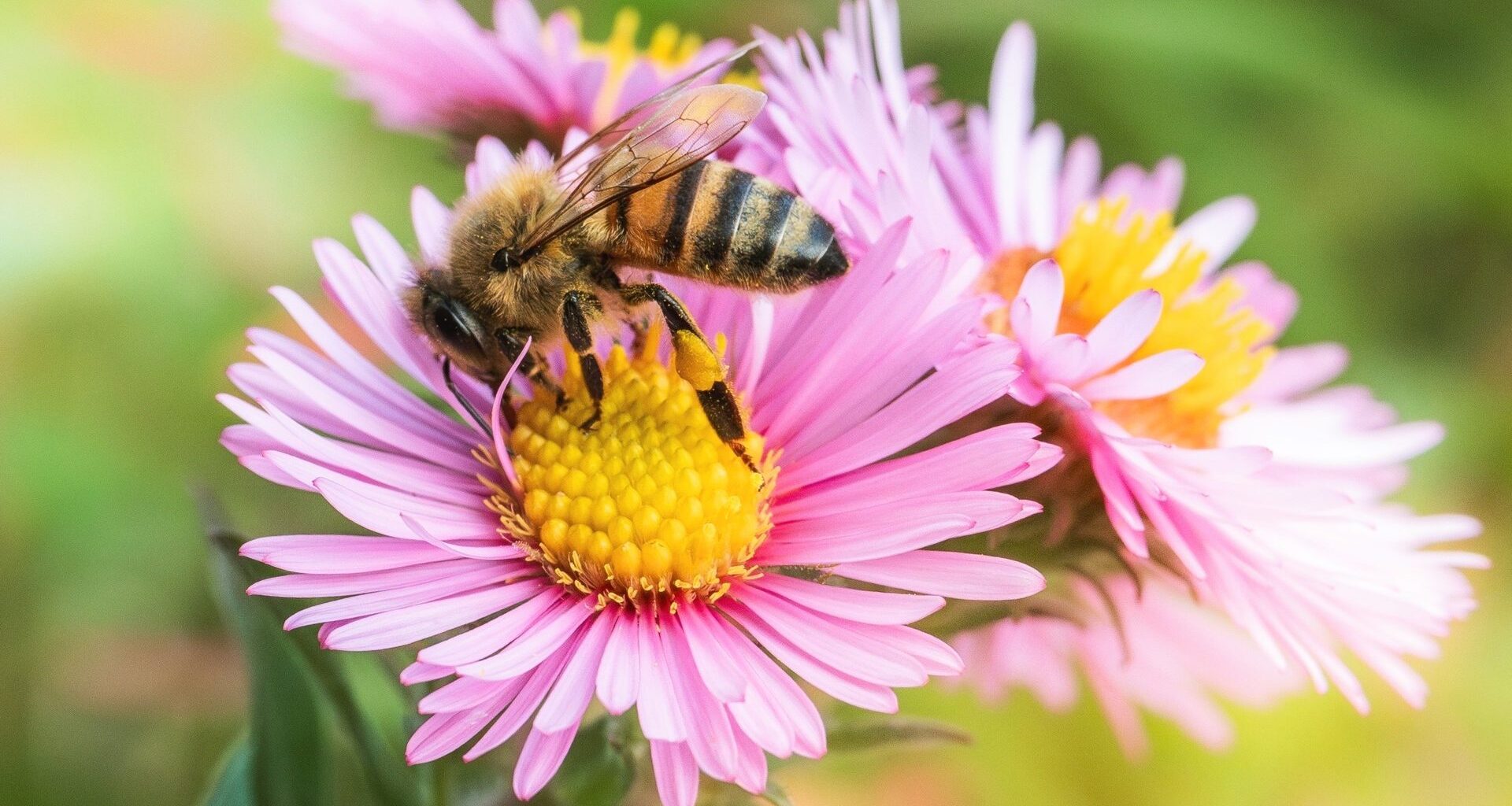
Honeybees are pushing wild pollinators away from flowers, raising concerns about competition for food and the impact of managed hives.
Keeping a beehive might seem like a straightforward way to help pollinators.
But the honeybees in that hive share flowers with wild bees and other insects, and those neighbors do not always get an equal chance to feed.
Researchers in England watched what happened when honeybees met other insects on flowers. Honeybees usually got to keep feeding, while the other insect gave up its place.
Often, there was no chasing or pushing. The other insect simply moved away, leaving the honeybee to feed undisturbed.
These small encounters matter because helping pollinators means considering all the insects that need those flowers. A growing number of honeybees may bring more competition for their wild neighbors.
Flowers feed many insects
A patch of flowers provides food for many visitors. Honeybees, bumblebees, solitary bees and flies called hoverflies may all turn up to feed in the same place.
Scientists have long studied whether honeybees collect so much nectar and pollen that they leave too little for other insects.
Victoria Buckle, a PhD student at Anglia Ruskin University, and her colleagues wanted to understand what happens when those insects meet.
Over two years, the team watched bramble and ivy flowers at five sites in and around Cambridge, all near known honeybee colonies.
These plants provide food for many insects, with ivy offering an important nectar supply in the fall.
The researchers spent 93 hours watching and recorded 300 encounters in which one insect interrupted another’s access to a flower. They noted who arrived first, how the insects behaved and which ones stayed to feed.
Honeybees push pollinators away from flowers
The team counted an insect as a winner if it gained or kept access to a flower while the other insect lost it.
Sometimes there was no winner because both insects stayed and fed alongside each other.
Honeybees won more than half their encounters with other kinds of insects on both plants.
On bramble, they often won whether they arrived at an occupied flower or were already feeding when another insect approached.
Their most common way of winning involved no contact at all. The other insect avoided them, leaving the honeybee with access to the flower.
Some encounters were more forceful, with honeybees chasing an insect away or making contact and removing it. Together, those actions accounted for at least a fifth of honeybee wins on both plants.
Ivy bees stood firm
Honeybees did not always get their way. Ivy bees, wild bees that specialize in collecting ivy pollen, often managed to keep feeding despite a honeybee’s presence.
When a solitary bee arrived at an ivy flower occupied by a honeybee, the honeybee kept its place in only five of 19 encounters. Almost all those arriving insects were ivy bees.
The honeybee usually backed away when it lost. Ivy bees also did some of the chasing, starting four of the eight chases involving honeybees on ivy.
Being bigger did not guarantee success, either. Bumblebees were the largest insects the researchers watched, but honeybees and bumblebees removed one another from flowers at similar rates.
More honeybees, fewer visitors
The team also found fewer wild pollinators in patches where honeybees were more numerous. On bramble, twice the honeybee density was associated with about 14% fewer bumblebees.
That does not prove honeybees caused the difference. Wild insects might avoid patches where honeybees have already taken much of the food, or they might avoid the honeybees themselves.
The flowers also made a difference. On ivy, the number of flowers in a patch explained wild insect numbers better than honeybee numbers did.
Because the researchers watched existing patches without changing anything, they could not separate all these possibilities.
The findings show a pattern, but they do not fully explain why some patches attracted fewer wild insects.
Losing flowers raises questions
An insect that leaves one flower might find another nearby. It might also return later, when fewer honeybees are around.
The study did not follow those insects to find out. It also did not measure whether losing access to flowers affected their survival, their ability to reproduce or the size of wild populations.
Weather could make these encounters more or less common.
On bramble, the researchers recorded more encounters on warmer, more humid days, although they still need to understand how those conditions affect competition.
The important next question is whether repeatedly losing flowers leaves wild insects with less food overall. That would help show when a brief interruption becomes a lasting problem.
Helping wild insects too
The research comes as more people take up beekeeping. According to the National Bee Unit, registered beekeepers in the UK increased from 19,000 in 2010 to 47,000 in 2025.
Buckle stressed that the team wanted to understand how managed honeybees and wild insects can share their surroundings.
“The aim of our study was not to discourage beekeeping, but to better understand how competition happens between wild and managed pollinator species with the aim of helping to conserve our wild pollinators, which play such an important ecological role,” Buckle said.
For anyone hoping to help pollinators, the findings offer a reason to look beyond how many honeybees visit a flower patch.
Protecting pollinators means making sure wild bees and other insects have enough flowers to feed on, even as managed honeybee populations grow.
The study is published in the journal Ecological Entomology.
—–
Like what you read? Subscribe to our newsletter for engaging articles, exclusive content, and the latest updates.
Check us out on EarthSnap, a free app brought to you by Eric Ralls and Earth.com.
—–