
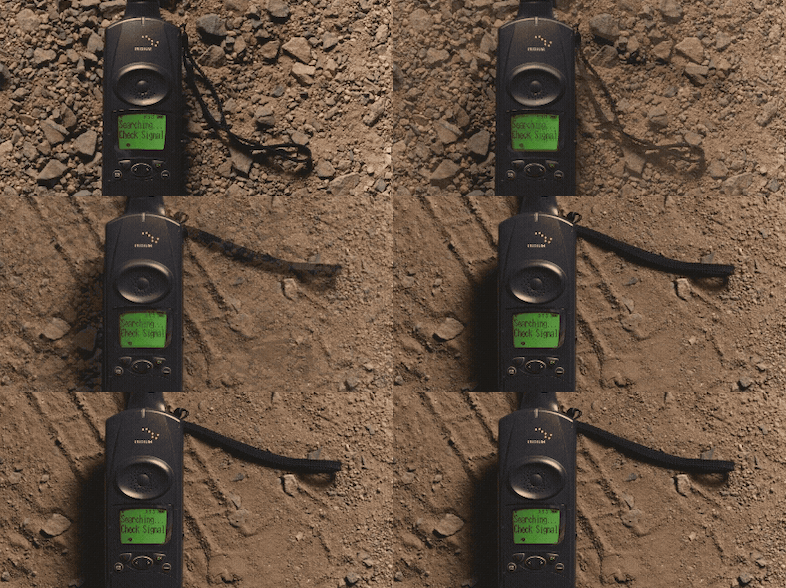
All Photography by Jake Caminero
For generations, the automobile separated us from everyday noise while we were betwixt destinations or on our way to remote locations where being unreachable was the point. By the Nineties, cellphones pierced that bubble, offering both the freedom and the obligations of a mobile connection. But only if you were within reach of a cell tower.
This story originally appeared in Volume 37 of Road & Track.
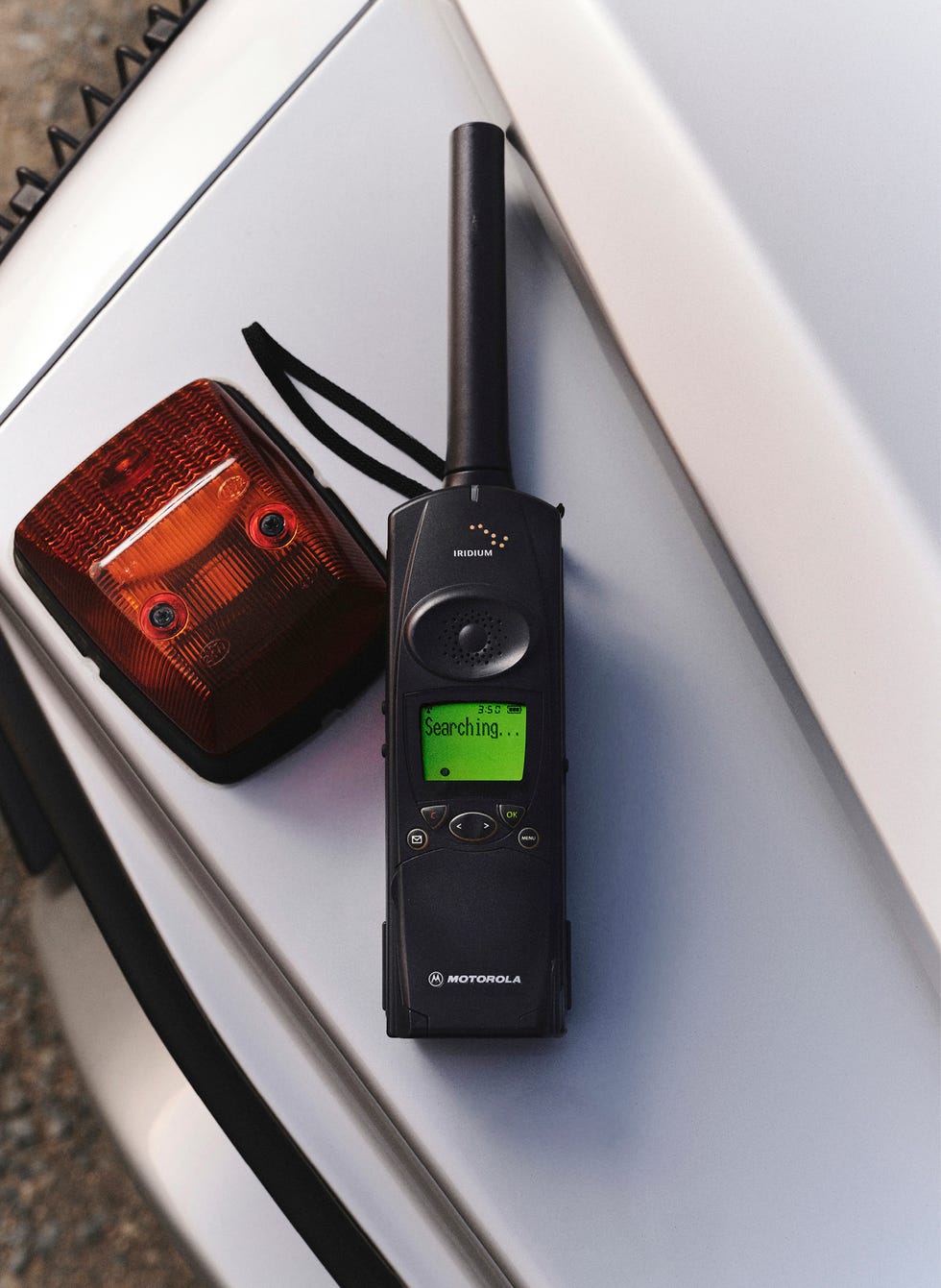
That relationship with connectivity changed forever on November 1, 1998, when Motorola’s Iridium satellite network opened to customers. For the first time, a handheld consumer product promised true global coverage. With a $3000 phone and service costing $7 a minute, Iridium had few takers and filed for bankruptcy nine months later. But Iridium foreshadowed our present day, where everything from ocean buoys to airplanes can connect to any number of satellite networks, a reborn Iridium among the operators. And the phones we rely on for directions, streaming music, and recording TikToks from the passenger’s seat increasingly include satellite functionality.
If you’re truly lost or in an accident, this feature can be a lifesaver. But unless you leave your phone at home like some sort of criminal, you’ll never be fully out of touch, even when you want to be.
Jake Caminero

Executive Editor Mike Austin has worked as a writer, editor, and occasional video host across titles such as Car and Driver, Autoblog, Popular Mechanics, and Hemmings (plus a few more). Prior to joining Road & Track he finally put his engineering degrees to use as an EV analyst. His personal cars skew slightly oddball, including a 1991 Honda Beat, 2001 Volkswagen Eurovan, 1987 Alfa Romeo Spider, and 2007 Saab 9-3 wagon.