
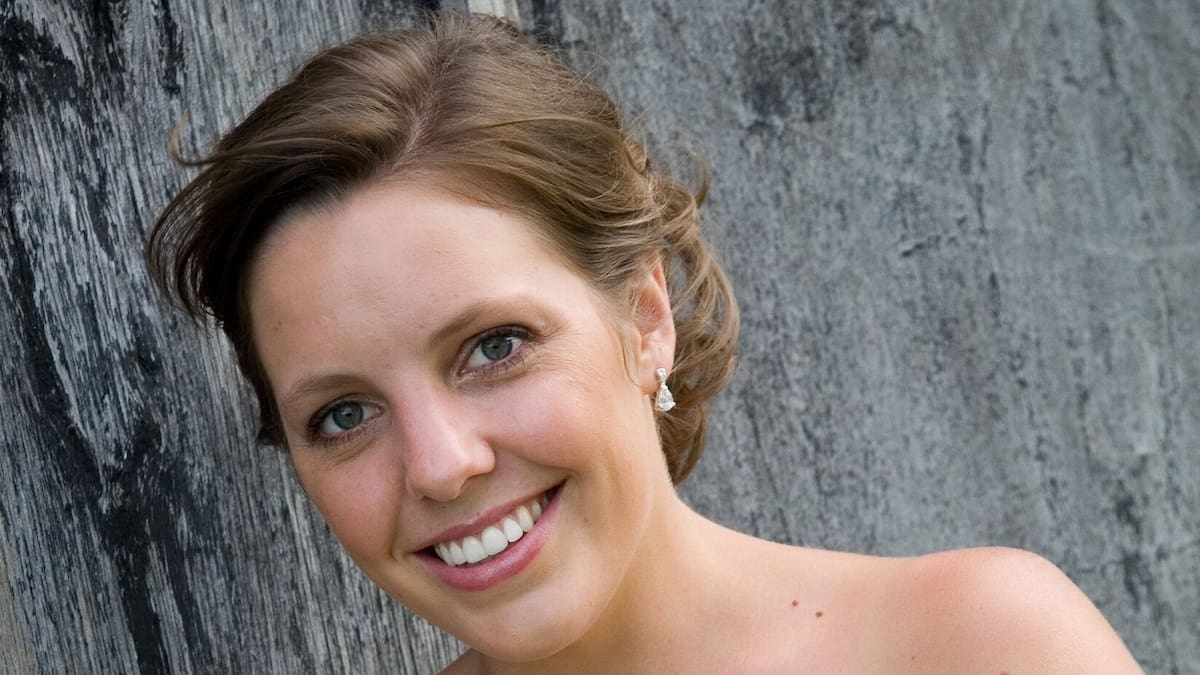
“She was taken far too soon and left an immeasurable hole in our hearts,” Maunder said.
The doctors’ appointments and diagnostic procedures that failed to detect the ticking time bomb in Sanderson’s head, and whether a Covid vaccine might have contributed to the rupture, formed the basis of a claim to ACC.
The claim, by Sanderson’s estate, sought cover for the fatal aneurysm the applicants believed was the result of a treatment injury.
But, it was declined by ACC and ended up in the District Court on appeal.
In a recently released decision Judge Peter Spiller said the court was deeply saddened by Sanderson’s tragic death.
He said her passing deprived her infant child of a mother and caused great grief to her partner, parents and others who knew and loved her.
However, it was the court’s task to assess the relevant evidence in light of the applicable law.
In the court’s view, the decision by a reviewer in May last year confirming ACC’s earlier decision to decline cover was the right one and the appeal was declined.
The lawyer acting for Sanderson’s estate, Jonathon Miller, told NZME an application had been lodged seeking leave to appeal Judge Spiller’s decision.
Tragedy during Covid restrictions
Sanderson, a wedding planner by trade, was engaged to be married and had “planned to perfection” a ceremony on the front lawn of her mother’s home.
But, she never had the chance to walk down the aisle.
Maunder said they had planned to marry in February 2021, but the arrival of Covid-19 forced a postponement . Many guests had been due to arrive from overseas.
Sanderson and her fiance Sam Hammond’s daughter was born in August 2021.
By early October, the headaches had set in.
The country was in Level 3 Covid restrictions so Sanderson’s first GP appointment was by phone.
She reported the headaches, which had initially lasted only the morning, were by then hanging around all day.
At times they affected her ability to function, but painkillers helped temporarily.
The doctor advised physiotherapy for what were assumed to be “tension” headaches.
Sanderson then sought an exemption letter to travel for physiotherapy. A Covid vaccine followed, then another GP consultation by phone.
The headaches worsened. Sanderson was stressed and upset, and unable to get a face-to-face physio appointment because of Covid restrictions.
She wanted to be closer to her mother in Tauranga but needed a letter to cross the “border” from Auckland.
Maunder said doctors tried hard to get her to Tauranga, but officials turned down their letters seeking permission to travel.
Sanderson sought help from the Ombudsman who responded on the day she died by seeking more information, Maunder said.
On October 15 Sanderson managed to see her GP who recorded nothing unusual following a broad examination, and assessed the headaches as stemming from joint inflammation in her upper spine.
The doctor recommended she keep trying to get physio but advised Sanderson to seek urgent medical attention if her condition worsened.
The headaches grew more constant and morphed into what Sanderson reported as frequent migraines.
Quiet strength: Alecia Sanderson died in October 2021. The 32-year-old had given birth two months earlier, and was due to be married on the lawn at her mother’s home. Photo / Keryn Maunder
Her GP then referred her to the hospital emergency department where she had a CT venogram; a quick, non-invasive imaging test using dye contrast to assess veins.
The radiologist found a 9mm aneurysm in a blood vessel on the left side of Sanderson’s brain, with no evidence it had ruptured.
About 30 minutes later, when Sanderson had returned to her hospital bed, the aneurysm burst with fatal consequences.
A CT scan showed Sanderson had suffered a sudden, severe bleed into the space surrounding her brain and upper neck area of her spine.
Doctors felt it was a non-survivable brain injury. Sanderson was taken off life support the next day, and died soon after.
‘Bright, thoughtful and loving’
Maunder said Alecia was the youngest of her four children, who had a quiet strength and authority all of her own.
“She was bright, thoughtful and loving, and always giving to others.”
Maunder said she left the family with the most precious gift of all, her beautiful baby girl.
“Through her daughter, Alecia’s love lives on. We miss Alecia every day.”
The man she was soon to wed told NZME that five years on, he and others lived with the tragic loss each day.
“She was a mum to our beautiful 10-week-old girl, my fiancée and a great friend.
“She meant so much to so many people, and her loss continues to be felt deeply by all of us,” Sam Hammond said.
A year after her death the GP for her estate applied for cover for a treatment injury, with a diagnosis of subarachnoid haemorrhage 30 minutes after the CT venogram, possibly related to the scan.
In January 2023, another GP reviewed Sanderson’s treatment and found the care provided during multiple consultations was “thorough and appropriate” with no significant failures.
He noted the symptoms “did not indicate a serious condition at the time” and that even an earlier referral to the emergency department would have been unlikely to change the outcome.
He said the CT scan on October 27, 2021 was the correct course to undertake.
An emergency medicine specialist said Sanderson’s debilitating headaches indicated a “rapidly growing aneurysm at risk of imminent rupture” but he did not consider the scan caused it.
He said the procedure typically led to a drop in blood pressure rather than an increase, which was thought to trigger such events and an earlier CT scan would not have changed the outcome.
A neurosurgeon’s opinion was that it was likely an “unstable and fragile aneurysm” which would have bled whether or not the CT venogram was done.
Claim declined; review sought
In February 2023, ACC declined the estate’s claim because it did not meet the criteria for a treatment injury.
The estate then sought a review because of what it said were “factual errors” in the decision, including the timing of the Covid vaccine and whether it might have contributed to the rupture.
The review upheld ACC’s decision and the matter went to court.
Judge Spiller acknowledged two doctors’ views that there was a failure of treatment by a GP when there should have been an earlier referral for assessment, but they were “heavily influenced” by hindsight and outweighed by evidence.
He said a treatment injury would only have occurred if there had been some departure from an objective standard of appropriate treatment.
He noted the “carefully nuanced” views of a neurosurgeon who said with the benefit of hindsight, he would have referred Sanderson for an MRI as early as the first consultation on October 13, 2021 if he had seen her in a neurological outpatient setting.
Judge Spiller said a treatment injury did not occur where, with the benefit of objective hindsight, a different course of treatment could have yielded a better result.
ACC was unable to comment at this stage.
Tracy Neal is a Nelson-based Open Justice reporter at NZME. She was previously RNZ’s regional reporter in Nelson-Marlborough and has covered general news, including court and local government for the Nelson Mail.
Join the NZ Herald’s Open Justice team for Case by Case, a video and podcast series examining the disputes and decisions making headlines across New Zealand.