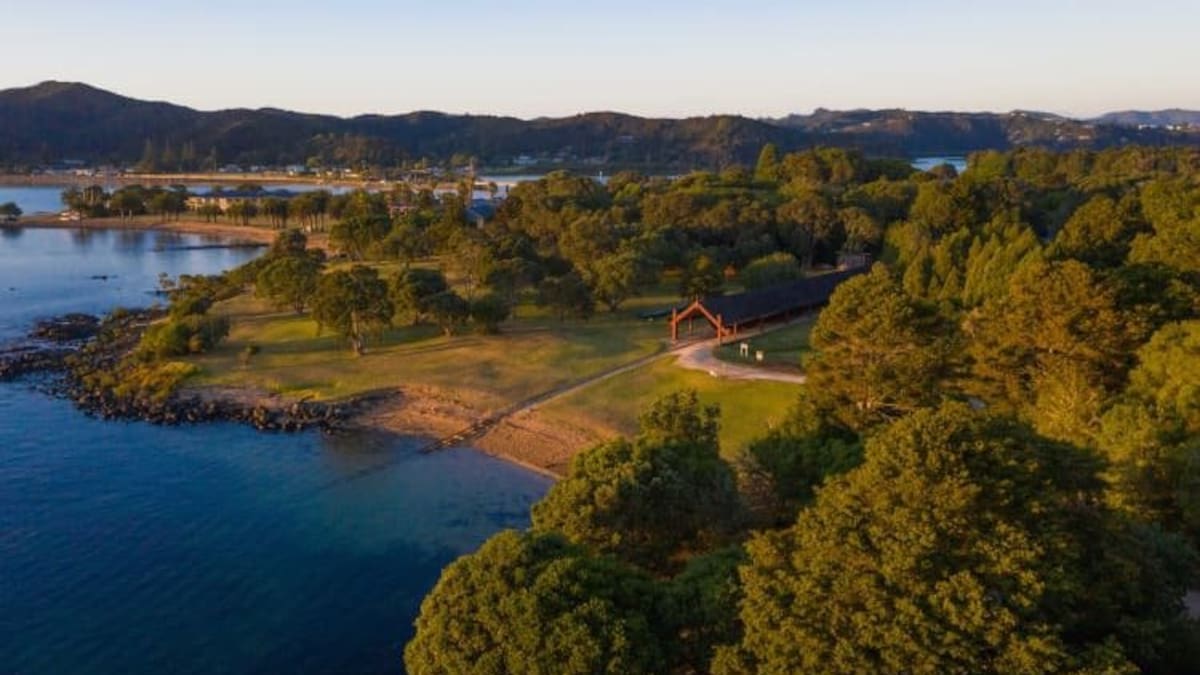
Waitangi Treaty Grounds/Te Pitowhenua and Te Tii Marae: The site where New Zealand’s founding document Te Tiriti o Waitangi/The Treaty of Waitangi was first debated and signed in 1840.Mataatua Wharenui – Te Mānuka Tūtahi, Whakatāne: A monumental carved meeting house in Whakatāne (Ngāti Awa).Te Whare Waiutuutu Kate Sheppard House, Christchurch: The home from which Kate Sheppard led the campaign that helped make New Zealand the first country in the world to grant women the right to vote.Parihaka Papakāinga: A historic settlement at the base of Taranaki Maunga and a renowned centre of nonviolent resistance to land confiscation under the leadership of Tohu Kākahi and Te Whiti o Rongomai.Te Kauwhanganui Māori Parliament, Morrinsville: A building preserving a rare indigenous parliamentary system, along with the King Mahuta monument and an archive of more than 20,000 documents mostly in te reo Māori.Te Hauturu o Toi/Little Barrier Island: One of the world’s most intact temperate island ecosystems, and a powerful example of conservation grounded in science and Indigenous stewardship.Tch Tatatei Awanui/Scenic Reserve Wharekauri coastal strip, Chatham Islands: A significant Moriori cultural landscape containing settlement sites, burials and the archaeological remains of the voyaging waka Rangihoua.Ngā Tapuwae o Mataaho/Auckland Volcanic Fields: A cultural landscape shaped by Auckland’s volcanoes, deeply associated with Māori history and traditions.Kermadec Islands and Marine Reserve: One of the most strictly protected reserves in New Zealand, about 1000km northeast of Cape Reinga.