
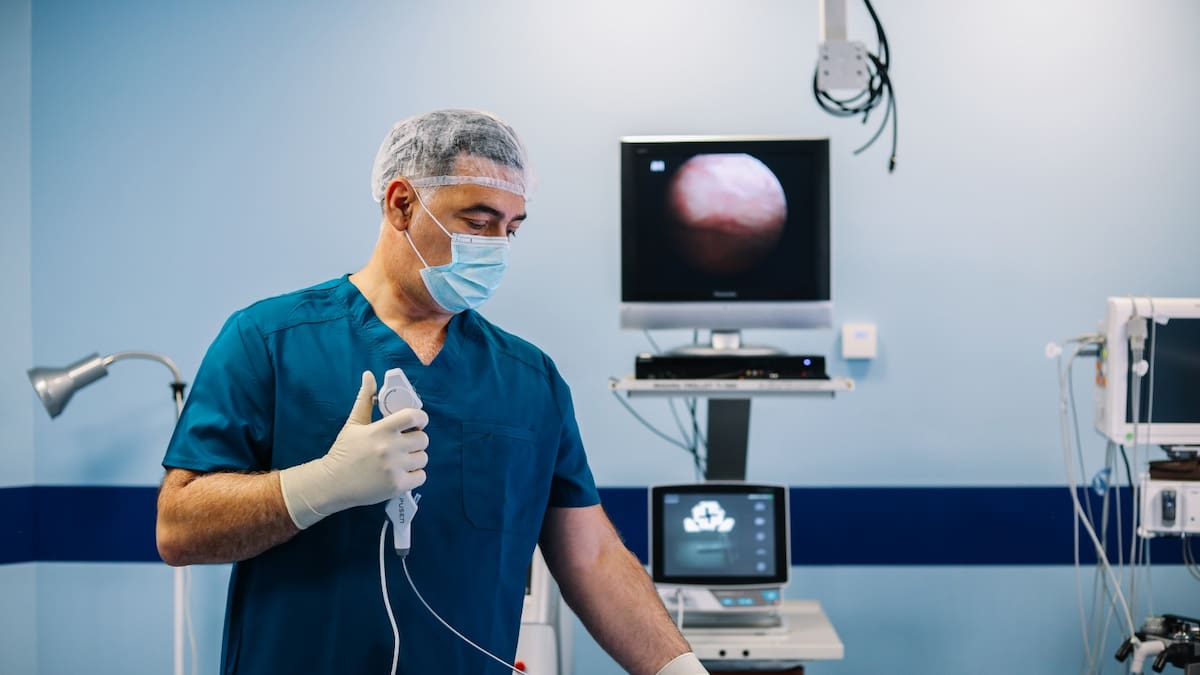
Canterbury Charity Hospital gets no government funding, surviving only on donations, three permanent staff and 300 volunteers. CEO Akshey Shukla says it helps about 1000 people a year waiting for treatment.
Hardly a day goes by without New Zealand’s public health system in the news because of understaffing, ageing infrastructure
and spiking demand. However, there’s another health story of entirely more positive dimensions: the Canterbury Charity Hospital.
It has existed since 2007, helping thousands of New Zealanders – some who live in pain – waiting for treatment in the public system. Volunteer surgeons, nurses, anaesthetists, dentists and support staff give up their free time to bring beneficial health outcomes to patients with ailments regarded as non-urgent by the system.
The hospital is a community icon, but exists without any government funding.
CEO Akshey Shukla delights in saluting those who have helped make it what it is.
“The people of Canterbury and their charitable nature are amazing; they are the lifeblood of this hospital with their donations. It might be just $10 or $15, or it might be a lot more than that through various bequests,” he said.
Canterbury Charity Hospital Executive Officer Dr Ashkey A. Shukla
“Then there are the volunteer surgeons, nurses, anaesthetists and dentists; they are from both private and public sectors, all work for free and give up their free time to do so – and at a time when we are always hearing about how stretched the health system is.
“I call them heroes – huge heroes.”
Shukla is himself part of the success story. He’s an energetic CEO, actively encouraging the medical fraternity to take part.
“Part of my job is to convince and motivate surgeons and others to come here,” he says. “They are heroes, yes, but heroes have to know there is a stage for their heroism.”
Shukla is proud to have lifted the number of surgeries completed to 100-120 this year. The hospital has just three permanent staff but 300 volunteers across its medical practitioners and support staff.
He says $0.82 of every $1 donated goes directly to patient care. That is a statistic which encourages financial support as it tells donors their money is being used to make a difference, not being siphoned off by administrative costs.
Another part of Shukla’s job is fundraising. He says there is a “visible negative difference” between donations this year and others – which is why he’s now encouraging people to visit the donors’ page on the hospital website.
The hospital deals in medical conditions where people have waited months or even years for treatment, often in pain, or have been denied surgery because their condition was not considered life-threatening. There are about 200,000 New Zealanders waiting for surgery, Shukla says.
Endoscopies are common procedures, as are hernias, sterilisations and other procedures not owned by the DHB because of pressure on the system.
As well as up to 120 surgeries undertaken a year, about three times that number visit the clinic for exams and to organise their surgery, about 300 endoscopies are carried out, up to 200 people use the hospital’s dietitian services and somewhere between 60-100 use the free dental services.
“So we help about 1000 people a year, all without any government support,” says Shukla. “We are helping meet the requirements of the health system.”
Joanne Lynch, the NZ group manager of Biomedical Services NZ (BSNZ), puts it slightly more forcefully.
“It’s sad that some people can find themselves without the level of healthcare support they need. Access to services can be challenging, particularly for those whose conditions may not meet the threshold for urgent treatment,” she said.
“So it’s a shame the Canterbury Charity Hospital is needed, but the mahi they do is amazing and provides hope for those stuck in the gaps of our system.”
Lynch should know. Her company keeps medical and surgical equipment safe and running in hospitals and clinics.
For them, standing behind the Canterbury Charity Hospital felt like the “perfect fit”, and they now maintain its medical equipment at no cost and donate to the hospital.
“We exist to help people get the care they need. That purpose is deeply embedded in our organisation and continues to guide us today,” says Lynch.
“Our parent company was founded on the values of helping others and making a meaningful difference in people’s lives. At BSNZ, those values are more than words. They shape how we serve our customers, support our communities, and help people access the care, equipment and services they need to live well.”
“When you see what the volunteers at the Canterbury Charity Hospital are doing, you can’t help but want to be part of it. Our engineers keep the equipment safe and running so surgery can happen.
“It’s a small part to play, but we believe healthcare is for everyone, and we’re proud to stand behind the people bringing this to life.”
Shukla says the work they do is desperately needed.
“99.99% of all our surgeries change people’s lives,” he says.
He is a military surgeon by training and, before moving into health leadership, spent 10 years in the Gurkhas Army, including command of a surgical field hospital in a war zone. In New Zealand he held senior roles at Pegasus Health, Canterbury’s primary care network (where he was a Covid response lead, establishing New Zealand’s first community-based assessment centre).
“It would be good to have more charity hospitals like this one, sure – but we also need our donors to keep helping us to help other people.”
For more information, visit www.charityhospital.org.nz
SaveShare this articleCopy LinkEmailFacebookTwitter/XLinkedInReddit