
A large opening carved into the living room wall frames this courtyard so generously that it doubles as a threshold to perch on, or to step across. On the roof, Mangalore double tiles protects the space without muting light; below, the floor gently dips to cradle a granite bed that features an urli as its nucleus.
Even the bathrooms refuse anonymity. Microcement walls, patterned flooring, and carved mirrors give each space its own personality. The palette shifts—coral in one, mustard in another—yet harmony remains absolute. Fluid partitions mindfully separate wet and dry zones, and wooden-finish ceilings lend depth. For the designers, it was unfamiliar territory. “We’ve never worked on a project this traditional,” they admit, “but the clients were open to experimenting. In the end, it feels like a retreat—calm, well-ventilated, not like a typical urban apartment.”
Original text by Mehar Deep Kaur, edited for context.
Also Read: South Indian homes and their serious obsession with courtyards: 5 homes AD editors love
Vaulted Ceilings in a Chennai Penthouse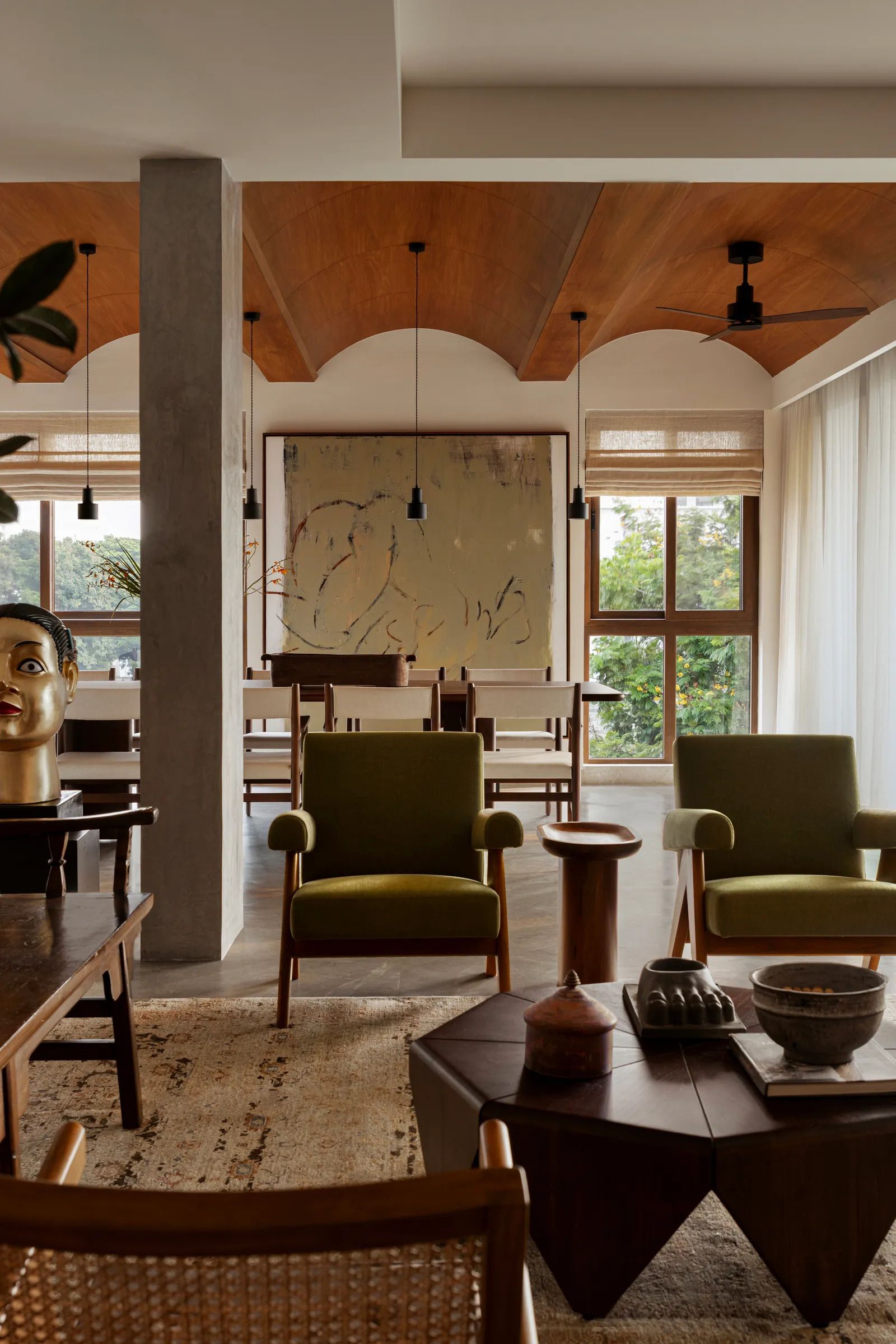
A vaulted ceiling lends the living room its sense of lift and ease. The furniture was custom-made by Image Muffin, while the art on the farthest wall is the work of Sri Lankan visual artist Kingsley Gunatillake.
Phosart Studio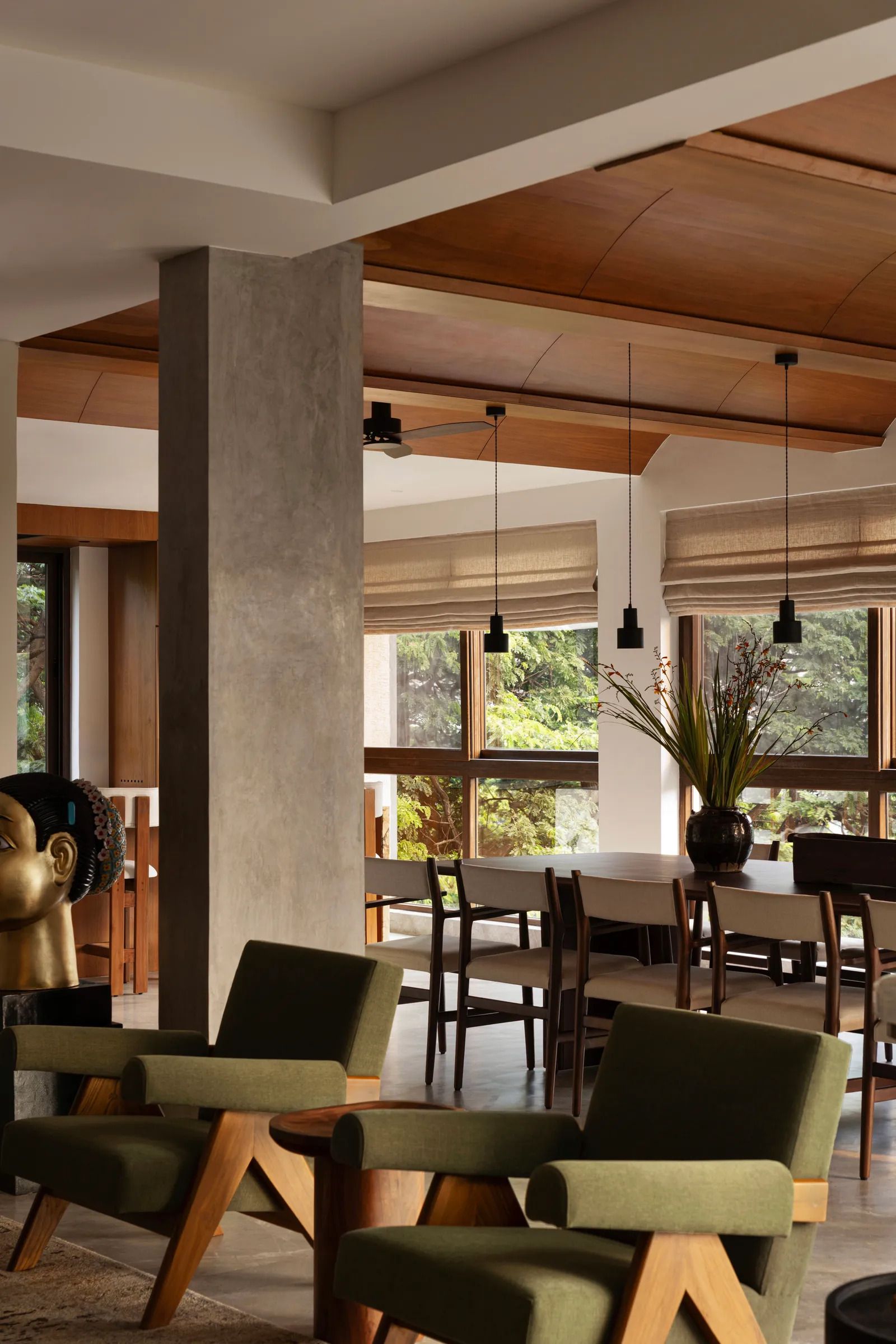
Phosart Studio
The thing about AD100 architect Gowri Adappa is that she seldom plays by the rules. Which means each new project, more often than not, is a playful rebellion disguised as a home. This 4,500-square-foot Chennai penthouse, set along a gentler stretch of the Adyar River, follows suit. Conceived as a weekend getaway, it doesn’t quite behave like one. There are no overly curated corners or rooms that feel like they’re waiting for guests to arrive. Instead, the home settles into an ease that suggests it’s been lived in forever—even though every inch has been carefully thought through.
The starting point was far less charming: a standard builder-grade shell with all the personality of a blank spreadsheet. The brief was to turn this into an open-plan, loft-like home—just without the clichés of exposed pipes and aggressive industrialism. Adappa’s response was characteristically restrained. A vaulted ceiling was introduced to lift the space (quite literally), concrete columns were exposed but not overplayed, and suddenly the Chennai penthouse had a point of view.