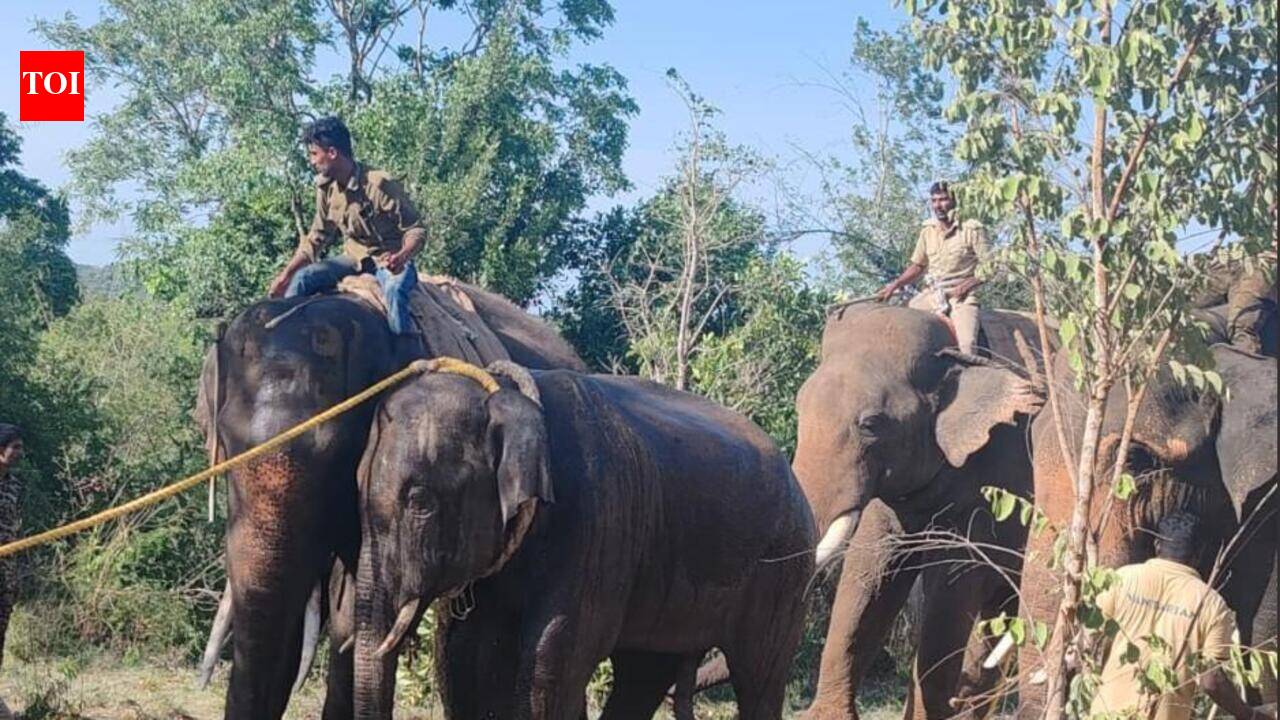
 The wild elephants first entered the then undivided Vizianagaram district in mid-2007 from the Lakhari forest area in Odisha. Since then, they have continued to move in herds, damaging crops and causing human casualties over the years. Parvathipuram Manyam: Despite the deployment of trained Kumki elephants by the state govt, the wild elephant menace continues to trouble residents and farmers in Parvathipuram Manyam district and parts of Srikakulam district in North Andhra Pradesh. The herds have repeatedly crossed the Andhra Pradesh–Odisha border into Odisha before returning to Andhra Pradesh within days, frustrating forest officials’ efforts to keep them away from human settlements and agricultural fields.The border areas of Parvathipuram Manyam and Srikakulam districts offer abundant water resources and sufficient food for the elephants. Having adapted to these conditions, the herds have frequented the region for nearly two decades.The wild elephants first entered the then undivided Vizianagaram district in mid-2007 from the Lakhari forest area in Odisha. Since then, they have continued to move in herds, damaging crops and causing human casualties over the years.Currently, two herds of wild elephants are moving through Parvathipuram Manyam district, with eight elephants in one group and four in the other. The animals have also been venturing dangerously close to human settlements, particularly in parts of Mukkuva mandal.Concerned over the loss of human lives and extensive crop damage caused by the elephants, Andhra Pradesh govt sought assistance from Karnataka and brought trained Kumki elephants to the state.As part of the initiative, two trained Kumki elephants, Jayanth and Abhimanyu, were deployed around two months ago to help drive the wild herds away from populated areas and guide them towards forest regions.In another major initiative, an elephant holding camp spread across 400 acres in the Guchchimi area of Seethanagaram mandal was virtually inaugurated on July 29 by AP deputy CM and forests minister Pawan Kalyan. These initiatives raised hopes among residents of Parvathipuram Manyam and Srikakulam districts that the long-standing elephant problem would finally be brought under control.For nearly 40 days after the Kumki elephants were deployed, the wild herds largely avoided entering their operational range and moved away when they encountered the trained animals. This initially made it difficult for forest officials to carry out their planned operations.However, the department subsequently achieved some success near Pakki when the wild elephants moved towards Rayagada in Odisha. The animals, however, returned to AP within 10 days.On a second occasion, the Kumki elephants helped guide the wild herd towards forest areas on the Odisha side of the border, near Konavalasa in Parvathipuram Manyam district.The apparent breakthrough proved temporary. After remaining in Odisha for around 10 to 15 days, the wild elephants returned to Andhra Pradesh. Forest officials had briefly hoped that the animals would stay across the border, bringing relief to affected villages. Those hopes faded when the herds returned within a few weeks.Officials believe the availability of food and water is a major factor behind the elephants’ repeated return. The animals reportedly failed to find adequate food and water in the areas they entered in Odisha, prompting them to move back towards Andhra Pradesh. After returning, they took shelter in the hills before venturing out again towards agricultural fields and human-inhabited areas in search of food.Rain delays further operationsForest officials were unable to continue the Kumki elephant operations as planned because of cyclonic conditions and heavy rainfall in Aug and Sept. A forest department official said operations during the rainy season were difficult, as field staff faced several challenges in carrying out the work under such conditions. Consequently, the department had to suspend the operations temporarily.With rainfall subsiding and winter approaching, forest officials are awaiting instructions from higher authorities to resume the operation, a senior forest department officer said. Once the necessary orders are received, the department plans to deploy the Kumki elephants again to guide the wild herds towards forest areas and prevent them from approaching human settlements.However, the elephants’ repeated movement across the state border highlights the difficulty of finding a lasting solution to the problem. For farmers and residents of North Andhra, the immediate concerns remain public safety and crop protection, as the wild elephant menace continues despite govt’s intervention.