
“The last chapters of this story really are patient delivery, so getting this therapy into New Zealanders. And that’s what we’re really not far away from.”
BioOra CEO John Robson (left) and National’s health spokesman Simeon Brown cut the ribbon at BioOra’s new Christchurch facility. Photo / Anna Heath
Creating a world-first facility like BioOra has had its challenges.
“The main issue is it’s so complicated, because nobody’s ever done it. Every time we reach an obstacle, it’s like, ‘well, how do we figure this out’? And there’s no textbook.”
To receive Car-T treatment now, New Zealanders must travel offshore.
David Downs was diagnosed with “terminal cancer” in 2017 and spent hundreds of thousands of dollars to travel to Boston for the lifesaving procedure.
“At one point it was going to be a million dollars. I had to go through a lot of treatment; I had to go to America 12 times for different tests and things,” Downs said.
“Since then, I’ve met many, many patients who have lost their house or had to give up their retirement savings to go overseas. Having this in New Zealand has just been such a major breakthrough.”
Downs, who is on the trust board at Wellington’s Malaghan Institute – where clinical trials have been taken – says the treatment has been successful.
“We’ve had enough patients go through the trial now to know that it really, really works. We’ve had probably 60 to 70 patients. The results are as good as anyone in the world is seeing with this type of treatment.
“The fact that we can now see this facility and have this potentially in the public system, so patients aren’t selling houses and have give-a-little campaigns. That’s just going to be a massive breakthrough. 150 patients a year. Those are patients for whom there is no other option. They are typically terminal – like I was.”
Cancer survivor, Car-T treatment recipient and Malaghan Institute board member David Downs. Photo / Anna Heath
The outspoken cancer survivor hails the innovation that BioOra is leading in the field of biotechnology.
“What we in New Zealand need is high-quality research, really world-leading, which we have at Malaghan Institute. And then that has to find its way into being a commercialised product. And one of the big challenges we often have in New Zealand is that we don’t commercialise our intellectual property. It sits there, kind of on the shelf,” Downs said.
“So BioOra coming along and working with the Malaghan Institute to create this company and bringing in offshore investment and then basically turning it into a company that will not just benefit patients – and that’s incredibly important but actually will be an export economy as well.
“It’s the perfect example of where growth for New Zealand should come from in this kind of high-tech innovation space. So, to me, it’s brilliant.”
Robson says, in theory, the first dose could be manufactured from the Christchurch site in the second half of next year, but that “wouldn’t be a patient dose”.
“The first patient is likely to be in early 2028.”
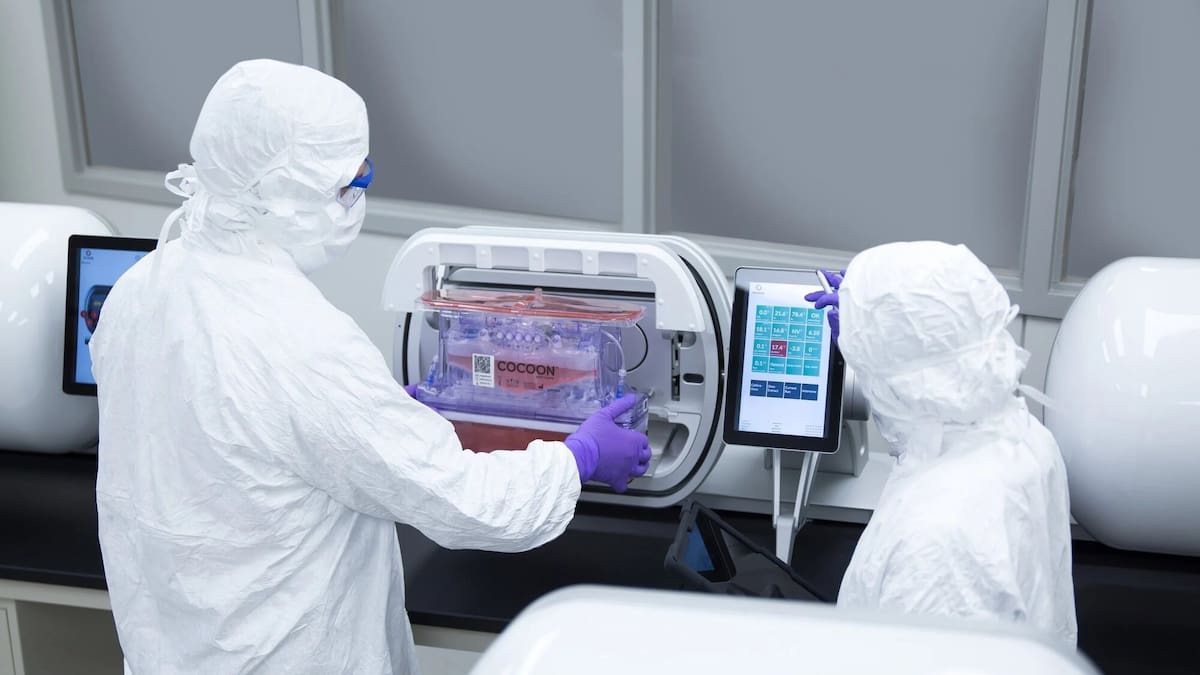
World-first laboratories at BioOra’s Christchurch facility are still under construction. Photo / Anna Heath
The range of treatments will also expand.
“We’re starting lymphoma for adults, we have a partnership with the Cincinnati Children’s Hospital, it’s the world’s number one children’s hospital. They’re taking our therapy into paediatric trials. So that’s leukaemia.
“The therapy that we’ve developed for the Malaghan is also applicable to some autoimmune diseases,” Robson said.
BioOra’s establishment in Christchurch is a coup for the city. It was originally planned to be built in Wellington, but circumstances led the company to investigate the Garden City, where the company settled on the city’s former temporary police station.
“This was the second site, and we walked into what was a shell. It’s a concrete floor, pillars, and a tin roof, nothing else. And we thought rather than building a building, we can just build a box within a box,” Robson said.
BioOra CEO John Robson. Photo / Anna Heath
Three years later, they have installed world-first laboratories that are almost ready to undertake world-class treatment – in New Zealand.
“Our health system is ready. We just need to make sure that the health system is funded to be able to treat these patients,” Downs said.
“We want to get this into the public health system, so it’s not exclusive. It should be that any New Zealander that needs this treatment can get it.”
National’s health spokesman Simeon Brown announced at the opening that the party would invest $25 million into BioOra, if re-elected.
Mike Thorpe is a senior multimedia journalist for the Herald, based in Christchurch. He has been a broadcast journalist across television and radio for 20 years and joined the Herald in August 2024.