
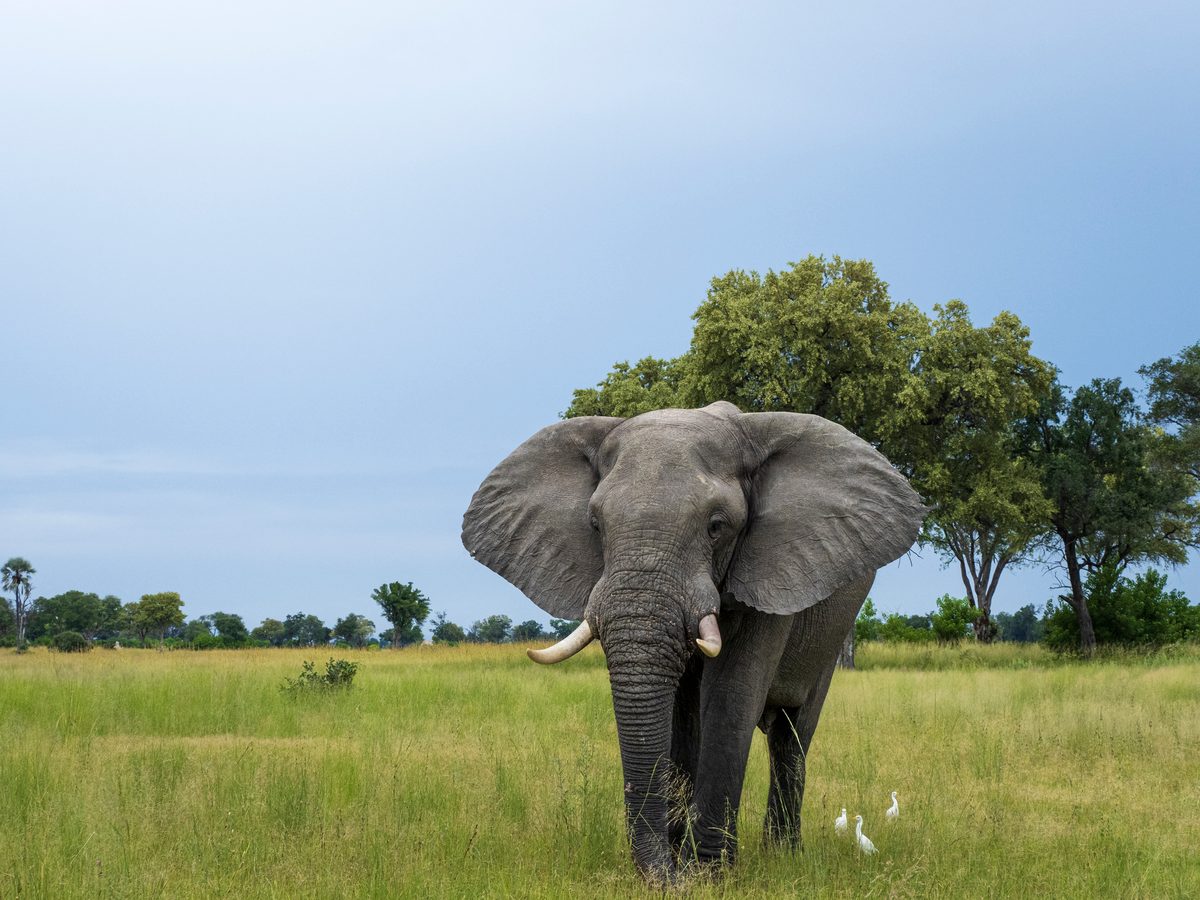
Standing up to three metres tall, weighing up to 6,000 kilograms, with ears the size of satellite dishes and feet the size of saucepans, the African elephant isn’t just big. It’s mammoth! The African savannah elephant (Loxodonta africana) is the biggest living land mammal on Earth, but there have been even larger elephants.
The straight-tusked elephant (Palaeoloxodon antiquus), which flourished in Europe and Western Asia around half a million years ago, grew up to four metres tall and weighed up to 13,000 kilograms. While Borson’s mastodon (“Mammut” borsoni), which lived millions of years earlier, grew taller and heavier still. Adult males are estimated to have weighed around 16,000 kilograms. All this bulk in a group of animals that feed on plants. So, how did they get to be so big?
Trace the elephant’s family tree back to its origins, and you’ll see that they started small. One of the earliest known elephant relatives, Eritherium, lived in Morocco about 60 million years ago. This trunk-less, pig-like animal stood about 20 centimetres tall. Then the family tree branched and different lineages evolved. Over time, elephants got bigger.
The obliging animals were, it seems, happy to obey Cope’s rule – the idea that animal lineages tend to increase in body size over long periods of time, because the pros outweigh the cons.
Big animals may need lots of food and a sturdy frame to support their bulk, but their size also brings protection. Taking on a large animal is a risky business, so predators tend to leave the biggest prey alone. Healthy adult elephants are rarely killed by predators.
Adult African elephants consume around 300 kilograms of vegetation a day, including grass, twigs, leaves and bark. Much of this food is fibrous and relatively low in nutrients, yet somehow the diet works.
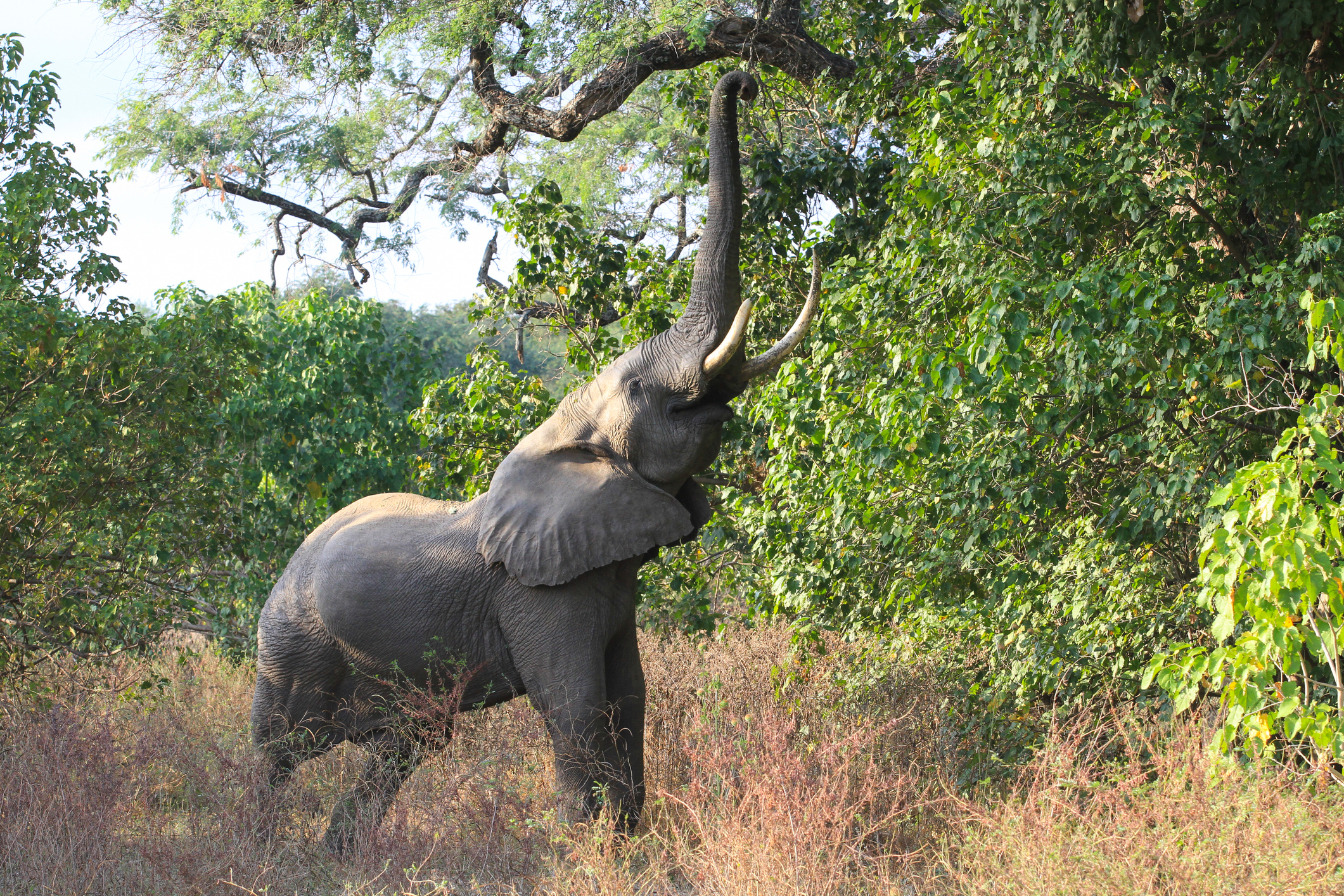 An African elephants eating in Mana pools, Zimbabwe. Credit: Kitz-travellers/ Getty Images
One reason for this is that as size increases, each kilogram of an animal’s body becomes cheaper to maintain. A 6,000 kg elephant obviously needs more energy than a 1 kg rabbit, but it doesn’t need 6,000 times more. Its enormous body therefore uses less energy per kilogram, helping make its enormous size sustainable.
Along with their big bodies, elephants have evolved big digestive systems to process all that food, and big trunks to help them reach it. Their long, sturdy legs can carry them across vast distances in search of food and water, while their enormous ears, packed with blood vessels, act as radiators, helping them shed excess heat.
So, perhaps a better question is, why aren’t today’s elephants even bigger? The answer is that there comes a point when the drawbacks of being big outweigh the benefits. Elephant body size hasn’t always increased, either. On islands, where resources are limited, some elephant lineages evolved to become much smaller – so-called dwarf elephants. Natural selection may favour smaller animals when food is scarce, because they need less food to survive. Over generations, this can push body size downwards – showing that, when it comes to elephants, bigger isn’t always better.
More wildlife stories from around the world: