


Listen to this article
Estimated 5 minutes
The audio version of this article is generated by AI-based technology. Mispronunciations can occur. We are working with our partners to continually review and improve the results.
This story is part of a CBC News series examining the public health impacts of online gambling.
Anna, a 51-year-old single mother of two teens, says online slot machine games cost her nearly everything.
And even at that point, the Ontario resident says it was hard to stop.
“The amount of money that I spent and lost — it was astronomical,” she told a recent meeting of Gamblers Anonymous in Toronto, which CBC News was invited to witness.
The peer support group has been a lifeline that helped her stop betting and break free from inducements and marketing she would receive from the betting apps, she says.
“If I had gone a little while without gambling, they would literally send me thousands of dollars to say ‘free money’ to keep you going,” she recalled.
WATCH | ‘Anna’ kicked her betting habit with help from Gamblers Anonymous:
Gamblers Anonymous helped ‘Anna’ kick her addiction
Anna says Gamblers Anonymous helped her find connection to recover from her addiction last year.
She’s not alone.
The number of problem gamblers in Ontario has spiked and gambling-related suicides have tripled since the expansion of private online casino games and sports betting in 2022, CBC News has learned.
Nearly 130,000 Ontarians now show signs of gambling problems, compared with roughly 43,000 in 2018, a tripling of the number of people who meet the criteria of gambling too frequently, losing money and struggling with addiction.
These estimates are based on new research from the Alberta Gambling Research Institute (AGRI), which found a 0.5 percentage point jump in Ontario’s rates of problem gambling compared to 2018. Their analysis uses the “Problem Gambling Severity Index” and data from Statistics Canada’s 2025 Canadian Community Health Survey.
AGRI researcher Carrie Shaw says the research is “brand new” and significant, showing that six months after Ontario’s private casinos opened in 2022, the number of problem gamblers in the province climbed while dropping in the rest of Canada.
“In Ontario’s market, gambling is very much normalized through access and advertisements,” said Shaw, who presented her findings at an AGRI conference in May.
“It’s true across Canada, but more so in Ontario, given the amount of exposure there is,” she said.
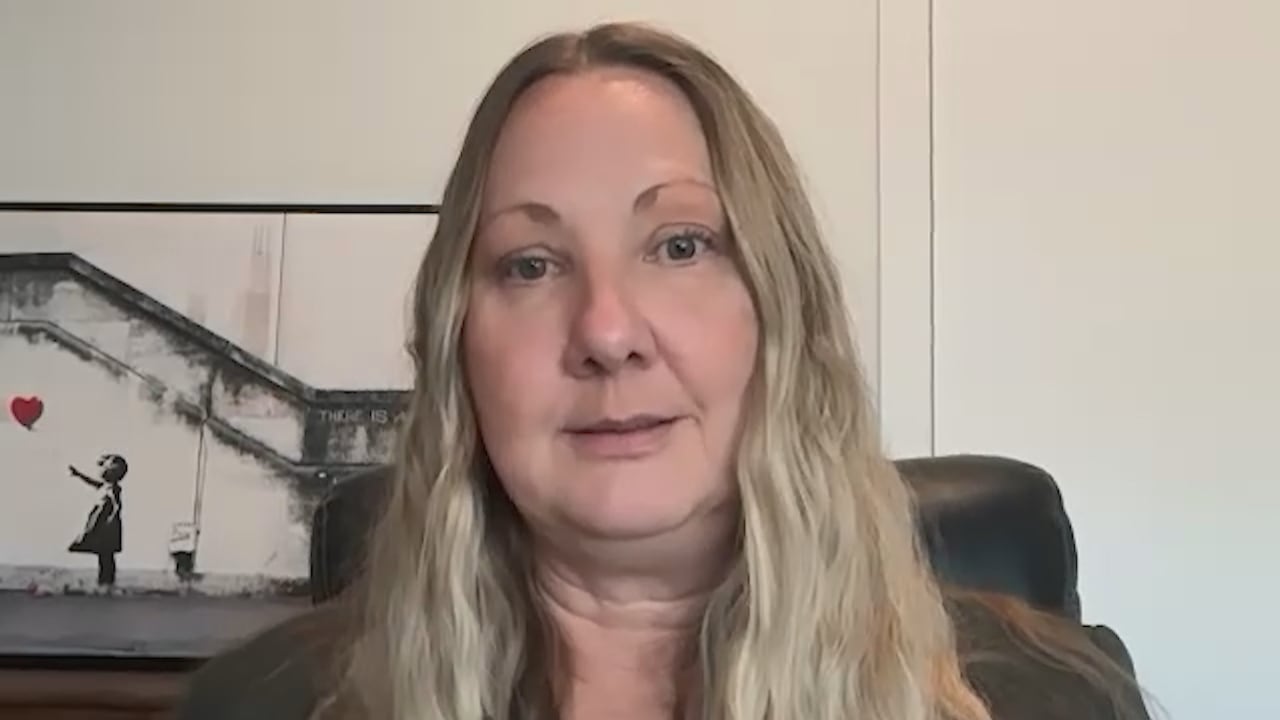
Carrie Shaw of the Alberta Gambling Research Institute found rising rates of problem gambling in Ontario after the 2022 online expansion of online betting. (CBC)
In July, Alberta joined Ontario in legalizing online gambling run by private companies. Everywhere else in Canada, it is illegal.
“With online gambling … the barriers to access are completely removed. You can access it anytime from your computer, your mobile phone, any time of day or night,” Shaw said. “You can be sitting at your desk at work and still be engaging.”
Gambling suicides rising
The Office of the Chief Coroner of Ontario also reports a spike in gambling-related suicides in the years after Ontario began allowing online betting.
Before Ontario’s expansion, the province had an average of five gambling-related suicides each year from 2016 to 2021. That number tripled after 2022.
Matthew Young, chief research officer for non-profit gambling research network Greo Evidence Insights, says he called on government two years ago to do a better job of tracking online gambling activity for fear of increased addiction, bankruptcies and suicides.
“We warned that we might be seeing the harms that we’re now seeing in the data,” he said.
Those calls were ignored, he says.
The Ontario government says it has spent $421 million in responsible gambling education, research and addiction treatment since 2018, including nearly $70 million last year.
That’s on top of nearly $159 million the Ontario Lottery and Gaming Corporation (OLG) spent in its PlaySmart program, meant to provide responsible gambling education, player protection tools and connections to support services, a spokesperson told CBC News in an emailed statement.
“And this year iGaming Ontario launched BetGuard, a centralized system that lets players self-exclude from all regulated online gaming sites through one registration,” the email said.
WATCH | Sports betting in Canada: Are we making a bad gamble?:
The Gamblification of Canada
The Fifth Estate explores the sudden spike in sports betting options.
A study published in the September 2026 American Journal of Preventive Medicine found a dramatic jump in the number of people with gambling disorders showing up at Ontario hospital emergency departments in distress.
A March 2026 study in the Canadian Medical Association Journal (CMAJ) found a 95.5 per cent increase in men and boys making gambling-related calls to ConnexOntario, the province’s 24-hour mental health and addictions help line, over the last decade.
Young calls it “unfathomable” that Canada changed the Criminal Code to allow online gambling and that provinces are opening their markets without proper study of the potential public health impacts.
WATCH | Gambling addiction needs better monitoring, says expert: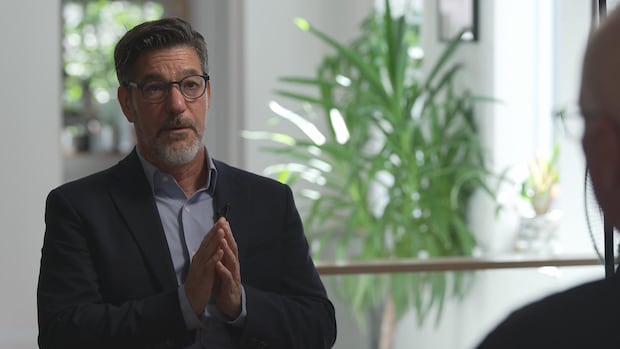
Gambling researcher says Canada needs better addiction monitoring
Matthew Young, addictions researcher, says there was no harm analysis done before Canada opened the floodgates to online gambling.
Young says that amid lobbying to legalize online gambling in other provinces, he would like to see better monitoring and for a share of the billions in revenues to be dedicated to independent research into ways to curb addiction and gambling-related harms.
Greo Evidence Insights was formerly known as the Ontario Problem Gambling Research Centre.
Ontario defunded it in 2019.
Are you, or someone you know, suffering from gambling? Support is available.
ConnexOntario 1-866-531-2600 or Text CONNEX to 247247Gamblers Anonymous 1-855-222-5542 or visit Canada or Toronto/GTA