
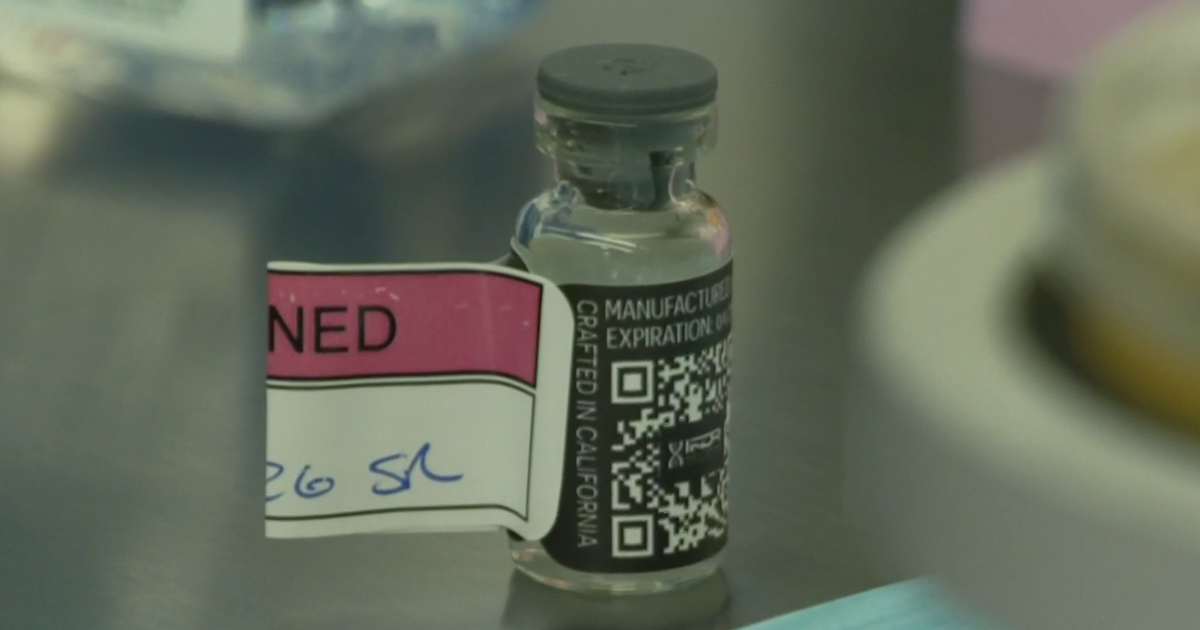
A drug that’s not FDA approved and still in clinical trials is being advertised all over the internet. Buying it turned out to be alarmingly easy.
First, CBS News national correspondent Adam Yamaguchi placed an online order through the website for Reset Wellness, a clinic started by a nurse practitioner, for 20 milligrams of retatrutide. The weight-loss medication, known as Reta, is an experimental peptide drug that Eli Lilly is studying as a next-generation obesity treatment. At checkout, he was promised a health evaluation, but the product arrived a week later without ever having to speak to a health professional.
Next, he purchased Reta from the website for Bodystreet Jupiter, a gym in Florida, after confirming he met its Body Mass Index, or BMI, requirement. The site said a doctor would review his intake form. The product arrived two days later without a consultation.
He even found a poster advertising the product for sale over the counter, at a bodega in Brooklyn.
Yamaguchi was able to buy a vial labeled “Retatrutide” at the corner store for $90. It came with a warning on the label that read “Research use only, not for human consumption.”
Dr. Reshma Ramachandran, a Yale physician who has studied the growing use of peptides and weight loss medications, said it’s “astounding” how easily accessible these drugs are. She said people who try products labeled as retatrutide are essentially acting as guinea pigs, because the drug is still in clinical trials and has not been certified as safe and effective.
She said prescribing a drug should involve a conversation about a patient’s medical history, the risks and whether the treatment is appropriate.
What’s actually in the vials?
University of Iowa research scientist Jason Galpin analyzed the samples for CBS News.
Both samples Yamaguchi bought online were consistent with a basic standard Galpin created for retatrutide, which isn’t the same as the drug being studied in Eli Lilly’s clinical trials.
But the bodega sample didn’t appear to even contain a peptide at all.
“It does not look anything like a peptide,” Galpin said of the sample Yamaguchi bought at a Brooklyn corner store, which was labeled as Reta.
Instead, Galpin found a compound called phenylacetic acid, which he described as a filler. It’s commonly found in fragrances and lip balms.
Further testing by Carl Ross, director of development at the University of Iowa’s Center for Biocatalysis and Bioprocessing, found 13 colonies of bacteria in the sample.
He warned that injecting material contaminated with bacteria could cause an infection.
“As kids, we’re all taught to wash out cuts if we get cut, but in this case … we’re injecting bacteria under the skin where it could multiply,” Ross said. “It’s pretty terrifying.”
Ramachandran shared the concern.
“What’s frightening to hear is that someone who’s buying this, who’s spending money on this, is going to potentially get themselves very sick,” she said.
Ramachandran said she hopes regulators can find ways to oversee these platforms as access to unapproved drugs continues to grow.
“I am trying to be hopeful that there might be ways to regulate these platforms… like the horse is out of the barn and so we’re going to be trying to catch up to what’s our current reality of really easy access”
CBS News has reached out to INDR Labs, Reset, Bodystreet for comment. They have not yet responded.
A spokesperson for Eli Lilly sent CBS News the following statement:
“Regulated manufacturers must demonstrate quality and consistency, dose after dose. Black-market sellers do not. A single test is a snapshot, not a guarantee that the dose will be sterile or stable in two weeks, let alone that the next vial will be safe. Giving consumers false confidence in unregulated products based on limited testing risks putting more people in harm’s way. Every day FDA, DOJ and other authorities fail to act against the growing black market is another day unsuspecting consumers are put at risk.
Third-party testing of a single sample with unknown ingredients and origin does not make an illegal product safe. Neither does taking a previous dose without apparent harm. Consumers are gambling with their health, with no way of knowing when a dangerous vial may arrive at their door. CBS itself recently reported on two deaths associated with black-market retatrutide, while media outlets in the UK, Ireland, an Australia have reported serious injuries and at least one death associated with similar illicit products. Just this week, Bloomberg reported that two manufacturers formerly on FDA’s Green List had been laundering product from other sources, had been contaminated with black mold and bugs, and had been destroying records.”
Jamie Korenblat and
contributed to this report.
More from CBS News
Go deeper with The Free Press