
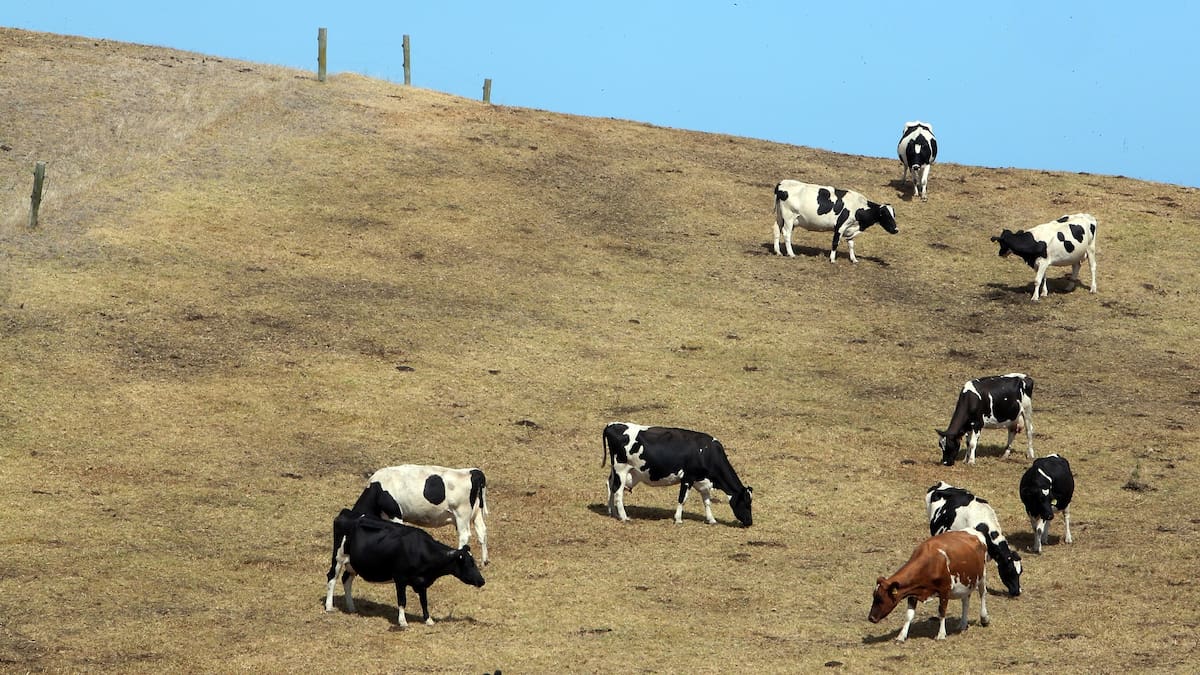
Now, with a powerful El Niño developing, Sunckell is taking precautions.
Environment Canterbury councillor and farmer John Sunckell.
Earth Sciences New Zealand says very strong El Niño conditions are already established and could strengthen further, potentially becoming one of the strongest events on record.
The weather pattern typically brings stronger westerly winds, increasing the likelihood of warm, dry conditions in eastern parts of the country.
Sunckell said Canterbury farmers were relatively well placed after a reasonable spring, with plenty of feed available.
However, he warned the greatest danger would come if dry conditions extended into next winter and spring, depleting feed reserves and reducing river and groundwater levels.
He was already conserving more supplementary feed than usual and considering options including drying off cows earlier or reducing stock numbers if conditions deteriorated.
“Crossing your fingers and hoping probably isn’t the best way forward,” he said.
Fellow Environment Canterbury councillor Claire McKay, who previously farmed in North Canterbury, recalled the devastating 2014-16 dry period, which placed immense pressure on rural families.
Environment Canterbury councillor Claire McKay.
Farmers had already endured a dry spring and summer in 2014, meaning many entered the following drought period with depleted feed reserves and stretched finances.
Low farm returns compounded the problem as farmers borrowed money to keep their animals fed.
“You didn’t have the income coming in, had to borrow money, and then you’ve got interest rates to pay,” McKay said.
Canterbury was in a comparatively good position heading into this summer, but that was no reason for complacency.
“We’ve still got quite a ways to go with summer heat.”
She urged farmers to consider securing supplementary feed early and to speak to their banks and advisers before conditions became difficult.
Environment Canterbury has warned a dry, windy summer could also bring water shortages, increased wildfire danger, low river flows and toxic algal blooms.
Eastern areas, particularly Banks Peninsula, North Canterbury and the Canterbury Plains, are considered more vulnerable to prolonged dry conditions.
However, the effects of El Niño are not uniform, and the latest seasonal outlook indicates coastal Canterbury rainfall is equally likely to be near normal or below normal between October and December.
McKay urged people to report algal blooms and fish strandings in waterways, while warning that alpine-fed rivers could rise rapidly after rain in the mountains, even when conditions downstream were fine.
Sunckell said people needed to recognise that the potential consequences of a prolonged drought extended well beyond farming.
“My final thought is for the whole community to be aware, whether you’re out tramping or out for a barbecue or taking the kids and the dog for a walk.
“It impacts all of us along the way.”
Ben Tomsett is a journalist based in Dunedin. He joined the Herald in 2023.