
A utilities chief executive warned that their growing support on the left meant a Labour-led government could be forced to cede considerable power to them.
An investment banker took a more pragmatic view, arguing that despite policies they considered unrealistic, the Greens could still be a credible partner for Labour.
Swarbrick leads, but the bar is low
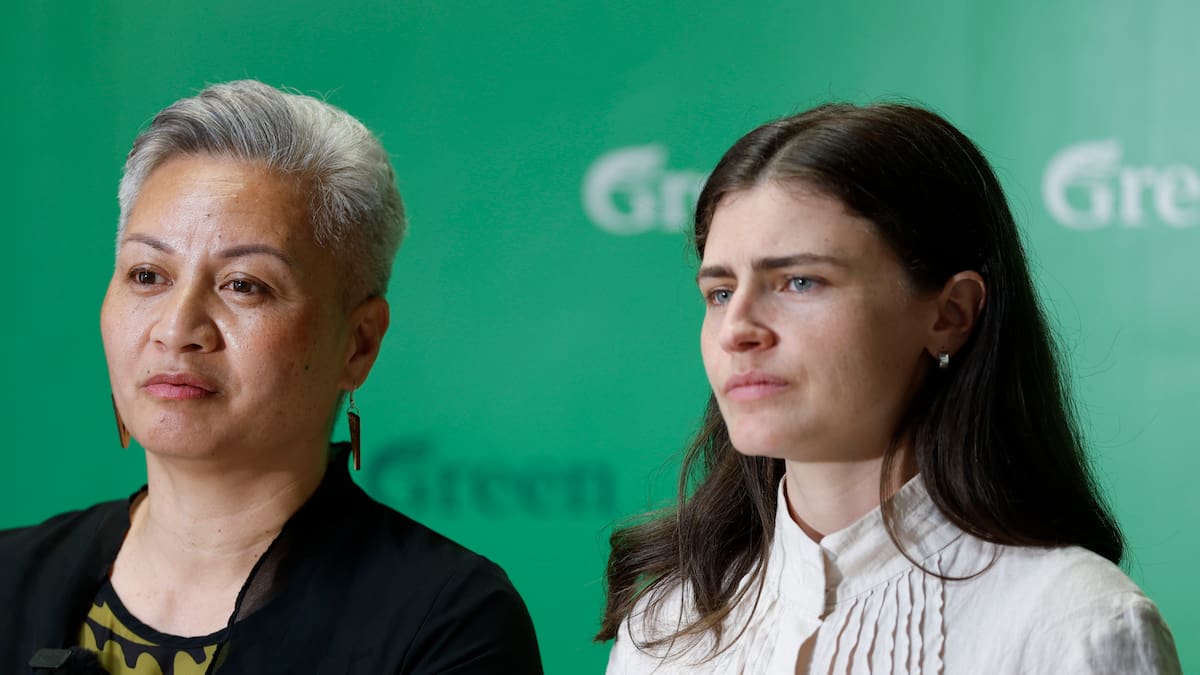
Swarbrick emerges as the stronger of the two co-leaders in the survey’s assessment of opposition leadership performance over the past three years.
On a scale of one to five, she scored a weighted average of 2.18, ahead of Davidson on 1.69.
One local government CEO said Swarbrick was underestimated. After hearing her speak at a business breakfast, the executive and other attendees were surprised by her grasp of issues, openness and effectiveness in debate.
Davidson faces a parallel challenge: maintaining the party’s focus on inequality and social justice while helping establish its credentials on economic management and coalition discipline.
Wealth tax and state ownership alarm business
The Greens’ economic policies are the biggest obstacle to winning boardroom confidence.
Their proposed 2.5% annual tax on net wealth above $10 million was singled out by the New Zealand Initiative’s chairman, Roger Partridge, who questioned whether the revenue could be collected reliably, citing risks from capital flight, tax avoidance and the difficulty of valuing assets.
Other business leaders warned that the party’s wider economic programme could undermine investment and weaken the private sector on which public services depend.
The proposed government-owned supermarket chain, KiwiMart, also drew criticism, with respondents questioning whether state ownership would deliver cheaper groceries.
On the survey’s five-point scale, zero-interest loans for household solar installations scored a weighted average of 2.65, while protecting at least 30% of New Zealand’s marine area scored 2.82.
A proposed 5% withholding tax on profits large technology companies send offshore scored 2.40.
Social policies fared no better. Restoring the school lunch programme and expanding it to another 400 schools scored 1.99, while legislating for a right to healthy food and creating a national food strategy scored just 1.94.
Climate identity at risk
The Greens are also facing criticism from executives who believe the party has lost sight of its environmental foundations.
A technology-sector respondent complained that there was too much emphasis on social issues and not enough on climate policy. Others questioned whether the party had moved too far from its traditional brand.
For Swarbrick, who holds the finance and climate change portfolios, rebuilding confidence will require demonstrating that environmental ambition can be reconciled with economic growth, investment and export competitiveness.
The Greens have experience supporting Labour-led governments, but the survey suggests that history has not dispelled business concerns.
If Labour needs Green support after the election, the party could wield significant influence regardless of its standing in the boardroom.