
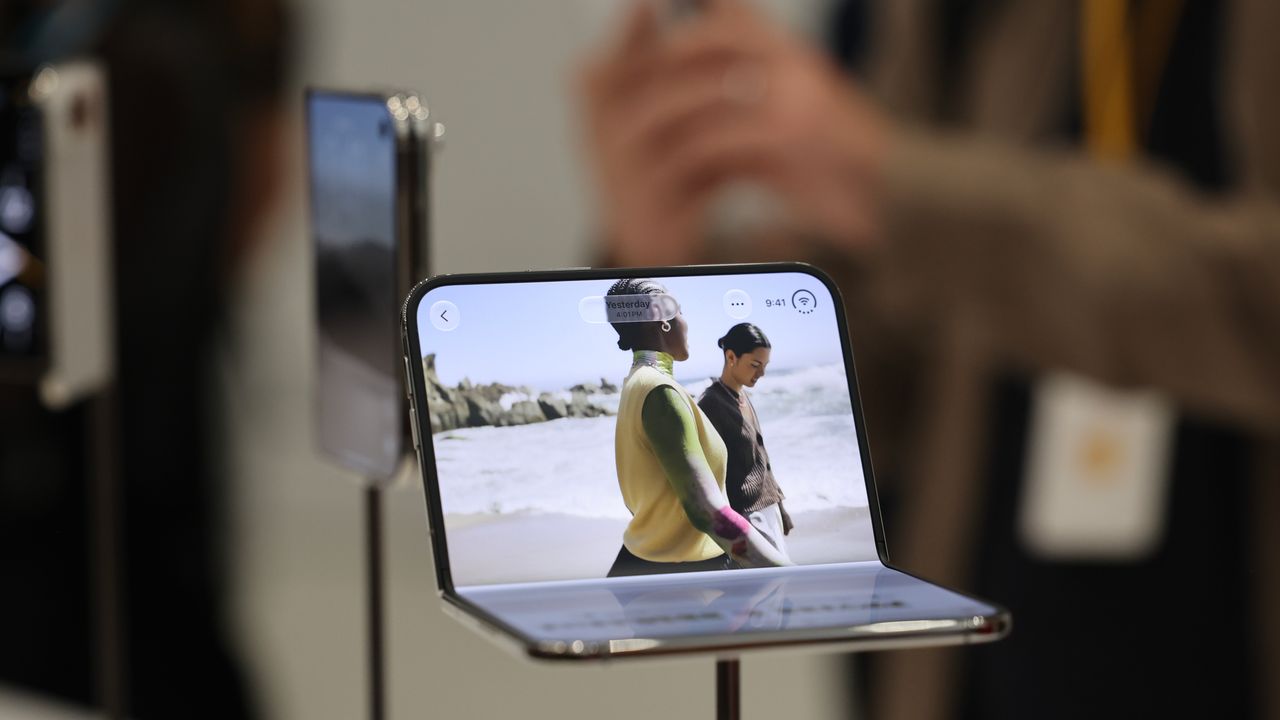
Apple’s first foldable iPhone goes on sale on Friday, 23 October, but how much you’ll pay depends considerably on where you buy it. The iPhone Duo starts at approximately $2,314 in the UAE for the 256GB model, compared with $1,999 in the US and $4,689 in Turkey. With a gap that large, could buying the iPhone overseas be worth factoring into your next trip?
Comparing prices across countries takes more than a quick currency conversion. Local taxes, card conversion changes, tourist tax refunds and customs rules can all influence the final bill. The US starting price, for example, excludes sales tax, which is added at checkout where applicable.
Using data from Open The Rank, we compared prices for the 256GB iPhone Duo across 23 international markets, with approximate US dollar equivalents shown below. The figures put the US at the cheapest end of the comparison and Turkey at the most expensive, while the UAE ranks fourth, behind Canada and Hong Kong.
How much the iPhone Duo costs globallyUnited States – $1,999Canada – $2,216Hong Kong – $2,230UAE – $2,314Japan – $2,319Malaysia – $2,329Thailand – $2,379China – $2,382Switzerland – $2,394Singapore – $2,426South Korea – $2,427Australia – $2,433Germany – $2,607Netherlands – $2,652Spain – $2,652France – $2,652United Kingdom – $2,652Mexico – $2,655Italy – $2,687Sweden – $2,698India – $3,124Brazil – $4,230Turkey – $4,689Why do prices differ so much between countries?
Taxes account for a substantial part of the difference, as the UAE and UK illustrate. Apple purchases are subject to five per cent VAT in the UAE, compared with 20 per cent in the UK. Using the dollar figures in our comparison, removing VAT brings the UAE price to approximately $2,204 and the UK price to $2,210. Their prices before VAT are therefore just $6 apart. Almost the entire $338 difference at checkout comes from the different tax rates.
How prices are displayed differs from country to country, too. The US starting price excludes applicable sales tax, which Apple calculates according to the delivery address or collection store. The advertised $1,999 is therefore not necessarily the final amount paid. Hong Kong has neither general sales tax nor VAT, so buyers face no equivalent consumption tax charge. This gives it a tax advantage, although it doesn’t account for every difference in Apple’s pricing.
Import duties also add another layer of complex calculations. Many countries receive fully assembled iPhones from overseas, but they do not all charge the same duties on them. India, for example, applies customs duty to imported smartphones, including special consumption tax and VAT. A published tax calculation estimates that these charges account for roughly half of the Duo’s local starting price, helping explain why it is considerably more expensive there.
Exchange rates also affect the comparison. A phone’s price in pounds, yen or lira can stay unchanged while its dollar equivalent rises or falls. The ranking is subject to change with fluctuating currency values. Taken together, these factors help explain why prices vary so widely, though only Apple can account for the full difference between markets.
A version of this article originally appeared on Condé Nast Traveller IN.