
Federated Farmers’ most recent confidence survey in September found one in four arable farmers were making a loss.
It’s this reason Dan Cottrell of Kiwi Quinoa is encouraging arable farmers to think about growing the dried seed crop to meet demand from overseas.
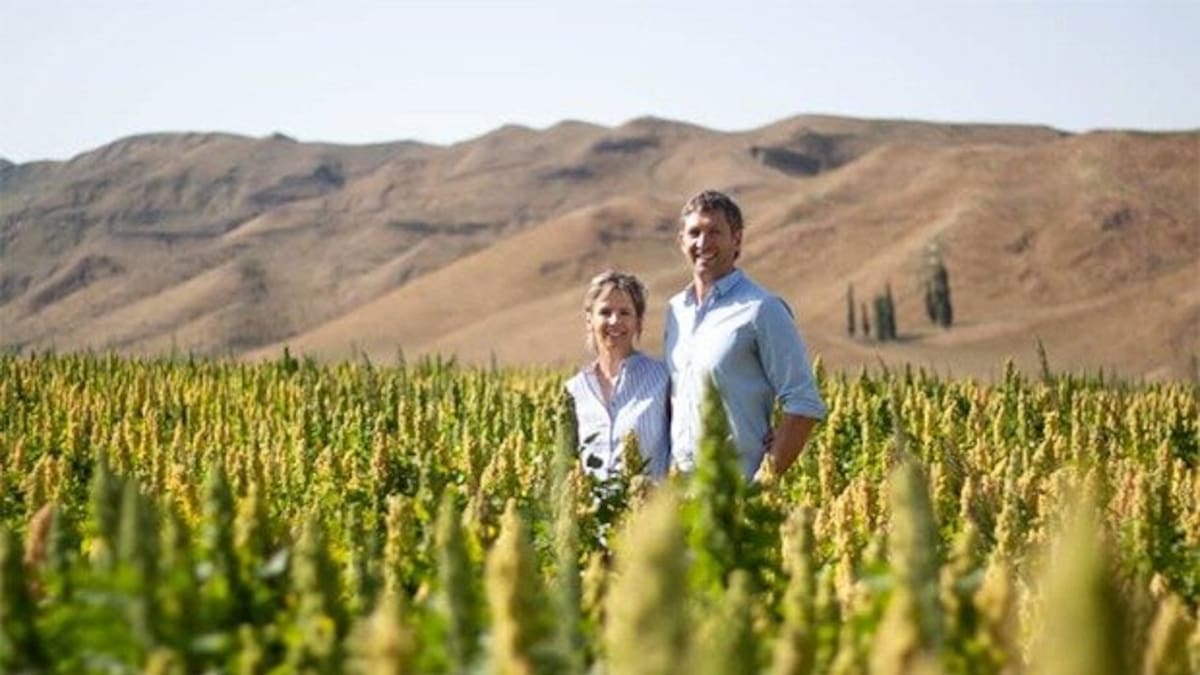
The sheep and beef farmer has been growing quinoa for over a decade near Taihape – expanding to 17 contract growers across the North and South Island after they ran out of room on his farm.
Kiwi Quinoa is the licensee partner growing Dutch quinoa, a saponin-free variant developed in the Netherlands by Wageningen University, for European growing companies.
It’s also secured an export contract with a partner in Canada and is looking for more growers to come on board.
Cottrell said it was helping overseas growers whose production and supply chains were under pressure.
Cottrell said there was also increased demand here, and he wanted to see more Kiwis eating quinoa too.
“Essentially we’re growing in their off season to supplement their production due to a variety of reasons – primarily increased demand for them and certainly climatic pressure and with the likes of what’s happening in Europe because they’ve had some really tough seasons.
“It’s not just one season, it’s two, three in a row, and 18 months of no rain and then flooding in the south of Spain.”
Cottrell said there was also increased demand here and he wanted to see more Kiwis eating quinoa too.
“It’s a very real new option,” he said.
“We’ve got long-term contracts and the demand is increasing.
“And look, I’m not going to sugarcoat it: it has been challenging within the quinoa industry for the last few years, but I think the demand is certainly taking off.”
For growers, he said New Zealand produces some of the highest yields in the world. It was a good opportunity for those impacted by the closures as it’s a “short rotation and low input” crop with a “healthy gross margin”.
Kiwi Quinoa is the licensee partner growing Dutch quinoa, a saponin-free variant developed in the Netherlands by Wageningen University, for European growing companies.
“Our average yield is three and a half tonne clean and … we have reached five tonne this last season.
“[It’s] low input, like very similar, or I would say lower fertiliser inputs than, for example, cereals, and there’s no sprays on the crop – so no sort of fungicides or herbicides or anything like that.”
Quinoa being harvested.
Cottrell said crops could be planted from now until late December with an April harvest; some growers had reported success with double cropping, planting after harvesting processed peas.
A field of quinoa.
He’s ideally looking for Canterbury growers, as they have a processing facility here, but was open to anyone and they also have a North Island processing facility.
“This crop … it’s got an exciting future, and we’ve got growth.
“The main thing is it grows really well in New Zealand.”
He encouraged growers to get in touch directly with any questions.