
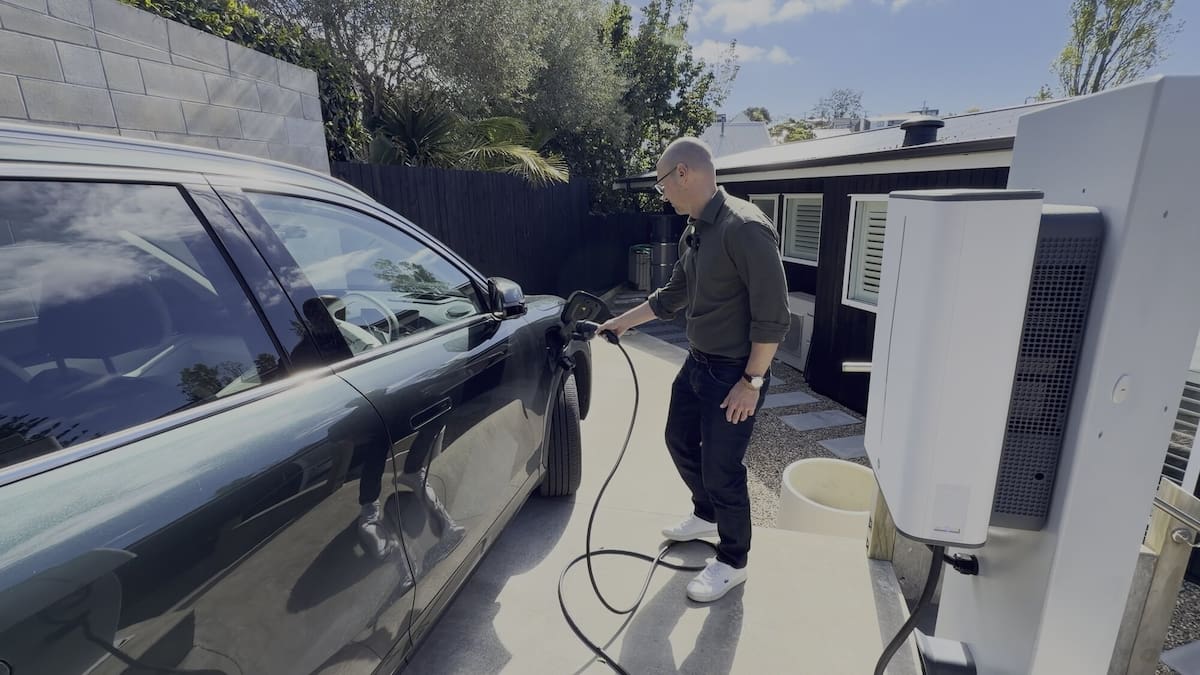
A $6000 StarCharge Halo bidirectional 7.4kW DC charger outside the Ryans’ home as part of the Genesis trial. The separate QEA trial in Queenstown has found installation costs $7000 to $8000 on top, but both costs are expected to lower dramatically if the technology goes mainstream. Photo / Chris Keall
For the first three months of their trial, the Ryans powered their home via a BYD Atto 3. They used the standard model, which comes with a 60kWh battery – enough capacity to run an average hoome for about 8 to 12 hours, or double that if you’re careful with power-hungry appliances. The Atto 3 Evo Premium comes with a 75kWh battery.
When will V2G go mainstream?
The StarCharge app lets you manually charge your EV, discharge power from your EV to your home, or automate the process. It also lets you see how much you’ve earned selling the power back to the grid. Photo / Chris Keall
Homeowner Carolyn Ryan said the V2G system was easy to use and the family didn’t notice any difference in electricity supply while they were drawing from an electric car’s battery.
During one three-hour period of a trial, the Ryans’ home used more than 16kWh of electricity, with less than 1kWh of that coming from the grid. Photo / Chris Keall
Beyond V2G: The Atto 3 is one of a number of EVs that support V2L (vehicle-to-load) charging today. That means, via an AC adapter, you can use your car to charge power tools, and e-scooter, or any 240v electrical device. Photo / Driven Car Guide