

Reading Time: 3 minutes

Ahead of November’s General Election, Farmers Weekly reporters hit the road to take the pulse of rural New Zealand. Follow their journey as they hear what matters most to rural communities on the Road to Election 2026.
Kawerau
Location – eastern Bay of Plenty
Population – 7680Industry – farming, forestry, engineering, geothermal energy
Council land area – 24sq km, the smallest council area in NZ
At just over 70 years old, Kawerau can claim to be New Zealand’s youngest town district, created on the back of the mighty Tasman pulp and paper mill.
Today the mill has closed, and times have been tough, but community leaders and businesses see a town re-inventing itself on its own terms.
It has them weaving a path between government-funding austerity and the natural assets of location, energy, and forestry that prompted the mill town’s genesis back in the 1950s.
Keen to work to set their district’s future on their terms, they are looking to central government this election to provide foundations of housing, education and health to underpin Kawerau’s renaissance.
Kawerau District Council mayor Faylene Tunui freely acknowledges work remains to be done to restore its economy to its healthy heydays.
“Tasman Mill was very much the main event back then, but there was little thought about when the mill’s gone, what is left?”
The Act of Parliament that created Tasman Mill bought a prosperous mill town to life.
However, it also left a legacy of land and water waste that turned the Tarawera River into the infamous “black drain”, often smelled before it was seen.
Meantime the bustling population of 9000 in the 1980s dwindled to a trough of 6000 in 2013.
Since then, however, it has enjoyed a healthy recovery, with a large young Māori family population alongside a growing population of older retirees.
“We have been trying to create a plan for the district on the run really, while dealing with the legacy left behind,” Tunui said.
This has meant trying to encourage more sustainable and steady businesses in the town.
She points to the commissioning this year of the Eastland Generation and Ngāti Tūwharetoa geothermal power station project, generating 49mW, sufficient to supply 50,000 homes.
The town’s largest remaining paper mill, employing over 200 people, is owned by Swedish company Essity.
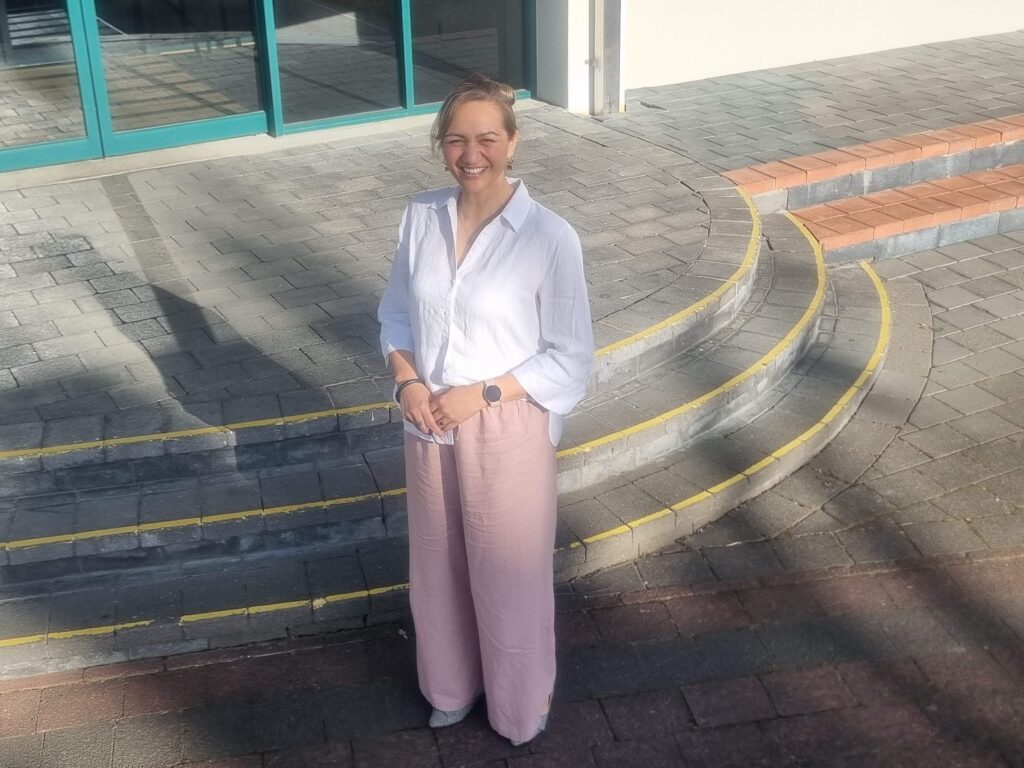 After having its creation dictated by a top-down Act of Parliament, Kawerau’s mayor Faylene Tunui says central government’s role should focus on the basics of housing and affordable food, leaving communities like Kawerau to set their growth pathway. Photo: Richard Rennie
Last year Essity invested $20 million into its tissue plant to run it on geothermal energy and today is proudly claimed to be the world’s first tissue processor run wholly on geothermal steam production.
In looking to reinvent itself, Tunui admits Kawerau has made a mistake common to others facing decline.
“Leadership was trying to replace the mill with new business options. But those businesses already here felt ignored. We then opted to play a retention game with those already here, and doing well.”
That includes a raft of heavy engineering firms that evolved in the mill’s shadow and have since diversified across multiple processing sectors.
With its good rail head, easy road access, geothermal energy and this base of engineering heritage, the town’s appeal to new entrants is well founded.
Forestry biofuel company Foresta is a new arrival. Foresta’s business development manager, Dean Ormrod, speaks highly of a council keen to help the company establish in the new Pūtauaki Trust industrial zone.
After years of central government pushing local councils on plans and legislation, Tunui said Kawerau has developed its own plan for its future, highlighting the parts most attractive to the government of the day.
Looking to the next general election, Tunui said there is underlying resentment at her tiny council being forced to be absorbed into a wider Eastern Bay of Plenty unitary authority.
“I have already said publicly that we are like a reluctant bridesmaid.”
Also, over the next three years she would also like to see “real basic stuff” taken care of, including more housing and job training linked to specific industries.
“Back in the day you’d be awarded a home here through a ballot.
“Today people are waking up, wondering how they will pay the $700 a week rent, let alone feed their kids.
“The old Tasman workers would not be able to believe its such a tough flex in 2026 to have a home you can afford.”