
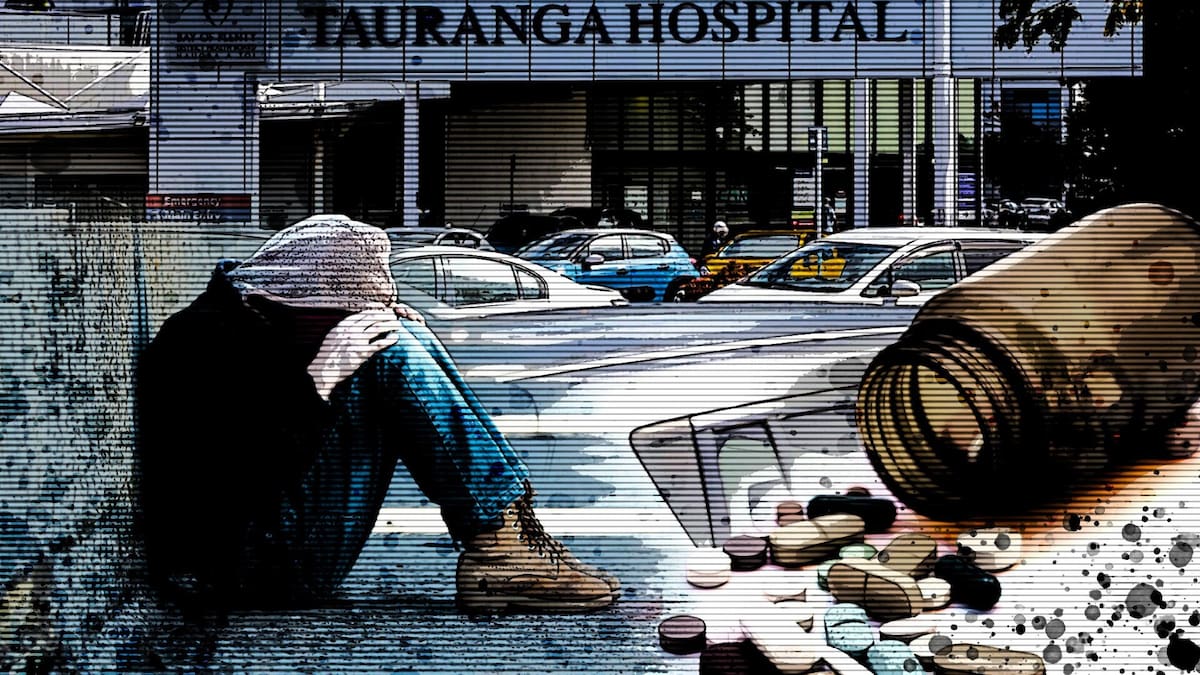
The therapist said her client, who was disruptive after being admitted to the hospital’s mental health inpatient unit last month, was subsequently “put on the footpath” outside the hospital.
“[My client] then goes to [their] vehicle in the hospital carpark and takes an overdose of … medication, which then led to [my client] becoming delusional”.
The therapist said neither she nor the patient’s family were notified of the decision to discharge the patient.
The patient was then trespassed by security from the hospital grounds for “loitering” according to a trespass notice provided to the Herald with the patient’s consent.
“It beggars belief,” the therapist said.
A complaint has been made with the Health and Disability Commissioner after a patient experiencing mental distress was discharged from Tauranga Hospital. Photo / Jason Oxenham.
The Herald provided Health New Zealand Te Whatu Ora with a privacy waiver from the patient so the agency could answer questions about the events and respond to allegations of substandard care.
The Herald’s questions included whether anyone known to the patient was informed of the discharge decision, why the patient was trespassed or if any specialist mental health staff intervened when the patient was acting erratically in the carpark.
Regional mental health and addiction lead Vicki Aitken told the Herald all decisions about the patient’s care were based on the clinical information and advice that was available at the time.
“We acknowledge the distress this person has experienced and are sorry they did not feel they received the support they needed at the time,” she said.
Aitken said it was recognised that views about a patient’s circumstances and care may differ between health professionals.
Patients experiencing mental distress can be required to remain at hospital and be compelled to receive treatment under the Mental Health Act if they present a serious danger to themselves or others.
The therapist said such restrictions were not put in place which was her primary concern.
“I think they were negligent … to put [my client] out on the footpath in that state, in that level of distress. Why was that okay and acceptable?”
Medical notes provided to the Herald with the patient’s consent show the patient wanted to be “locked up” for their own safety and that of others.
They show the patient was disruptive once in a room on the mental health ward and requested to be put in a seclusion room, but the patient was told that wasn’t an option.
Security was called when the patient started to kick items in their room and it was at that point that they were discharged, the notes said.
The patient’s therapist says her client overdosed on medication in the hospital carpark after being discharged. Photo / Kelly O’Hara
Health NZ has not said why the patient was not ordered to remain at the hospital and receive treatment.
The national director of mental health and addiction Phil Grady told the Herald using the act was a “last resort” and a person must have an abnormal state of mind that endangers themselves or others.
‘I need help’: Phone recording between patient and crisis worker
A recording of a phone conversation between the patient and a crisis worker has been provided to the Herald with the patient’s consent. Image / NZME
A day after overdosing on medication, the patient pleaded with a mental health crisis worker for help, according to a recording of a telephone conversation provided to the Herald.
The crisis worker was part of a “co-response” team which pairs clinicians with frontline police to assist with dangerous situations.
In June, when the Government expanded the co-response model, Health NZ said it would “help people experiencing mental distress receive timely, wraparound support”.
Audio of a conversation between the patient and the co-response staff member has been shared with the Herald with the patient’s consent.
In the recording, the patient pleads to be readmitted to hospital or to be locked up in a police cell for their own safety.
The patient is also recorded as explicitly warning the mental health worker that they were a risk to themselves.
“I am in a place where I am, or could, harm myself,” the patient told the crisis worker during the conversation.
However, the request for intervention was declined.
The patient went on to say they didn’t understand why they couldn’t be put somewhere safe before they became upset and hung up.
Despite the patient warning they were a risk to themselves, the mental health worker’s summary notes of the phone conversation stated that the patient showed “no indication” they were at “imminent risk” of harming themself.
The patient’s therapist told the Herald it was concerning the worker made notes which in her view were completely at odds with the conversation, and that it raised questions about the staff member’s ability to competently assess risk.
“It’s pretty appalling when you hear the recording.”
It was after this phone call that the therapist said her client made a second attempt to take their own life.
The Herald has seen photographs of injuries sustained by the patient after this incident which were shared with the Herald with the consent of the patient.
“The reason my client is willing to share this story is in the hope something will change so no one else has to go through what they went through,” the patient’s therapist said.
Health NZ would not say why the recording of the conversation appeared to differ from notes made by the worker.
Mental Health Minister Matt Doocey says anyone experiencing mental distress should receive help if it’s requested.
Mental Health Minister Matt Doocey said anyone seeking mental health and addiction support must receive it.
“I don’t think any New Zealander should be left in limbo and anything falling short of that would not meet my expectations.”
Doocey accepted that delivering better crisis response was critical and said that was a key Government focus.
He said the new Mental Health Bill will strengthen the involvement of family and support people in the care and planning of those experiencing distress.
Formal complaint laid over patient care
Tauranga Hospital on Cameron Rd. Photo / Kelly O’Hara
The patient and their therapist complained to Health NZ about the sequence of events, highlighting what they believed was substandard care.
In letters responding to their concerns, provided to the Herald, Health NZ said its review did not identify evidence of concerns or risks being ignored.
It accepted there were varying views on the patient’s level of risk, and the need for compulsory treatment.
The response said clinicians “consistently recognised [the patient’s] elevated suicide risk” but assessments frequently recorded a denial of immediate intent to harm which was complicated by intoxication and substance abuse.
Health NZ’s letter said “repeated” assessments, engagement and planning did occur with the patient.
The patient’s therapist does not accept such explanations and said months of distress and warnings of harm – documented by clinicians – preceded admission to hospital.
She believed Health NZ made “serious errors” which could have resulted in the death of her client.
The therapist reiterated that her client should have been compelled to stay at the hospital and said it felt like patients have to be in extreme danger before action is taken.
“If we can’t listen and take appropriate action at that time [when a patient is known to be at risk], we are failing citizens of New Zealand”.
She said while it was not unusual for people to report difficulty getting crisis teams to respond, she had “never in her career” seen a case like what her client experienced.
Given Health NZ’s denial of mistakes being made, she’s lodged a complaint with the Health and Disability Commissioner.
Aitken said health authorities continue to take an active interest in the wellbeing of the patient and remain in regular contact with them.
She urged anyone experiencing mental health distress or crisis to contact their GP, telehealth services such as Whakarongorau 1737, or to call their local mental health crisis services.
Michael Morrah is a senior investigative reporter/team leader at the Herald. He won News Journalist of the Year at the 2025 Voyager Media Awards and has twice been named reporter of the year at the NZ Television Awards. He has been a broadcast journalist for 20 years and joined the Herald’s video team in July 2024.