
The next comprehensive labour-market figures arrive on November 4, just three days before the election. Consensus forecasts are for unemployment to edge down to 5.5%. That would be an improvement, but only a marginal one, leaving the jobless rate around its highest level in a decade.
The wider economy isn’t exactly running hot either. Gross domestic product (GDP) grew just 0.2% in the June quarter, although that figure is now somewhat backward-looking, with September-quarter GDP not due until December 17. Household consumption increased only 0.1%, while businesses have become more optimistic about the future, but their actual activity remains subdued.
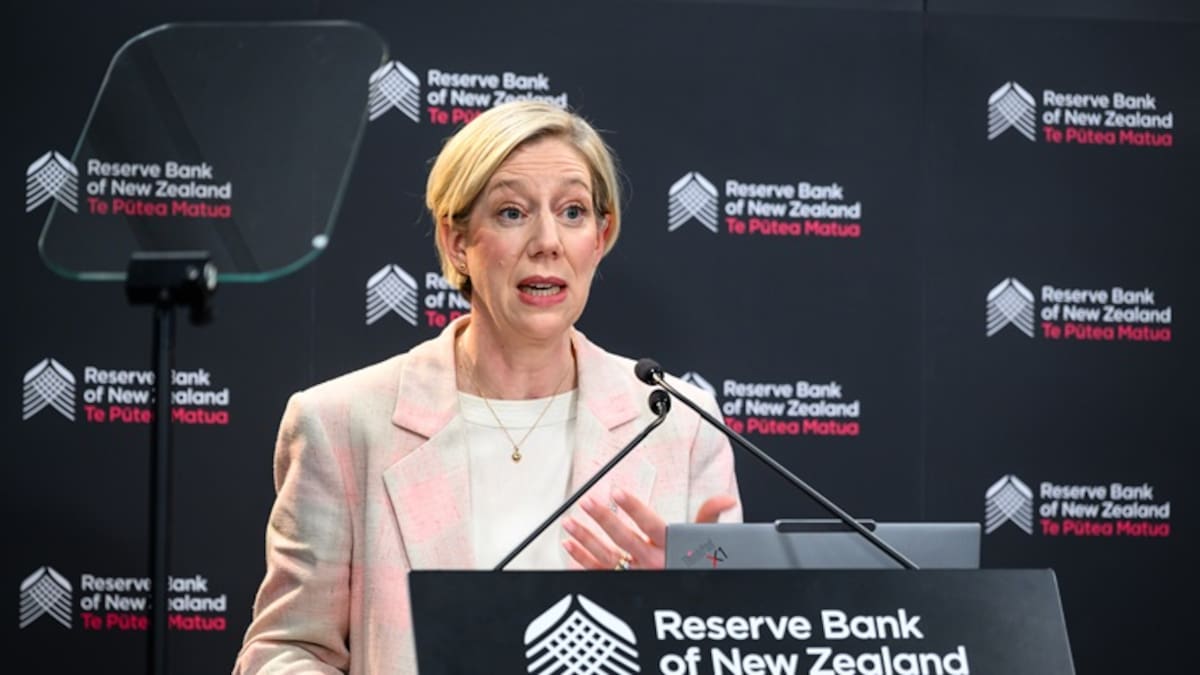
Which raises an interesting question. If we expect the Reserve Bank to care deeply about inflation, should it be required to care about your job as well?
Inflation versus employment
Labour has promised to restore the Reserve Bank’s dual mandate if it forms the next Government, requiring monetary policy to support maximum sustainable employment alongside price stability. New Zealand First leader Winston Peters has also expressed support for returning employment to the mandate.
We’ve been here before. The Labour-led Government introduced the dual mandate in 2018, before the employment objective was removed in December 2023 by the incoming National-led coalition. Interestingly, New Zealand First supported the original dual mandate but later agreed to its removal as part of the current coalition, and Peters has since indicated he would be open to revisiting the issue.
That means the election has brought an important monetary policy question back into focus: should the Reserve Bank be formally tasked with considering employment alongside inflation?
This might sound like an obscure debate about the plumbing of monetary policy, but it isn’t. Interest rates don’t bring inflation down by magic. Raising the OCR makes mortgages and borrowing more expensive. Households spend less, businesses face higher financing costs and investment can slow. Eventually, weaker demand makes it harder for businesses to keep increasing prices.
There can be another consequence. Businesses hire fewer people, cut hours or shed jobs. Employment isn’t separate from the fight against inflation. It can be one of the ways monetary policy works.
So should the people setting interest rates be explicitly required to consider it?
Conflicting signals
This question is particularly relevant today. Inflation is too high, unemployment is around a decade high and the economy is growing only slowly.
The latest NZIER Quarterly Survey of Business Opinion illustrates the contradiction. A net 40% of businesses expected general economic conditions to improve, up from 14% three months earlier, but firms’ own reported activity was still a net negative 1%.
Weak demand also appears to be limiting firms’ ability to pass higher costs on to customers. The proportion of businesses reporting higher selling prices fell to a net 26% in the September quarter from 41% three months earlier, while pricing intentions also eased.
That’s important for the Reserve Bank. The concern with an oil shock isn’t simply that filling the car becomes more expensive. It’s that the initial price increase spreads through the economy as businesses pass higher fuel and transport costs on to their customers.
So far, there is little evidence that higher energy costs have caused businesses to materially lift their longer-term price-setting plans. That could change if oil prices remain elevated, but for now it argues against the idea that a significant second-round inflation problem is already underway.
Inflation itself is similarly complicated. The fall from 4.1% to 3.7% was not only an improvement, it was better than the Reserve Bank expected. But dig beneath that headline and the news was less reassuring. Closely watched measures of core inflation have moved higher and are now around, or slightly above, the top of the Reserve Bank’s target range.
Petrol prices were still 19.1% higher than a year earlier and 85.5% of the Consumers Price Index (CPI) basket increased in price over the year. There are also reasons to think headline inflation will move higher again, largely because of renewed increases in fuel prices.
The New Zealand dollar adds another complication. A weaker dollar makes imported fuel, machinery and consumer goods more expensive. If that weakness persists, it could add to inflation, even while domestic demand and employment remain soft.
The Reserve Bank isn’t setting interest rates to defend the currency. But the exchange rate affects its inflation outlook, meaning a weaker dollar can make its job harder at precisely the time the domestic economy might argue for caution.
Nor is the Reserve Bank making its decision in isolation. Less than 24 hours later, the US Federal Reserve concludes its meeting. The European Central Bank follows on Thursday, the Bank of Japan on Friday, while next week brings decisions from the Reserve Bank of Australia on Tuesday and the Bank of England on Thursday.
New Zealand doesn’t have to follow (or anticipate) what other central banks do, but relative interest rates influence currencies and financial markets, so overseas decisions can feed back into the Reserve Bank’s inflation problem.
There is another reason the US Federal Reserve is relevant. The US central bank itself operates with statutory objectives that include maximum employment and stable prices. But neither is the US model universal. Central-bank mandates around the world vary considerably, particularly in the weight they give to employment alongside price stability.
Would a dual mandate actually change anything?
Perhaps less than you might imagine.
Restoring the dual mandate might make little difference during normal demand-driven economic cycles. If an economy is overheating, inflation is rising and unemployment is unsustainably low, higher interest rates can address both problems.
The real difficulty comes with a supply shock, when the two objectives can start pulling in opposite directions. That’s particularly relevant to New Zealand today.
Higher global oil prices and a weaker New Zealand dollar are adding to inflation pressures, but neither is the result of an overheating domestic labour market.
Raising the OCR won’t produce another barrel of oil or directly reverse imported inflation. But the Reserve Bank still needs to prevent higher fuel and import costs spreading into wages and other prices and turning a temporary inflation shock into something more persistent.
That’s the dilemma. Higher interest rates can help stop a supply shock becoming an entrenched inflation problem, but they can also put additional pressure on an already weak economy and labour market.
This is precisely where the mandate could matter, potentially allowing policymakers to accept a slightly slower return of inflation towards the target when labour market conditions are weak.
Doesn’t the Reserve Bank care about jobs already?
Of course it does. Removing employment from the Reserve Bank’s statutory mandate doesn’t mean the Monetary Policy Committee stopped considering the labour market or the wider economy. When the employment objective was removed, Treasury advised that the change was unlikely to materially alter monetary policy decisions. One potential benefit was instead the signal it sent about the Reserve Bank’s commitment to fighting inflation, because inflation expectations can themselves influence inflation.
That gets to the heart of the debate. It’s not really about whether the Reserve Bank should notice unemployment. It already does. The question is whether employment should be a formal objective alongside price stability, particularly at times when the two point in different directions.
Critics of a dual mandate can point to New Zealand’s recent experience. We had one when inflation subsequently surged to 7.3%. But timing isn’t the same as causation. That inflation surge occurred against the extraordinary backdrop of Covid, global supply disruptions and extremely stimulatory economic policy. There was no evidence when the employment objective was removed that the dual mandate itself had caused the inflation surge.
At the same time, putting employment back into the mandate isn’t cost-free. Suppose the Reserve Bank believed it could return inflation to 2% more quickly by keeping interest rates higher, but doing so would cause significantly more people to lose their jobs. How much additional unemployment would be an acceptable price for getting inflation back to target six months earlier?
There isn’t an objectively correct answer. Allow inflation to remain above target for longer and households lose purchasing power, while inflation expectations could become harder to contain. A weaker New Zealand dollar could compound the problem by making imports more expensive. Fight inflation more aggressively and higher interest rates put additional pressure on borrowers and businesses, potentially costing jobs.
There isn’t a version where everybody wins.
Why should investors care?
For investors, this isn’t an abstract debate. Interest rates underpin the value of virtually every financial asset. Higher rates make cash and term deposits more attractive, affect bond prices and borrowing costs, influence property and change how much investors are prepared to pay for company earnings.
Inflation matters even more fundamentally. If an investment earns 5% while inflation is 2%, your purchasing power has increased by about 3% before tax. Earn 5% while inflation is also 5% and you have not moved forward in real terms.
The currency matters too. For someone holding unhedged overseas investments, a weaker New Zealand dollar increases those investments’ value in New Zealand dollars, all else being equal. A strengthening New Zealand dollar does the opposite.
But investors also depend on businesses earning profits. Weak consumer demand, expensive borrowing and rising unemployment aren’t necessarily an attractive environment for corporate earnings. That leaves investors with a stake on both sides: we need the Reserve Bank to protect the purchasing power of our money, but we also depend on an economy in which people have jobs, consumers spend and businesses invest.
There will be plenty of discussion this afternoon about whether the OCR rises 0.25 percentage points and where interest rates go next. But with the election approaching, there’s a more fundamental question worth considering.
When inflation is too high but jobs are already under pressure, should the Reserve Bank be formally required to care about both?
The answer could matter to our mortgages, investments, currency and wider economy for considerably longer than today’s interest-rate decision.
Generate is a New Zealand-owned KiwiSaver and Managed Fund provider managing over $10 billion on behalf of more than 200,000 New Zealanders.
This article is intended for general information only and should not be considered financial advice. The views expressed are those of the author. All investments carry risk and past performance is not indicative of future results.
To see Generate’s Financial Advice Provider Disclosure Statement or Product Disclosure Statement, go to www.generatewealth.co.nz/advertising-disclosures/. The issuer is Generate Investment Management Limited.