
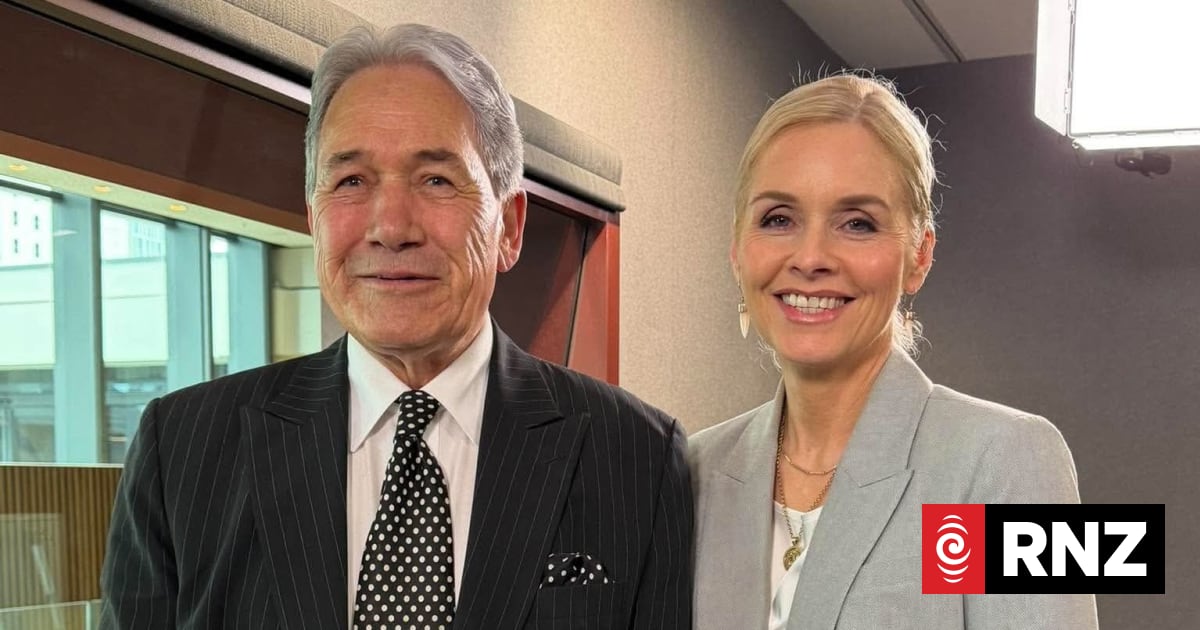
In a wide-ranging interview with Mata with Mihingarangi, the New Zealand First leader described the endorsement as a “statement of respect”.
Asked what was separatist about Te Aka Whaiora, the now-defunct Māori Health Authority established by the previous government to address disparities between Māori and non-Māori health outcomes, Peters responded, “because your plan does not close the gaps”.
He continued: “It just has a whole lot of elitist Māori at the trough in which the mass Māori, the majority of Māori in whose name they make these demands, get absolutely nothing”.
He pointed to funding allocated to the Waipareira Trust and an investigation into Manurewa Marae as examples of what he called “electoral corruption”.
Peters also declared that the Treaty of Waitangi had become the “trough of Waitangi”.
Challenged on whether needs-based funding had succeeded in closing the gaps between Māori and non-Māori in health, education and justice, Peters insisted it had.
On education, he argued that improving Māori achievement began with getting children to attend school but rejected the suggestion that poverty and a lack of transport were contributing factors in truancy.
However, when asked whether funding for the Māori wardens and the Māori Women’s Welfare League was itself race-based, Peters argued it was needs-based.
He said the work of Māori wardens was a matter of commonsense, not separatism, and that a Māori warden telling a young person, “look son, I don’t think that’s the right thing to do”, had a better chance of success than a police officer delivering the same message.
In a quick-fire round, Peters chose Whananaki over Whirinaki and crayfish over oysters. He named the late Labour MP Kerry Burke, who served in Parliament from 1972 to 1990, as the best Speaker of the House.
He also told Mata with Mihingarangi that he would still refuse a knighthood, did not support blanket pay equity for women’s sport, and maintained that his iwi, Ngāti Wai, had ceded sovereignty.