
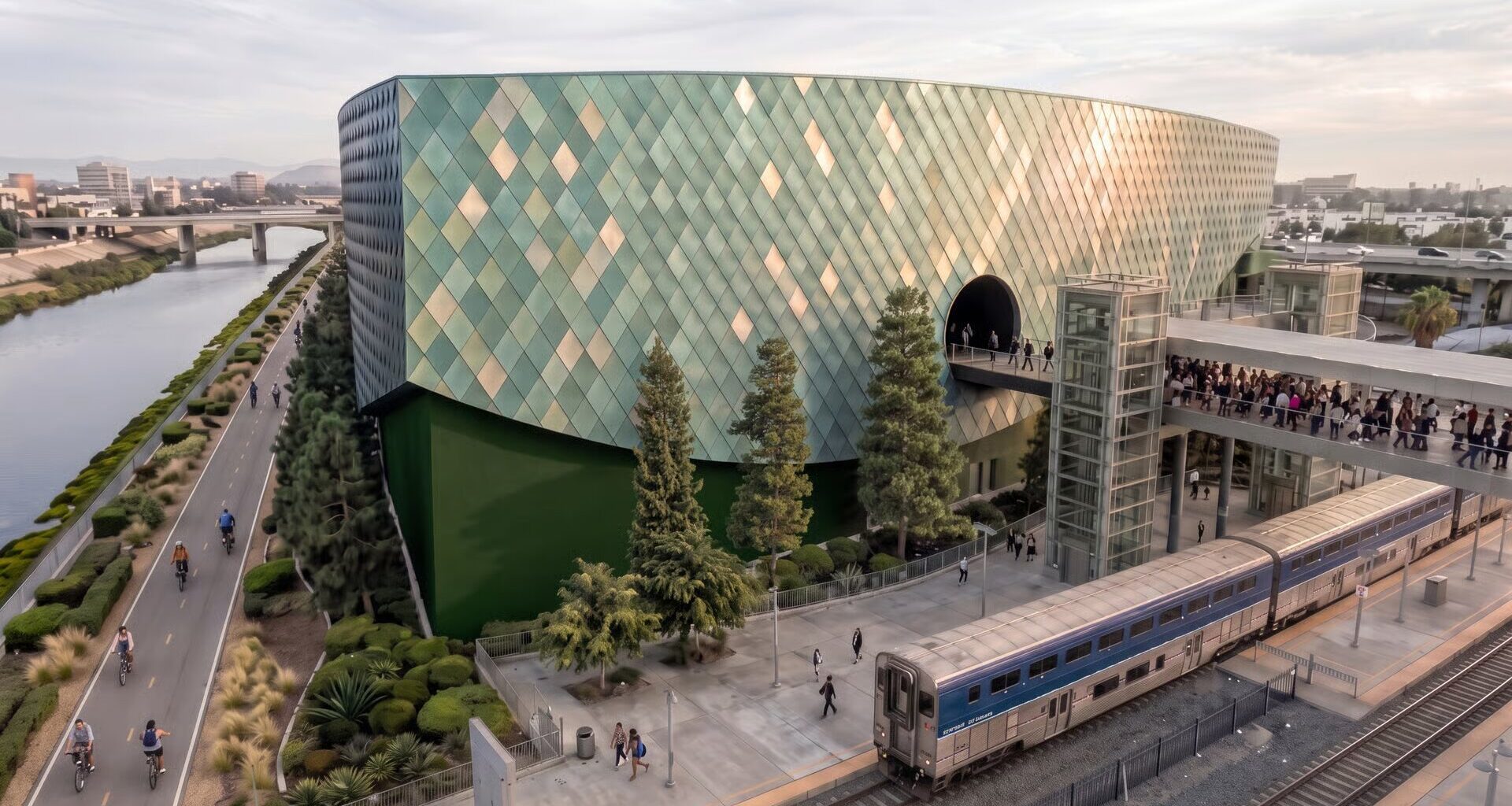
A new museum by teamLab, an immersive art collective of “ultra-technologists” with a global footprint, announced Thursday, Oct. 29, at Anaheim’s OCVibe will be the group’s first permanent presence in the United States.
The museum will add another genre of attraction to the growing multi-billion-dollar entertainment and residential district under development around the Honda Center, where there are already concert venues and culinary concepts under construction next to the arena.
The Tokyo-based art collective teamLab was founded in 2001. It designs large-scale and tech-driven immersive digital exhibitions worldwide.
The collective’s teamLab Planets museum in Tokyo, where visitors take off their shoes to wade through mirrored rooms and shallow water, holds the Guinness World Record for the most visited museum operated by a single art group, drawing 2.5 million visitors between April 2023 and March 2024. The museum opened in 2018.
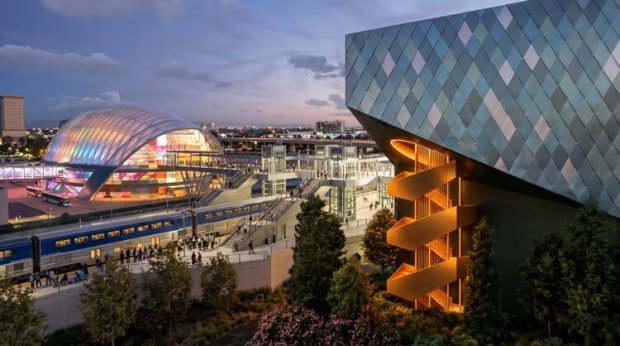 Renderings show a new teamLab museum in Anaheim’s OCVibe district that will be the international art collective’s first permanent location in the United States. TeamLab and local leaders are plotting for a 2030 opening. (Courtesy of teamLab)
“It is with great joy that we announce the opening of teamLab’s first major museum in North America, located at OCVIBE in Anaheim,” teamLab Founder Toshiyuki Inoko said in a Thursday statement.
“For teamLab, through art, we seek to explore what perception is and what existence is. The artworks change with the presence of people, making them an integral part of the art itself,” Inoko said. “People immerse themselves with their entire bodies, transcending the boundaries between themselves, the artworks, and the world around them, becoming part of a borderless continuity.”
The yet-to-be-named museum in Anaheim could open as soon as 2030, according to the press release.
Anaheim Ducks owner and philanthropist Henry Samueli — whose company is behind the $5 billion OCVibe development — announced the museum to a crowd of several hundred, including local leaders and teamLab executives, who flew in from Japan, on Thursday.
“Arts and culture make a real significant impact on the community. So we thought about how to do that,” he said, delivering an anecdote about a family trip to Japan, where they visited a teamLab experience.
“We were blown away. We’ve never seen anything like it anywhere,” he said. “The art engulfs you and surrounds you. It’s hard to describe it in words.”
Officials estimate around 5,000 to 7,000 people a day would visit Anaheim’s museum when it opens.
It will occupy an approximately 110,000-square-foot lot to the south of the ARTIC station, space that’s currently being used as parking. The train station is known for its 120-foot-tall glass entrance, pillow-like arched shell and colorful nighttime lighting.
“If we really see kind of the idea of ARTIC as this kind of very cutting-edge, modern transportation center, then building this museum connected by a bridge to ARTIC really kind of fulfills a vision that there has been,” city spokesperson Mike Lyster said. “And so now imagine people will go to ARTIC, perhaps arrive at night with the ceiling lit up in vibrant colors.”
The teamLab museum continues what the developers of OCVibe said they want to create.
“From the outset, our vision for OCVibe has been to create more than a collection of buildings and venues. We’re building a connected, vibrant district where architecture, public spaces, art and entertainment come together to create an experience that is greater than the sum of its parts,” OCVibe Executive Director of Development Dan Young said.
“Bringing teamLab to OCVIBE reflects the importance we’ve placed on integrating arts and culture into the district’s master plan,” he said. “It adds an entirely new dimension to what people can experience here in Anaheim, while helping establish OCVibe as a cultural destination for California and the U.S.”