
That is the European Union Aviation Safety Agency (EASA).
It may seem odd for EASA to be involved in a product for a New Zealand airline that does not fly to Europe.
But EASA approval would likely speed up any future approvals needed.
If the airline wanted to one day license Skynest to other carriers, as it has done with Skycouch for United Airlines, the EASA approval would make such a programme easier.
Skynest requires multiple approvals and each certification has multiple parts.
EASA and New Zealand’s Civil Aviation Authority (CAA) have a working arrangement on aviation safety.
Among other things, it aims to achieve common safety objectives and similar certification systems.
If modifications on the aircraft were carried out in Europe, EASA approval would likely be required.
EASA approvals are generally recognised worldwide as being of the highest standard and the agency has acknowledged having resource constraints in recent years.
An industry source said a higher workload due to the increase in aircraft production and global aircraft backlog were factors in that.
The International Air Transport Association in December said longer timelines for new aircraft were impacting long-haul fleet renewal around the world.
But Air New Zealand said Skynest approval from the CAA was progressing well.
Skynest was supposed to launch in December.
Air New Zealand chief customer and digital officer Jeremy O’Brien said the airline chose to put new aircraft to work over summer rather than delay entry into service.
O’Brien said the airline was seeing strong demand for premium travel.
That demand was especially from international visitors coming to New Zealand.
He said thousands of customers would still enjoy the airline’s newest cabins over summer.
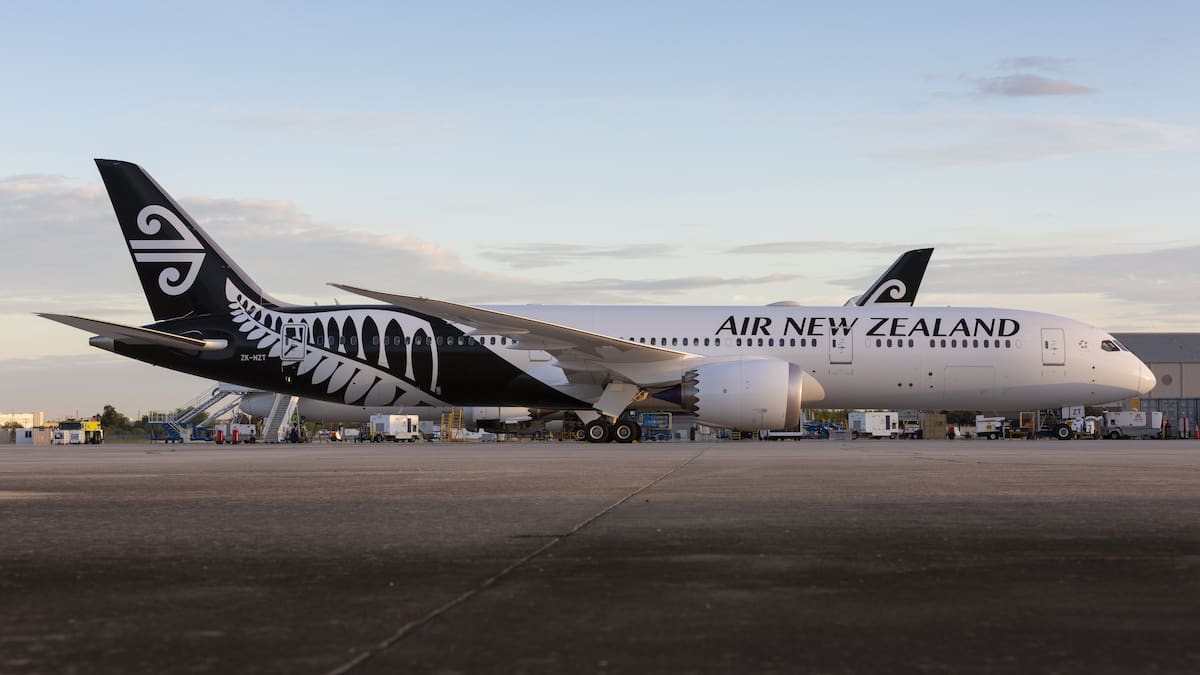
The first new Dreamliner to join Air New Zealand’s fleet in seven years arrived this week and a second aircraft is expected to arrive on Sunday.
“We’ll confirm the new launch date for the Skynest once the timeline is clear.”
Skynest aimed to give passengers in economy the chance to lie down and sleep on long-haul flights.
Earlier this month, Forbes magazine named Skynest the “innovation of the year” for airlines.
It said the lie-flat options for economy passengers were an industry first.
Skynest has six lie-flat pods stacked like triple bunk beds, and each can be reserved for a four-hour session.
Air New Zealand’s new cabin experience on 787-9 Dreamliners will have sleeping pods in a bunk-style arrangement.
Skynest was being sold at $495 for a four-hour session.
It’s understood the airline is contacting passengers who already paid for Skynest and options including refunds will be available.
Two new 787s completed final assembly at Boeing’s South Carolina plant in March.
The FAA weight limits added 10,000lbs (4.53 tonnes) to permitted take-off weight and 300 nautical miles (555km) to range.
The upgrade allowed for carrying extra payload on long routes.
The airline’s goal is to get more customers, baggage and cargo across long-haul routes, especially the Auckland-New York service.
Air NZ faces competition on that route from Qantas.
ZK-NZT landed in Auckland last night, the first new Dreamliner to join Air New Zealand’s fleet in seven years.
A second aircraft, ZK-NZS, is expected to arrive in New Zealand on Sunday.
The airline said both new Dreamliners had the latest cabin interiors.
Air NZ started an estimated $490 million retrofit of the aircraft shortly before Covid.
Business Premier Luxe seats at the front have extra room with dining space for two people.
In premium economy, a hard shell seat allows passengers to tilt back without impacting the person behind them.
The final retrofitted Dreamliner is expected to be flying by the end of the year.
John Weekes is a business journalist covering aviation. He also has experience covering courts, consumer affairs, crime and politics.
Stay ahead with the latest market moves, corporate updates, and economic insights by subscribing to our Business newsletter – your essential weekly round-up of all the business news you need.