
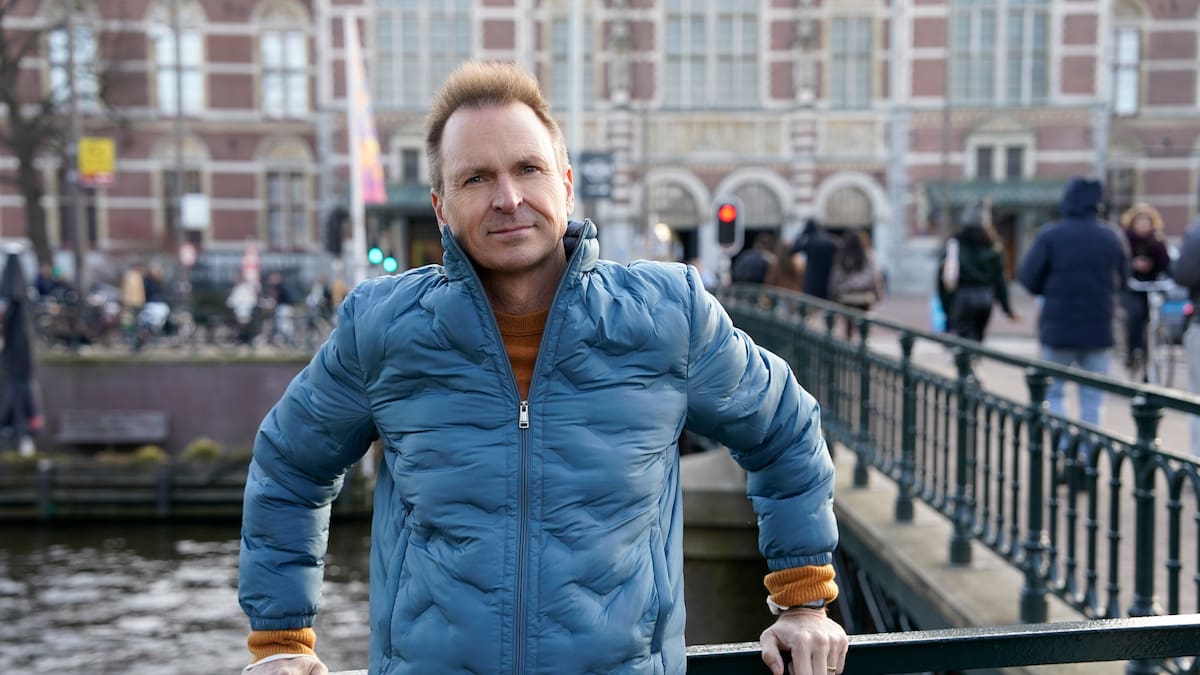
The US reality travel juggernaut has been replicated in multiple countries and won countless awards, including 10 Primetime Emmys.
Today, Keoghan writes his own scripts, researches countries and cultures, sets up his own shots, and travels the world with teams vying for a million-dollar cash prize.
It’s a relentless job, with 12 episodes shot over three weeks, but it’s one Keoghan never tires of.
“It’s a very fresh type of show to be involved with because it’s not in the same place doing the same thing. We’re always in a different place doing a different thing. Our studio is the world.”
He says he might have started losing interest a long time ago if he was given a script to present and that was it.
“I’ve been in front of a camera for so long now, but I really get a kick out of sharing those experiences with other people. And that’s part of one of the best parts of my job, I think, is seeing the sheer joy on the faces of people who have never had an opportunity to do some of the things that I have done.”
Phil Keoghan grew up in Lincoln. Photo / CBS
Days ago, to show viewers what happens behind the scenes, Keoghan posted a video of himself washing his hair on the side of the road in Milan.
When there’s time, he “absolutely” tries the show’s challenges himself, although the intensity of the shooting schedule can’t be understated.
“I lose a lot of weight every gig, every time I go out,” Keoghan admits.
“People are like, what are you doing when the teams are running around? And I have to remind them that when you’re shooting 12 shows in roughly 21 days, it’s pretty brutal. I’m not complaining because I love it.”
Keoghan was born in Lincoln, Canterbury, and left New Zealand when he was 3, spending time in Antigua and Canada. He came back to visit, and returned for high school and university, before getting his first job at TVNZ.
The Amazing Race has visited New Zealand four times, and is returning, this time to Christchurch, for the show’s upcoming 39th season.
“The majority of my family’s here, and I have a lot of interest in working here,” Keoghan says, his New Zealand accent peeking out. He’s zooming in from a beachside bach in the North Island, with the unmistakable glimpse of native tree ferns in the background.
Keoghan’s mum, Beth, still lives just outside Christchurch, and his dad, John, was the greeter at the show’s season 13 pit stop, making for a special day at the office.
“We were in Tauranga, just up in the hills. My dad spent the day with me at work, and that was a very special day.”
Keoghan has made sure New Zealand gets shown off when they manage to film in the country.
Good mate and AJ Hackett Bungy co-founder Henry van Asch helped organise a tandem bungy jump for the teams during one season.
They have been zorbing in Rotorua, been part of a shepherd “shamozzle” in Methven involving a lot of sheep, and even driven the length of New Zealand in campervans.
Host Phil Keoghan in a New Zealand leg of The Amazing Race.
Keoghan knew one day he would bring the show back to “vibrant, renewed” Christchurch.
“It just felt like the right time now with the way the city is. [There’s a] blend of innovation and the way that they’ve also recognised the balance of European culture with the Māori culture – there’s waka on the Avon [River] now, not just punting.”
One place is still on The Amazing Race filming bucket list: the wild West Coast.
“It’s perhaps the most unique place in the whole country,” Keoghan says.
“When you go over that great divide – my uncle was a poet, he used to call it the razorback – that’s a whole other world over there. And then there’s the Hokitika Wildfoods Festival that I wish we could do.”
Part of the allure of The Amazing Race for viewers is its vicarious nature. Keoghan says it makes the show appealing, particularly to American audiences, even after all these years.
And showcasing New Zealand and the world is “the biggest gift he can give” those dedicated fans.
“Americans travel less than Kiwis,” he says.
“For a lot of Americans, they’re seeing things they’ve just never been exposed to, in faraway places. And I love that we share the world in a positive way when so much of what people see of the rest of the world is negative.”
The Amazing Race host Phil Keoghan introduces Christchurch from a vantage point on the Port Hills. Photo / ChristchurchNZ
In Keoghan’s eyes, reality TV shows with longevity tend to maintain a standard of excellence. The Amazing Race prides itself on its safety record as well as its innovation and execution.
“The only reason you stay on the air is if the audience keeps coming back, and the only reason you can keep the audience coming back is making sure you don’t give them a bad show,” he says.
“You give them something that makes them want to come back for the next show. You can’t rest on what you did before, you’ve got to keep thinking it’s not about what we did in the past, it’s about what we’re going to continue to do to stay on in the future.”
It hasn’t always been smooth sailing. The show premiered just days before the 9/11 terror attacks.
Every bus in New York was plastered with a poster of the show, and Keoghan had been promoting it all week.
“That was a wake-up call. You know, what is a fun, frivolous reality show got to do in a moment where there was so much pain?” he says.
“What I didn’t have perspective on then was that there was an importance to a show like ours, which was to be able to show that that was a moment in time and in history. But that’s not a reflection of all of humanity. And that we had this ability to change people’s perceptions, open people’s eyes, and get them to acknowledge the importance of a show like ours to share something positive.”
TV host and keen cyclist Phil Keoghan calls New Zealand home.
While Keoghan doesn’t know how long The Amazing Race will continue, he hopes the ethos of cultural respect and curiosity continues to rub off on audiences.
”We’ve been able to show that the human spirit is alive and well wherever you go in the world,” he says.
“Most people care about their families, care about doing the right thing by each other, and want to share the place they call home. I always try to remind the teams to remember they are a visitor. Embrace the difference, ask questions, be curious, be respectful. It’s like going into somebody else’s home.”
In his eyes, there’s enough stress in the world, and sometimes, people just need to escape and live vicariously through others.
“Laugh, have your eyes opened, and be curious. That what our show’s able to do.”