
Credit: Far Out / Apple Corps LTD / Tom Marcello
October 31st, 2026 · 7:21pm GMT
Such was the universality of The Beatles‘ 1960s stardom, musical innovation, and enduring influence that even those select few who boldly declare to hate the Beatles typically do so out of an inherent need to attract attention by being contrarian.
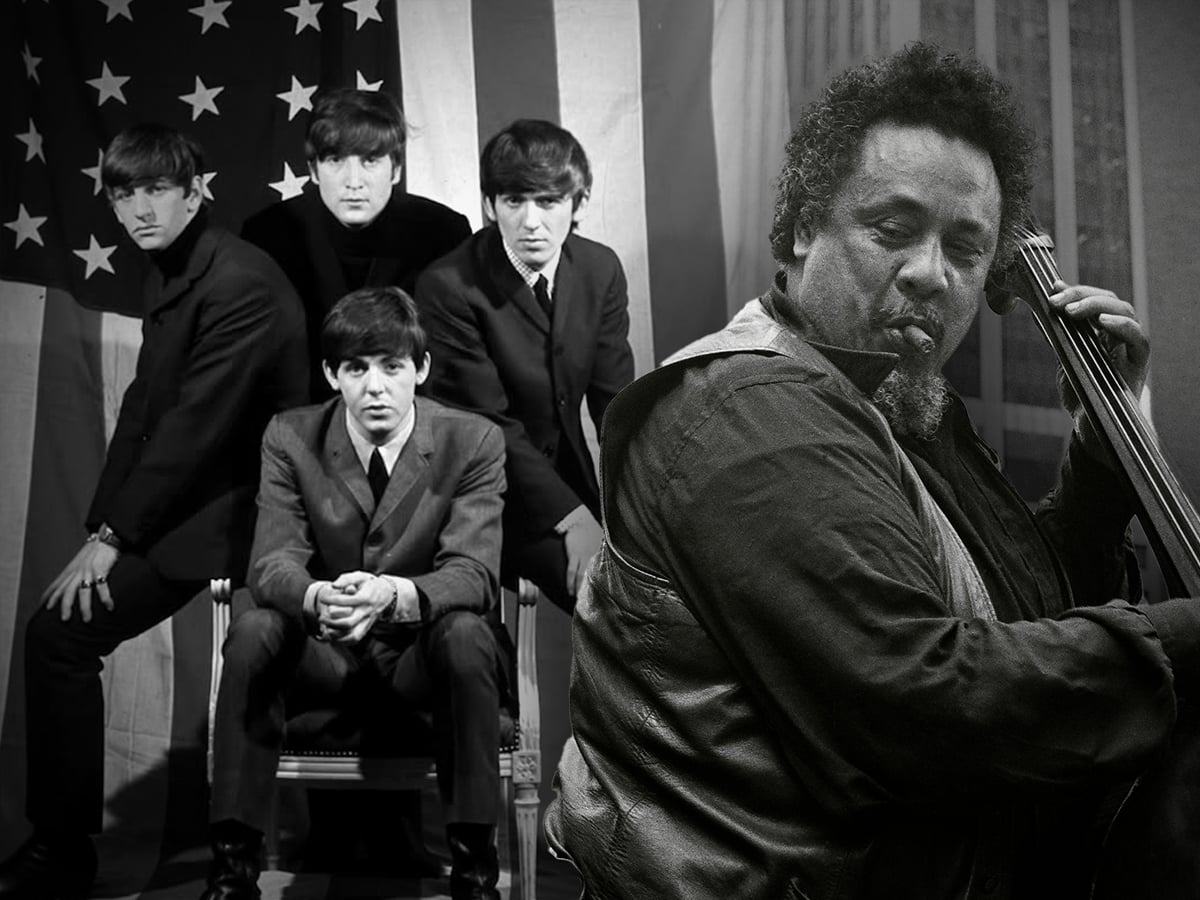
Charles Mingus, on the other hand, had a genuine gripe against the Fab Four.
Mingus, being the legendary upright bassist and improvisation jazz master that he was, existed on the opposite end of the musical spectrum from The Beatles, in many ways. Although, like the Liverpudlian outfit, he maintained a deep-rooted adoration for old-school American blues that routinely found its way into those jazz grooves, and although Mingus did collaborate with some pop figures later in his life (if you could consider Joni Mitchell’s output as being pop-adjacent), it is still difficult to envision the great Charles Mingus twisting and shouting to ‘I Want To Hold Your Hand’.
As such, when The Beatles visited the United States for the very first time in 1964, ushering in the age of global Beatlemania and the British invasion period of pop revolution, Mingus was among the few, aside from concerned conservative parents and opportunistic evangelical preachers, overly unimpressed.
What’s more, his problem with the band stemmed from a rather noble, irrefutable argument. In an interview published in the 2013 book Mingus Speaks, the jazz bassist took umbrage with the fact that The Beatles took the vast majority of their sonic influences from Black America.
“For the Beatles to be able to come here and take all the millions of dollars away from this country by copying our own music and composers, selling it back to ’em and nobody even suing ’em yet,” he rallied, summarising, “They came and took our own music and sold it to this country and took the money out and laughed.”
There is a degree of unavoidable truth to that view; The Beatles did, indeed, owe a great deal to their American influences. They covered the likes of Chuck Berry and Little Richard during their live performances, borrowed heavily from blues and R&B, and even covered three different Motown Records singles on their 1963 With The Beatles LP. With that in mind, there is indeed something rather ludicrous about them becoming the biggest band in America via repackaging inherently American influences.
Further reading: From The Vault
Then again, that isn’t a criticism that can be levelled exclusively at The Beatles. By the same metric, you could say that every single non-American rock band in history has been guilty of ripping off the sound of the States and selling it back to them, given that the root of all rock and roll is Black American blues.
What’s more, The Beatles did, at the very least, have the decency to admit those influences, whereas some of their contemporaries, The Rolling Stones, for instance, took old gospel tracks like ‘The Last Time’ and passed them off as original, self-penned efforts.
In fact, during one 2010 interview, Motown stalwart Smokey Robinson claimed, “They were the first really popular white band, or white artists that I had heard, who came right out and said, ‘We grew up and were very influenced by Black music and by Motown’.”
Seemingly, though, that argument didn’t do much to persuade Charles Mingus to board the Beatles’ train, with the jazz legend remaining resentful of the band even after that had gone their separate ways in 1970.
ADD AS A PREFERRED SOURCE ON GOOGLE  The Far Out Beatles Newsletter
All the latest stories about The Beatles from the independent voice of culture.
Straight to your inbox.