
Preliminary results indicate the strategy has contributed to an overhang, with National winning 42 electorates despite receiving just 29.2% of the party vote. Together with other overhang seats, including those arising from Te Pāti Māori’s five electorate victories, the preliminary allocation produces a 131-seat Parliament.
Speaking to the Herald, Mowbray said the results show that, without the strategy, National “wouldn’t even be in discussion” with its coalition partners, who have both increased their party vote share since 2023.
Harry Mowbray, a wealthy businessman and political campaigner whose children founded toy company Zuru, was a prominent backer of the vote-splitting campaign.
“The horrifying thing was that [National] still don’t recognise it,” Mowbray said.
“There was over a 20% swing. So that’s huge. It is the only thing that has saved the centre-right in this country.”
Mowbray said he and Don Brash, among others, had been accused by National’s Gerry Brownlee and Chris Bishop of “playing with matches and blowing fires” by promoting the vote-splitting strategy during the campaign.
Brownlee and Bishop – with senior MPs Nicola Willis and Paul Goldsmith – now look likely to be out of their jobs, with National securing just 29.4% of the party vote against 42 electorate seats.
Mowbray thought National’s criticism of the strategy, including the party’s alleged complaint to the Electoral Commission over his Split Your Vote website, had been unfounded, but he was “very happy” the media coverage had instead spread their message further.
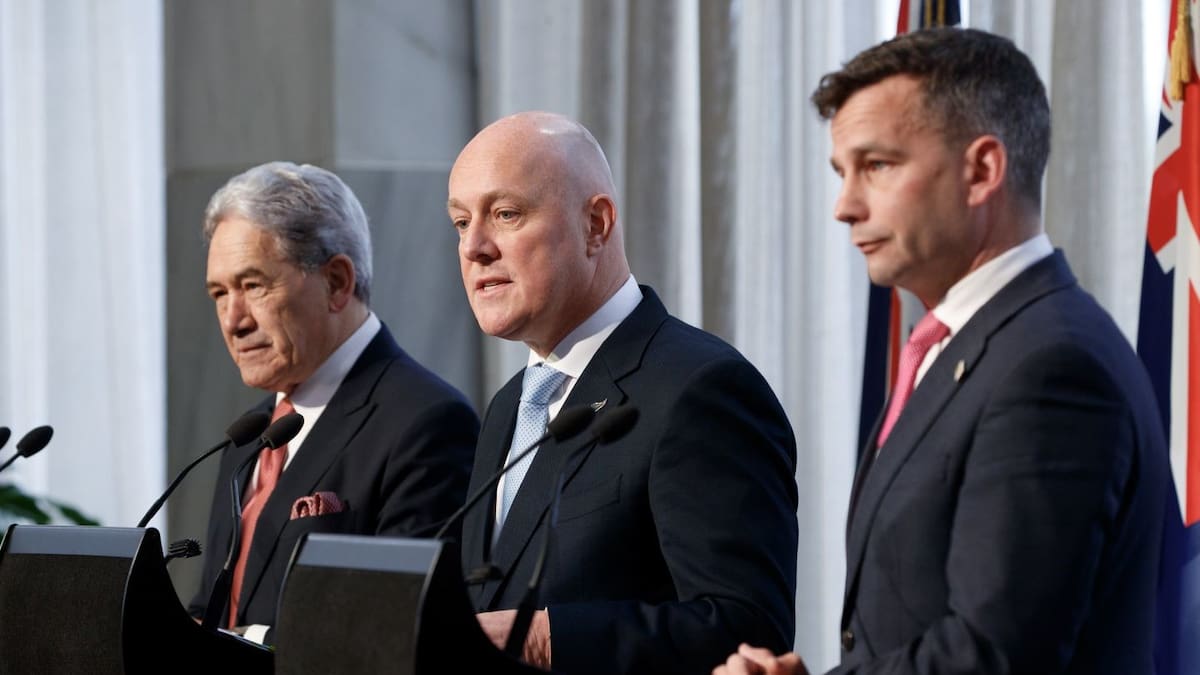
National won 42 electorate seats but just 29.2% of the party vote, while Act and NZ First have both increased their party vote share since 2023. Preliminary results now point to an 11-seat overhang in a 131-seat Parliament. Photo / Mark Mitchell
“We’re trying to help this lot, but they’re just looking in the rearview mirror at the electorates that they’ve lost … I don’t know how we actually get them to do the arithmetic but, yeah, it’s mind-blowing,” Mowbray said.
“My biggest disappointment is that every party on the right or the centre-right, their whole campaign was about self-interest.
“David [Seymour] should not have been trying to win Epsom and Tāmaki. And Chris Luxon should not have been trying to save Nicola, because it was going to be impossible to do that.”
Luxon refrained from addressing the vote-splitting campaign and whether he thought it had worked, telling reporters today he was “focused on going forward”.
Sign up to The Daily H, a free newsletter curated by our editors and delivered to your inbox every weekday.