
Previous Slide◀
Next Slide▶
1 of 5
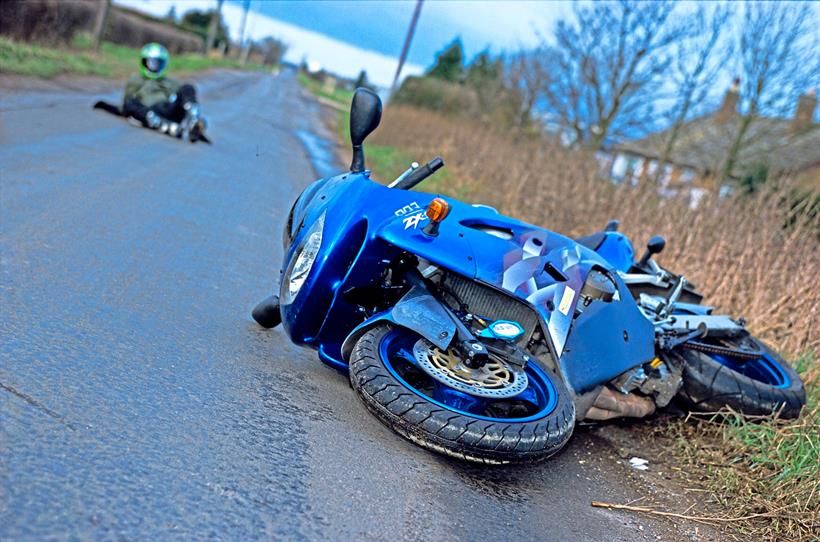
Crashing is one of the few unpleasantries of motorcycling. There’s only so much you can do to mitigate it, and ultimately, no amount of advanced training, high-tech rider aids, or plain old good luck can save you from all eventualities.
Sometimes, as the viral social media clip goes, ‘one minute you’re on the road looking at the bushes, then the next minute you’re in the bushes looking at the road’. So, what happens when you’ve really come a cropper and end up so badly injured that you can’t call for help?
That’s where RealRider comes in – the British-developed smartphone app promises to speed up response times by automatically alerting the emergency services within seconds of an impact, calling in the blue-light cavalry without delay thanks to a clever algorithm that knows exactly when your ride has gone pear-shaped.
“We’re the only app-system with direct links to the emergency services,” RealRider’s Chief Operating Officer, Steven Roberts, told MCN. “That was a two-year process of stringent interviews and testing.
“What really differentiates us is that we’re not relying on friends, family, or anybody else. It’s just a direct signal that goes straight onto the CAD [Computer Aided Dispatch] system of the ambulance service. The onus is taken off the rider, or anyone else for that matter.”
The app constantly monitors your phone’s accelerometer, gyroscope, and motion sensors to detect impacts or heavy deceleration – although speed is not recorded nor relayed to the police.
If a crash is suspected, RealRider starts a countdown timer, giving the user a chance to cancel the alert if they’re not injured.
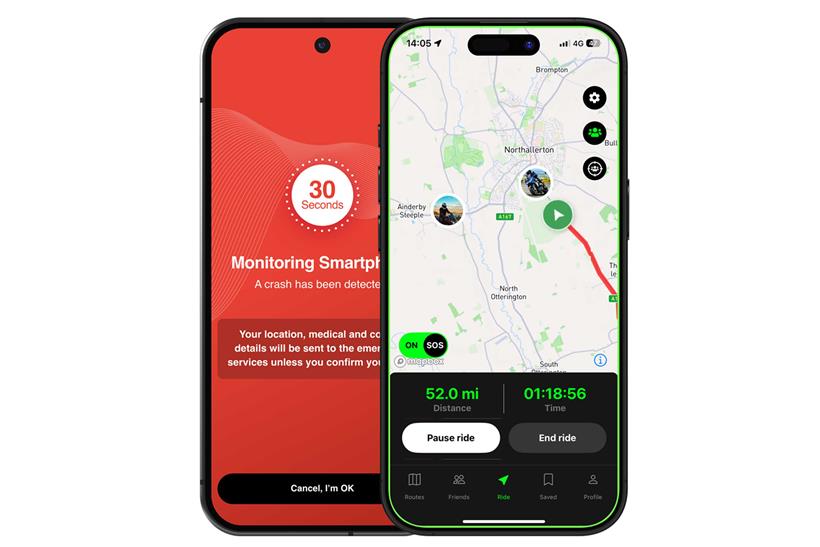
“The app looks for a number of triggers – rapid deceleration, impact, and tumbling motion,” Roberts explained. “If the rider doesn’t cancel the alert, all of their key information – location, direction of travel, and any medical data they’ve uploaded – is sent directly to emergency responders within seconds of the event.”
In 2006, the team at RealSafe Technologies (the company behind RealRider) collaborated with paramedics and air ambulance pilots to produce a Crash Scene Management video for the Great Roads, Great Rides motorcycle DVD, created for the UK Highways Agency (now Highways England).
While filming, emergency responders explained the need for a solution that could quickly locate injured riders and alert ambulance control and in turn, this requirement led to the development of RealRider SOS.
NHS integration
Thanks to years of testing, which involved throwing phones out of moving cars, through cardboard walls, and conducting on-track crash testing, the system is so accurate that false activations are said to account for fewer than one percent of alerts.
That reliability was crucial in gaining the 999 seal of approval.
“The key thing emergency services wanted to focus on was false activations – they didn’t want riders getting home, throwing their jacket down, and triggering an ambulance,” he continued.
The app’s algorithms are refined to recognise real crashes and ignore false flags, with additional updates like an auto-pause feature to prevent the app from mistaking evasive manoeuvres for a fall.
Full coverage
Like any phone-based system, RealRider needs mobile signal to work, unlike a standalone satellite emergency beacon such as Garmin’s inReach – although the SOS function on such devices usually requires manual activation.
To help reduce coverage blackspots, the company have recently partnered with Anywhere eSIM, which uses multi-carrier roaming to send the signal through whichever network is available – similar to how the 999 system works.
RealRider’s network covers the UK, Europe, the US, Canada, and Japan, and the system is already being adopted by major players including powering Triumph’s SOS.
One year’s subscription to RealRider will cost £60 from 2026 , which is a rise of £24 from 2025’s pricing. That might sound like a steep increase, but membership still works out at less than a cup of coffee per week.
Speed saves lives
Motorcyclists remain Britain’s most vulnerable road users, with riders 42 times more likely than car occupants to be killed per mile travelled. Fatalities are climbing too, increasing by 8% in 2024 according to the latest Department for Transport figures.
Response times can play a vital role in influencing survivability, and RealRider aims to help by automatically alerting emergency services when a rider is incapacitated.
So important is the speed at which help arrives; that U.S. research recently found deaths from road traffic collisions (involving all manner of vehicles) were twice as high when emergency response exceeded 12 minutes, compared with times when EMS arrived in under seven minutes.