
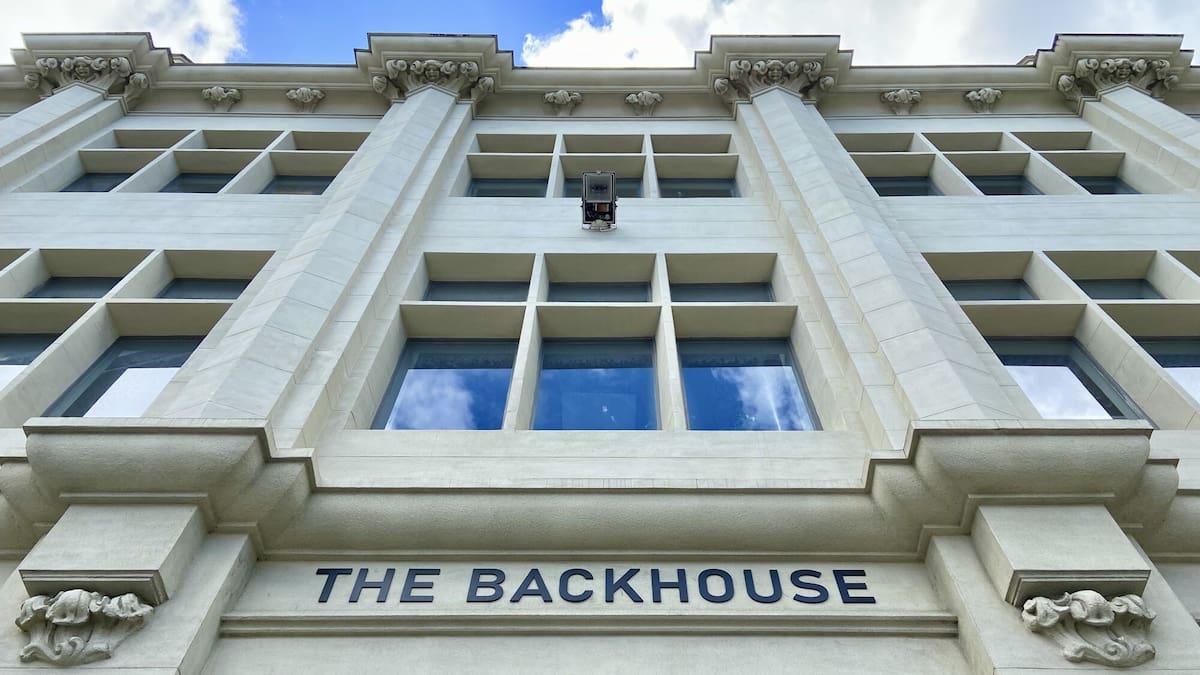
Ucol will return to a regional governance model with its own board and chief executive from January 1.
Deighton said the move meant lost potential for Whanganui’s economic future.
“That’s in terms of supporting technology-driven businesses and education that supports that.
“Tenants come down to the Watering Hole [communal space on the ground floor] in the morning to have a coffee and chat, and then one finds out the other needs something – ‘I know someone who can help with that.’
“Those are the things that will go when they scatter.”
Jacobs’ letter said Te Pūkenga acknowledged the Backhouse Trust and Tupoho Trust, which had “engaged positively” with Ucol to explore future solutions for the site.
“While these discussions have been constructive, a viable pathway forward has not been identified at this stage.”
On June 28, the Chronicle reported that Ucol sent a letter to some Backhouse tenants saying they had a week to leave.
Shortly afterwards, Tupoho began negotiations with Ucol about taking over the lease, with the intention of keeping the building as a community facility.
Tupoho chairman Ken Mair said that, in his opinion, Ucol viewed the building as a commercial asset, especially as the polytechnic would be autonomous when Te Pūkenga ended.
“We tried our best, and we feel for the tenants who deserved better treatment in regard to Ucol,” he said.
“Once again, there is a tension between commercial and community wellbeing.”
Michael Law in The Watering Hole, The Backhouse’s communal space. Photo / Mike Tweed
In a statement, Ucol operations lead Jasmine Groves said that, when economic development agency Whanganui & Partners and Ucol started the initiative, “it was a different time, and both entities operated independently”.
“Although the original vision for The Backhouse was not fully realised, we sincerely thank the trustees and volunteers for their mahi and commitment to the kaupapa.
“Once Ucol transitions to its future governance structure, decisions about the building and its future use will be worked through, including consideration of community needs.”
Ucol has had a lease agreement with The Backhouse Trust since 2022, but funding for the project, from Te Pūkenga/Ucol and Whanganui & Partners, ended in 2023.
Te Pūkenga funding covered rental costs, with Whanganui & Partners providing $80,000 in 2021 and 2022, and $20,000 in 2023.
Whanganui district councillor Michael Law, a Backhouse tenant since 2022, said he understood negotiations between Ucol and Tupoho had shut down.
“To be honest, there’s not much we can do.
“They [Ucol] are not acknowledging the fact that it’s an educational facility and a start-up incubator, and they are destroying all hopes for future industries to come out of that area.”
Law said some people had already moved out because of the uncertainty. “The vibe is definitely down.”
In June, tenants included Thrive Whanganui, Whanganui District Education Training Trust (WDETT), Te Manu Atatū – Whanganui Māori Business Network, and Lamp Studios.
A spokesperson for Thrive said the organisation planned to be out of the building by the end of November.
Deighton said the building had been empty for years before The Backhouse began, and it was likely to be empty again.
“Even if they [Ucol] have got plans, it will take a couple of years to get them up and running.
“To me, this does not seem like a commonsense decision.”
This story has been updated to clarify that the lease expired in March 2025.
Mike Tweed is a multimedia journalist at the Whanganui Chronicle. Since starting in March 2020, he has dabbled in everything from sport to music. At present, his focus is local government, primarily the Whanganui District Council.