

The ADP employment report for the U.S. in October recorded the largest increase since July, with upward revisions to the previous figure. However, experts caution that the data should be interpreted carefully in the absence of the non-farm payroll report!
Data released by Automatic Data Processing (ADP) on Wednesday showed that private sector wage growth in October was slightly stronger than expected, offering a glimmer of hope that there is no risk of a labor market collapse.
The U.S. ADP employment report for October recorded an increase of 42,000 jobs, the largest rise since July 2025, surpassing expectations of 28,000. Additionally, total employment figures for September were revised to show a decrease of 29,000 jobs, compared to the previously reported decline of 32,000.
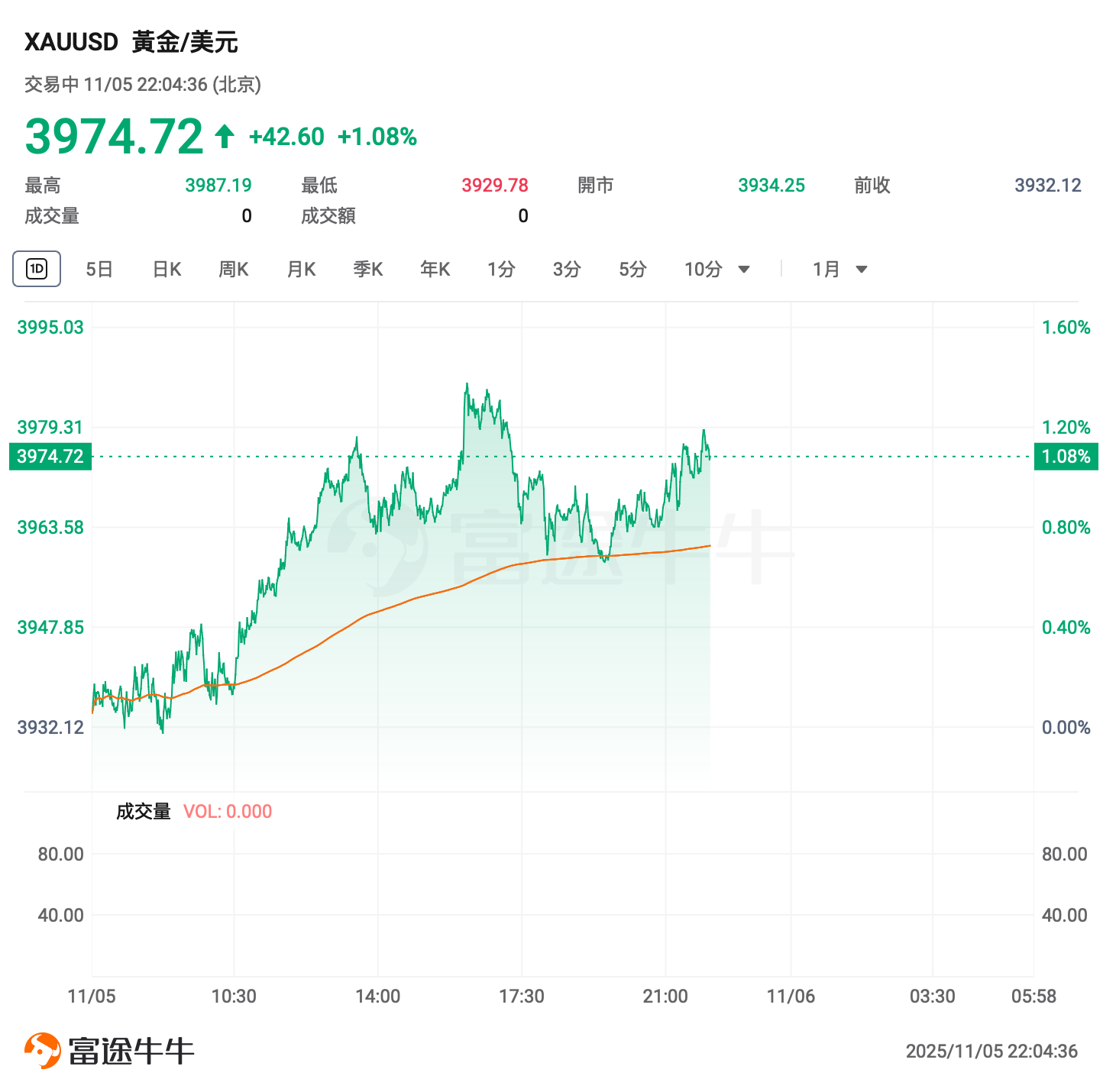
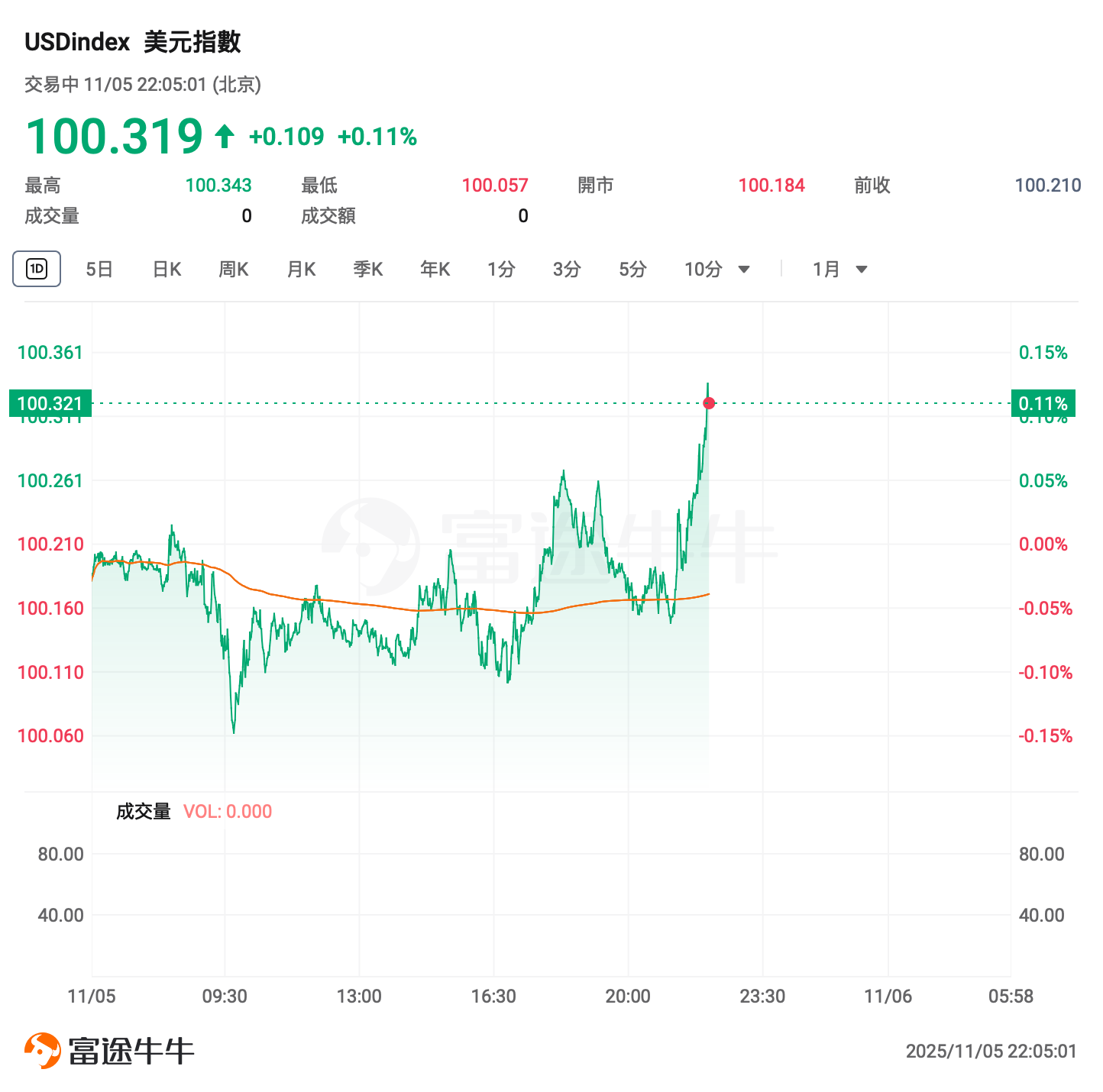
 Spot gold briefly declined by $4 following the release of the ADP report, but quickly rebounded. The US Dollar Index edged higher.
Key changes in employment and wage growth by major industries in the ADP report are as follows:
Construction employment increased by 5,000 in October, following a decrease of 5,000 in September. The median annual wage growth rate for employees in the sector was 4.5% in October, unchanged from September.
Manufacturing employment fell by 3,000 in October, after declining by 2,000 in September. The median annual wage growth rate for employees in the sector stood at 4.8% in October, compared to 4.7% in September.
Employment in trade/transportation/utilities rose by 47,000 in October, reversing a decline of 7,000 in September. The median annual wage growth rate for employees in this sector remained stable at 4.3% in both October and September.
Financial services employment increased by 11,000 in October, recovering from a loss of 9,000 jobs in September. The median annual wage growth rate for employees in this sector stayed consistent at 5.2% in both October and September.
Employment in the professional/business services sector decreased by 15,000 in October, following a decline of 13,000 in September; the median annual rate of wage growth for employed persons was 4.2%, unchanged from September.
Automatic Data Processing (ADP) reported that U.S. employment rebounded last month from two months of weakness, but the rebound was not broad-based. Growth was led by education and health care, trade, transportation, and utilities. Employers in professional and business services, information, leisure, and hospitality sectors cut jobs for the third consecutive month.
Nela Richardson, chief economist at ADP, stated that private employers added jobs in October for the first time since July of last year, but hiring remained modest compared to earlier reports this year. Meanwhile, wage growth has remained largely flat for over a year, indicating balanced changes in supply and demand.
As one of the key indicators measuring the state of the U.S. labor market, the ADP employment data, often referred to as the ‘mini non-farm payroll,’ is now receiving heightened attention due to the U.S. government’s record-breaking ongoing shutdown. The U.S. Secretary of Labor reiterated on Tuesday evening that ‘economic data will not be released until the government shutdown ends.’ This week’s non-farm payroll data release remains pending.
If the non-farm payroll report is released, Wall Street expects it to show a reduction of 60,000 jobs, with the unemployment rate rising to 4.5%.
Economists have urged caution when interpreting the ADP report, pointing out methodological differences and other limitations. Matthew Martin, senior U.S. economist at Oxford Economics, stated: ‘The ADP data is limited to private businesses relying on ADP for payroll management, thus offering weaker national representation. The ADP employment data should be viewed as a complement to the Bureau of Labor Statistics’ (BLS) establishment survey, not a substitute.’
Federal Reserve officials expressed concerns about the state of the labor market, increasingly viewing risks of a weakening job market as outweighing upward inflationary pressures. At last week’s policy meeting, the Federal Reserve cut interest rates by another 25 basis points. However, the prospect of a rate cut in December remains uncertain.
Although data from the Bureau of Labor Statistics (BLS) has ceased updating, officials will review other data this week. Latest figures from the job search website Indeed show that the number of job postings has fallen to its lowest level since February 2021.
Challenger, Gray & Christmas will release its monthly layoff report on Thursday. Meanwhile, economists will closely monitor unemployment claims across states to assess whether companies are scaling back their workforce. The University of Michigan will also release its monthly consumer confidence index on Friday, reflecting consumers’ views on the overall economic situation.
 Stay ahead of major financial events and discover investment opportunities early! Open Futubull > Market > US Stocks >Economic Calendar/Selected macroeconomic data, seize the investment opportunity!

Editor/Doris