
It’s now Netflix’s most-watched movie in the world, garnering 22.1 million views in three days and launching fiery discourse among scholars and normies alike. Within a week, the film’s official Reddit thread has clocked more than 3700 responses, while military defence experts and policy advocates have picked apart the movie’s themes and details.
According to a Bloomberg News report, the Pentagon waded into the discourse, in an internal memo sent earlier this month by the Missile Defence Agency. That document told recipients to prepare to “address false assumptions, provide correct facts and a better understanding” about the weapons depicted in the movie. (The Pentagon did not respond to a request for comment.)
But most nuclear policy experts say A House of Dynamite accurately captures how fragile and fallible America’s nuclear defences actually are.
Garrett Graff, historian and author of the 2025 bestseller The Devil Reached Toward the Sky: An Oral History of the Making and Unleashing the Atomic Bomb, put it this way: “Everything changes when a missile is in the air. At that point, you have already lost.
“We stand much closer to a nuclear precipice than most of us realise.”
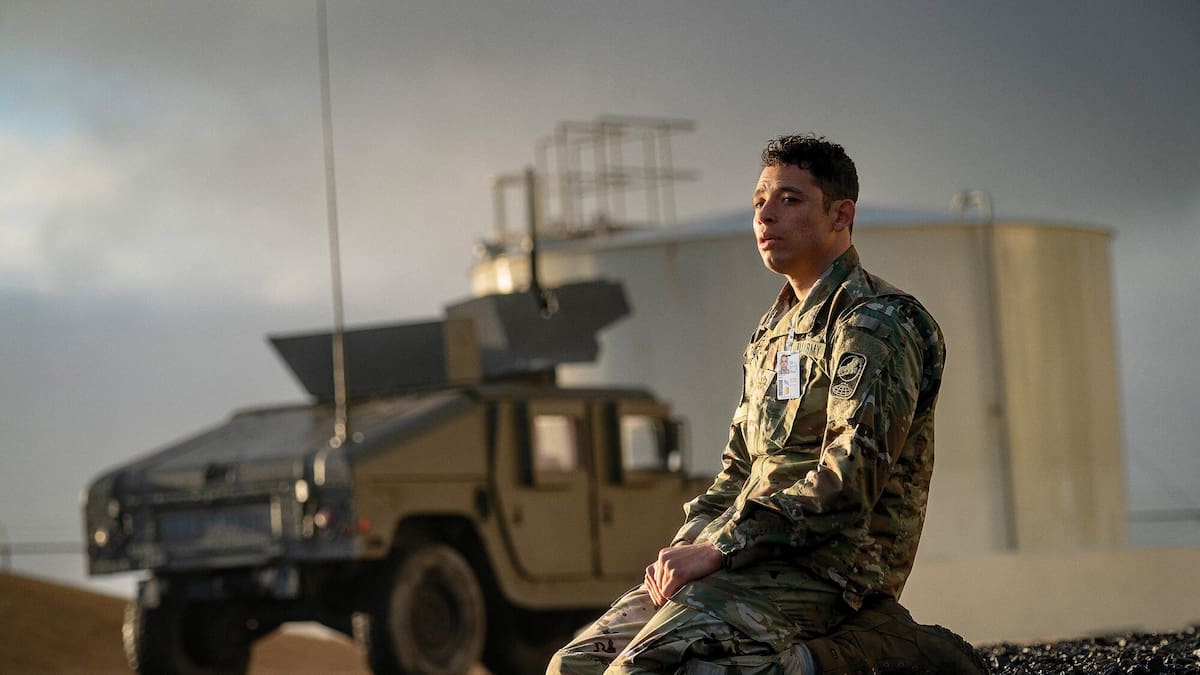
(Left to right) Tracy Letts as General Anthony Brady and Gbenga Akinnagbe as Major General Steven Kyle in A House of Dynamite. Photo / Eros Hoagland, Netflix
In A House of Dynamite, the characters tasked with saving the world are sleep-deprived parents, bureaucrats navigating divorces and new jobs, intelligence officers who groan about receiving a work call while they’re on vacation. Military jargon rattles through the dialogue. The events of the film – a 30-minute sequence repeated three times, through different perspectives – occur (with some licence) in real time. (Here come spoilers.)
Screenwriter Noah Oppenheim said he and Bigelow, the Oscar-winning director of The Hurt Locker, committed early in the film-making process to being as accurate and authentic as possible. They worked with more than a dozen technical experts, he said, including people who have held senior roles at the Pentagon, CIA and the White House, such as Larry Pfeiffer, the senior director of President Barack Obama’s Situation Room.
Pfeiffer, who was on hand for scenes depicting the White House “SitRoom,” reported that the set felt so authentic, when he felt his phone vibrating in his pocket at one point during the production, “I felt pangs of guilt as if I had brought my phone into a secure facility”.
Still, experts have debated the level of accuracy and plausibility in the film, which chronicles the Government’s response to a single intercontinental ballistic missile (ICBM) launched by an unidentified attacker.
“Approximately three minutes ago we detected an ICBM over the Pacific,” a general flatly informs a wide-eyed group of government officials in the film’s opening sequence. “Current flight trajectory is consistent with impact somewhere in the continental United States.” The estimated time until the nuke lands somewhere in the heartland (Chicago, it turns out): 18 minutes.
“I’ve seen people quibbling with the idea that we would not know where the launch came from or who was responsible,” said Mark Melamed, who helps lead the Global Nuclear Policy Program at the Nuclear Threat Initiative, a DC-based nonprofit group. (Some of Melamed’s colleagues reviewed and provided notes on an early draft of the House of Dynamite script.) Other points of contention: that the President would face such immense time pressure in the scenario outlined in the film – since it’s just one weapon – and that any adversary would launch just one nuke at the United States.
Oppenheim has said the inciting incident is the biggest creative liberty the film takes. But what follows is “a series of decisions that all fall within the realm of possible to probable,” he said. “Somebody might make a different decision if this were to unfold.”
A House of Dynamite director Kathryn Bigelow. Photo / Getty Images
“These are all fair points for debate. Mileage may vary in terms of how plausible you find individual elements of this scenario,” Melamed said. “We’ve never seen nuclear weapons used in the world that we currently inhabit, so I think it’s totally fair to say we don’t know exactly how that would play out.”
It is true that we have a robust missile defence system – but not a foolproof one. In A House of Dynamite, two land-based missiles are launched from Fort Greely in Alaska to intercept the incoming enemy one. Both fail.
“The description of it as a coin flip is generally quite accurate,” Melamed said – and that 50/50 chance is under test conditions, leading many experts to speculate that their success rate in the real world would be lower. (The film describes it as a 61% rate. In its internal memo, the Pentagon reportedly claimed a 100% success rate on its tests.)
It is also true that, if someone were to launch a nuclear attack, the world’s leaders, their militaries and their bureaucrats would have mere minutes to talk through the most consequential decision in human history. It would take 30 minutes or less for an ICBM launched from the Pacific Ocean to hit the United States. Launched from the Atlantic coastline, where Russian submarines regularly patrol, it would take somewhere around 10 to 12 minutes.
Yes, Graff said, the fate of the world would be decided over a conference call while the President “and whichever senior officials happen to be reachable at that exact moment” were simultaneously being evacuated to various underground bunkers.
And yes, Graff confirmed, “the nuclear football” at the heart of America’s nuclear deterrence strategy is exactly what is depicted in the film: a plain leather briefcase with a couple of briefing binders, “filled with what is pejoratively called a ‘Denny’s Menu’ of nuclear options of ‘rare, medium, and well done.’ ” Always just steps away from the commander in chief.
In A House of Dynamite, the US president (played by Idris Elba) laments that he has had just one briefing on nuclear war. Experts say that rings true. Photo / Netflix
In the film, the President (played by Idris Elba) laments that he has had only one briefing about how nuclear war might unfold, yet the decision rests on his shoulders alone. This also rings true, Graff said: while the scenarios prepared by the military and the Pentagon have been carefully planned and choreographed, “historically, the President never participated in a decision-making drill himself”.
“You wouldn’t ever want your adversary to have insight into how a president would actually react to a nuclear attack,” he explained.
That the President is the sole authority on commanding such a strike has been a core part of our nuclear policy since the Cold War, said Erin Dumbacher, the Stanton Nuclear Security Senior Fellow at the Council on Foreign Relations. The President is capable of launching a nuclear assault at any time – by land, by sea or by air. Theoretically, that readiness is enough to discourage the country’s enemies from attacking.
“Nuclear weapons policy is the only area where the Constitution does not require the president to seek congressional authorisation to go to war,” Dumbacher said. And what recourse is there for a president who sets off nuclear armageddon?
“Certainly there are no guardrails on the president other than the threat of impeachment, I suppose,” Dumbacher said.
With A House of Dynamite, Bigelow, a vocal advocate for denuclearisation, expects audiences will be – ought to be – shocked by these realities.
“I have a friend who saw it on a plane over the weekend and he texted me. I think he must have been on a red eye. He texted me in the middle of the night with like, the head exploding emoji,” Melamed said.
A House of Dynamite filmmakers said they relied on expertise from former Pentagon officials, as well as former senior military and White House leaders, to ensure “authenticity.” Photo / Tom Brenner, The Washington Post
In the 21st century, the nuclear war film has become a period piece. Nuclear weapons are now little more than a plot point, just another tool in a bad guy’s arsenal. But as A House of Dynamite reminds us, we still live in the nuclear age. And indeed, we may be at a crucial turning point.
“We are at a moment where we are losing the last generation of the people who actually understand how terrible nuclear war actually is,” said Graff, the author and historian.
For the first time since the end of the Cold War, the number of nuclear weapons in the world is increasing: Russia has been expanding its arsenal, as has China. Mounting global tensions and shifting alliances could mean that even more countries will elect to build their own stockpiles, no longer confident that the United States will use its “nuclear umbrella” to protect them.
President Donald Trump, meanwhile, has ordered the Pentagon to construct a new, more robust missile defence shield dubbed “Golden Dome,” which would effectively flood Earth’s orbit with hundreds, if not thousands, of “suicide satellites” to intercept enemy missiles. This week, Trump said he directed the Pentagon to begin testing its existing stockpile of nuclear weapons, “immediately”.
“We don’t want to think about these existential threats in this way every day and we shouldn’t,” Dumbacher said. “But we do, in fact, live in this world. And so we have to kind of take a step across or through that disbelief in order to do something about it.”