
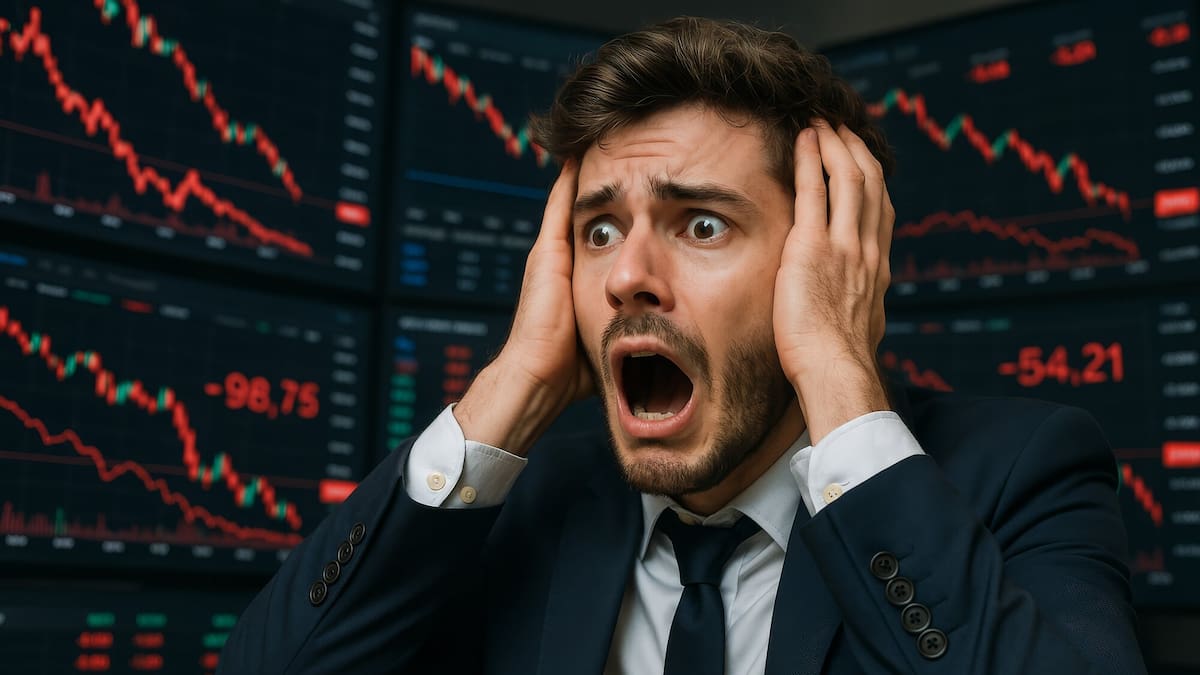
But as speculation about a Wall Street tech bubble builds and cracks start to appear in
parts of the US credit market, the prospect is something we have to consider.
I certainly hope the people who run my KiwiSaver fund are considering it.
Stocks are overvalued when they command a much higher price than their earnings (or expected future earnings) can justify.
The Nasdaq index – home to all the big tech stocks – has roughly doubled in value in the past three years.
That’s not a normal level of return on investment.
It has drawn comparisons to the tech bubble of the late 1990s that popped spectacularly in 2000.
But it’s not the prospect of my inflated retirement savings taking a haircut that bothers me.
I still have enough years up my sleeve to see them fall and rise again.
It’s the psychological blow that another setback would deliver to our already battered local economy.
To put it plainly, we’ve taken so long to get the economy back on track post-Covid, that we risk running into the next crisis before we get a chance to catch our breath.
Consumers aren’t ready for it, businesses are in no shape to cope with it and neither are the Government’s finances.
The only bright spot is that the Reserve Bank has some room to cut interest rates further if required.
But it is in no shape to print money if things get really bad.
Let’s take a look at the prospects of a major tech wreck and, more importantly, how it might hurt New Zealand.
I’m writing this column on Friday afternoon with another day of Wall Street trading still ahead of me.
So perhaps by the time this is published, the crash will have happened.
That’s one of the risks we have to live with as financial writers in this country.
It is unlikely, though. Even if Wall Street has had a really ugly Friday.
A major sell-off isn’t the same as a wider financial crisis.
A correction – often described as a fall from the peak of about 10% – is inevitable at some point. It’s healthy.
If that’s what this current round of market jitters delivers, I think we’ll be okay.
Speculation about an AI bubble and another tech wreck bit headlines last week as the guy who inspired the Hollywood movie The Big Short made some big bets against the tech giants.
Michael Burry, the investor who bet against the banks after he anticipated the subprime mortgage crisis and the 2008 Global Financial Crisis, has just started short-selling big tech stocks like Nvidia and Palantir.
Short selling, for the record, is a way to invest by putting money on the price of an asset to fall.
I could use up the rest of my word count explaining how it works, but the short version is you borrow shares from a broker, sell them immediately at the market price.
Then, when the price falls, you can buy back the shares you need to repay the broker at a cheaper price.
It’s complicated, risky, and I don’t recommend people start doing that.
It could also be that Burry is wrong.
I talked to a senior executive from a very large international investment group this week who remained bullish about the outlook.
His view – and I think we can assume it remains widely held on Wall Street – is that we were not yet in bubble territory.
He argued that the emergence of AI represents a paradigm shift that is already delivering real profits and will continue to.
I’d counter that the rise of the internet was also a very real paradigm shift, which has delivered very real profits too.
The dot.com boom just got ahead of itself. It only fell a few years short of delivering on promises of a social and economic revolution.
But that was enough to create an almighty mess.
The Nasdaq index rose fivefold between 1995 and 2000, but then crashed from a peak of 5048 on March 10, 2000 to just 1140 by October – a 77% fall. It didn’t fully recover that value until 2015.
New Zealand wasn’t massively exposed to that crash.
But 2008 hit hard.
We were already technically in recession, thanks to a gnarly drought, when the wheels fell off global debt markets.
Compared to 2008, I’d say New Zealanders are far more exposed to Wall Street equities.
We have a lot more sitting in KiwiSaver funds that are heavily invested in US markets.
We also have a lot more people investing directly via apps like Sharesies, which typically bypass the local market and head straight for Wall Street.
A major crash would no doubt put a dent in consumer confidence.
On the positive side of the ledger, we are less exposed to risky second-tier lending. The GFC precipitated the meltdown of our finance company sector – wiping out about $3 billion in savings and affecting between 150,000 and 200,000 investors.
The past few years have actually put the squeeze on borrowing and there has been a move to pay down private debt.
Our farmers and businesses are less heavily indebted. Household debt is still very high, but our major banks are well capitalised and would handle all but the most apocalyptic scenarios.
What New Zealand couldn’t avoid is the global demand slump that tends to accompany a Wall Street crash.
That hits commodity prices and overall demand for our exports. It hits the tourist market.
It could certainly mean another recession.
Trying to pick these things is near impossible. The pessimists are always right eventually.
Those, like Bury, and the economist Nouriel Roubini (who also picked the GFC) are celebrated in hindsight for their gloomy predictions.
But not so much gets written about the lost earnings of the countless pessimists who flinch too early.
I’m certainly not one to try and call these things. But we need to be mentally prepared for them.
Here’s hoping it all settles down, at least until we build back some much-needed resiliency into our economy.
Liam Dann is business editor-at-large for theNZ Herald. He is a senior writer and columnist and presents and produces videos and podcasts. He joined theHeraldin 2003
Catch up on the debates that dominated the week by signing up to our Opinion newsletter – a weekly round-up of our best commentary.