

NASA
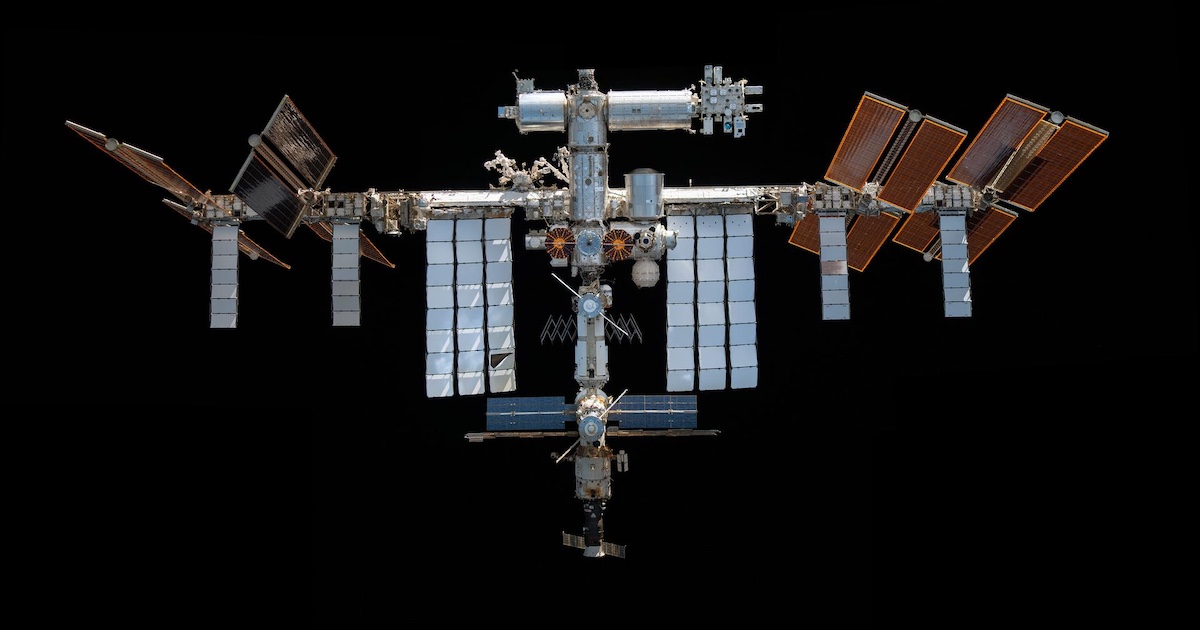
It has been absolutely crucial to our understanding of space in the almost 25 years that it has been continuously inhabited, so it’s no surprise that the International Space Station is, sadly, reaching the end of its life.
Scheduled to be decommissioned via a controlled de-orbit into the Pacific Ocean by the end of 2030, our days of marvelling at the life astronauts lead on board is coming slowly to an end.
But there’s still five years to go, and plenty of discovery left.
And crucial to the next round of discoveries is the latest NASA SpaceX commercial resupply mission – the 33rd of its kind – which reached the ISS at the end of August.
Pexels/SpaceX
According to a recent update from NASA, the SpaceX Dragon spacecraft, which launched from Cape Canaveral Space Force Station, was carrying over 5,000 pounds of supplies, with some fascinating items in the payload.
And as NASA’s Sean Duffy explained in the update, some of the supplies – which also include food and equipment – will be vital to exciting upcoming NASA projects:
“Commercial resupply missions to the International Space Station deliver science that helps prove technologies for Artemis lunar missions and beyond. This flight will test 3D printing metal parts and bioprinting tissue in microgravity – technology that could give astronauts tools and medical support on future Moon and Mars missions.”
NASA’s astronauts are, of course, elite scientists, as some of the many experiments that they are performing in space prove.
Amongst the other supplies to be studied are bone stem cells and bioprinted liver tissue, which will allow vital observations of their behavior and properties in microgravity.
Pexels/SpaceX
But perhaps the most fascinating part of this resupply mission is Dragon’s other purpose, beyond providing vital supplies for living and experimentation.
That’s because, as part of the mission, the Dragon will perform a boosting manoeuvre, propelling the ISS such that it maintains its current altitude, via innovative new technology, as NASA continued in the statement:
“During the mission, Dragon also will perform a reboost demonstration of station to maintain its current altitude. The hardware, located in the trunk of Dragon, contains an independent propellant system separate from the spacecraft to fuel two Draco engines using existing hardware and propellant system design. The boost kit will help sustain the orbiting lab’s altitude starting in September with a series of burns planned periodically throughout the fall of 2025.”
This boost will demonstrate the capabilities of the propellant system to keep orbiting objects on course, with vital implications for NASA and SpaceX’s pioneering space programs.
Moreover, it will keep the ISS just where we want it, for another few years to come.
If you thought that was interesting, you might like to read about why we should be worried about the leak in the bottom of the ocean.
Categories: NATURE/SPACE, SCI/TECH
Tags: · booster technology, international space station, iss, NASA, science, single topic, space, spacex, SpaceX Dragon, SpaceX Dragon Capsule, technology, top