
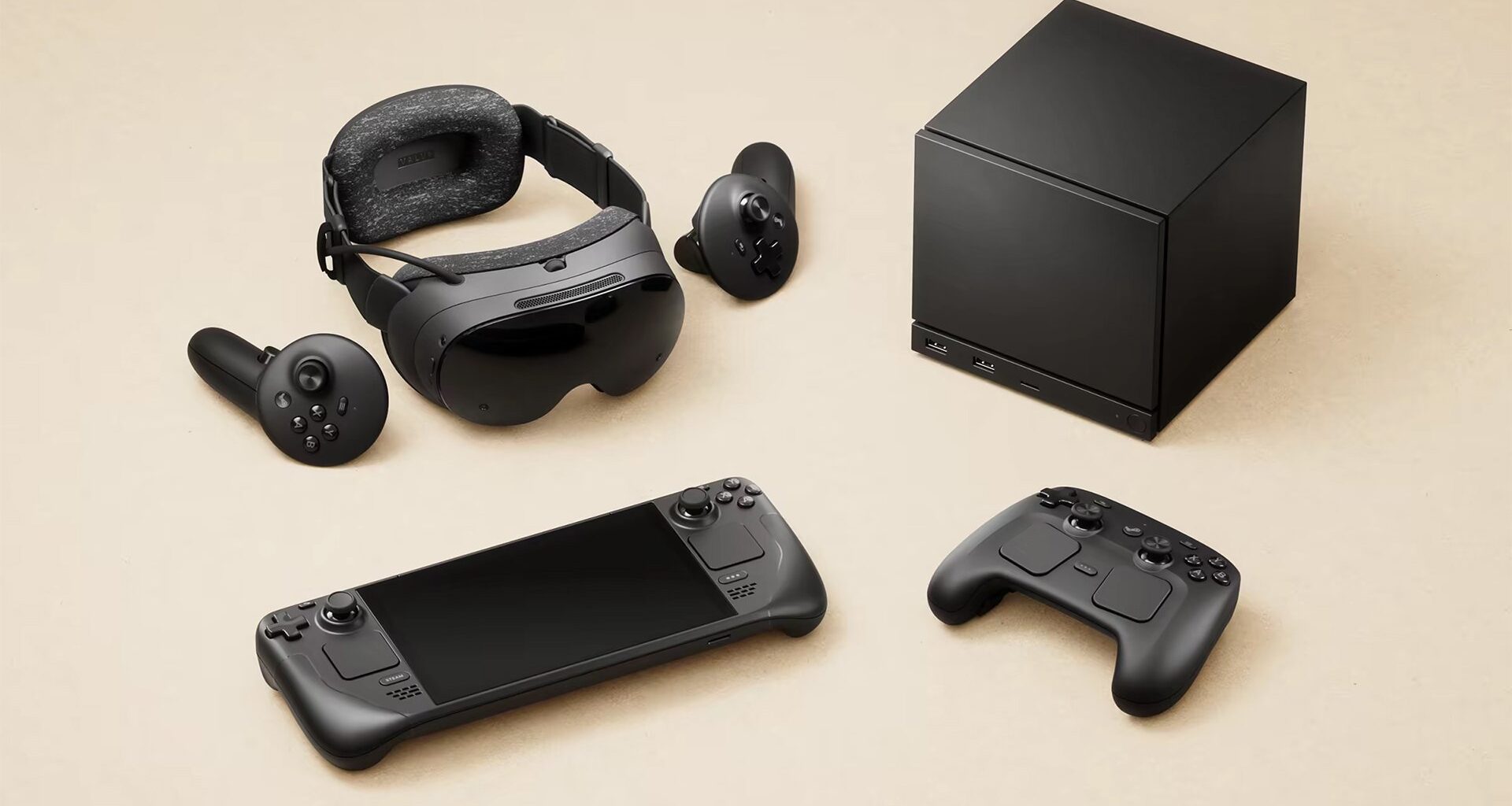
Valve has announced three new products – a new VR headset called the Steam Frame, a new controller called the Steam Controller and a console-like unit called the Steam Machine.
Valve says it plans to ship all three products in the same regions they currently ship Steam Deck. They will start shipping in early 2026, with specific launch timing and pricing to be confirmed later.
“We’ve been super happy with the success of Steam Deck,” said Gabe Newell, President of Valve, “and PC gamers have continued asking for even more ways to play all the great titles in their Steam libraries. Our work over the years on other hardware and even more importantly on SteamOS has enabled Steam Controller, Steam Machine, and Steam Frame to do just that.”
The Steam Machine is a six-inch console-like cube with “over six times the horsepower of Steam Deck”, which is designed to allow PC games to be played on the TV.
The machine has 1 Gigabit ethernet, DisplayPort 1.4 and HDMI 2.0, as well as one USB-C port and four USB-A ports. It will also come in 512GB and 2TB storage options. Its power supply will be built-in, meaning it won’t have a power brick.
The Steam Machine also has a built-in wireless adapter designed to connect to the Steam Controller, meaning players don’t have to plug in its USB ‘Puck’ receiver.
Valve promises it will offer “4K gaming at 60 fps with FSR, thanks to a discrete semi-custom AMD desktop class CPU and GPU”. It also claims the Steam Machine “keeps cool and runs whisper-quiet, even while running the most demanding games”.
Valve also says the Steam Machine will be powerful enough to stream games to other devices, including the Steam Deck, Steam Frame or any other device running Steam or Steam Link.
Steam will also add a Steam Machine Verified program, similar to that for the Steam Deck, which lets Steam Machine owners see at a glance how well each game will run on the device.
Steam Machine Features and Specs
Models
512GB model and 2TB modelSteam Machine will ship in a bundle with Steam Controller and will also be available standalone
Specs
CPU: Semi-custom AMD Zen 4 6C / 12T up to 4.8 GHz, 30W TDPGPU: Semi-Custom AMD RDNA3 28CUs45GHz max sustained clock, 110W TDPSupports 4K gaming at 60 FPS with FSRRay tracing supportedOver 6x more powerful than Steam Deck16GB DDR5 + 8GB GDDR6 VRAM512 GB & 2 TB SSD modelsmicro SD card slot for expanded storage/portable catalogInternal power supply, AC power 110-240V
I/O
DisplayPort 1.4Up to 4K @ 240Hz or 8K@60HzSupports HDR, FreeSync, and daisychainingHDMI 2.0Up to 4K @ 120HzSupports HDR, FreeSync, and CECEthernet 1 GbpsUSB-C 10 Gbps, 3.2 Gen 24x Type USB-A ports2x USB 3 in the front2x USB 2 in the rear2×2 Wi-Fi 6E, dedicated BT antennaIntegrated Steam Controller 2.4GHz radio
Other features
Works with other controllers, accessories,and PC peripheralsWake with Steam ControllerRuns SteamOSFamiliar, gaming first user experienceFast suspend / resumeSteam cloud saves, and all the otherSteam features you’d expectCustomizable LED barPersonalize with colors and animationReflect system status (e.g. downloads, booting, updating)
The new Steam Controller looks like a hybrid of an Xbox controller and a PlayStation controller. It features the same View and Menu buttons (the equivalents of Select and Start) seen on an Xbox Series X/S controller, but has the analogue sticks on the bottom like a PlayStation DualSense controller.
It also features two large trackpads at the bottom, which will allow players to control the mouse cursor in PC games that make use of mouse controls. It also includes ‘grip-enabled gyro’, which it calls Grip Sense, where holding the controller’s grips can enable and disable gyro aiming.
The controller comes with the Steam Controller Puck, a wired dongle which serves two purposes – a wireless transmitter to “provide a fast, stable connection” , and a charging station with a magnetic connection to charge the controller.
Valve says the controller will feature “next-generation magnetic thumbsticks” using TMR technology, which it says are “designed for improved feel, responsiveness and long-term reliability”. They also support capacitive touch for motion controls.
It also features four programmable grip buttons on the underside of the controller, and contains infrared LEDs which makes it easier for the Steam Frame to track it, which Valve says is “perfect for playing all of your non-VR games on a giant virtual screen”.
Finally, the Steam Frame is a “streaming first” virtual reality headset which can be played wirelessly, similar to the Meta Quest headsets. It also comes with two handheld controllers which also look similar to those for the Quest.
The headset comes with a USB plug-and-play 6GHz wireless adapter, which Valve says “provides a dedicated link for both VR and non-VR streaming”. The adapter contains dual radios – one for audio and visuals, and one for connecting to Wi-Fi – which Valve says makes the connection more stable.
Valve says the device uses ‘foveated streaming’, which means it uses eye tracking to optimise detail where the player is looking, leading to what it claims is “over a 10x improvement in image quality and effective bandwidth”.
Although it’s mainly designed for streaming VR and non-VR games from a Steam PC or Steam Machine, Valve says the Steam Frame “is a PC” running SteamOS on a Snapdragon 8 Series Processor with 16GB of RAM, and can therefore handle some less image-intensive games on a standalone basis.
As with Steam Deck and the Steam Machine, a Steam Frame Verified program will be launched, which lets players see which games in their Steam library will work standalone without the need to stream.
Valve previously released its own VR headset, the Valve Index, back in 2019. It was bundled with Half-Life: Alyx. Unlike the Steam Frame, however, it required a wired connection.
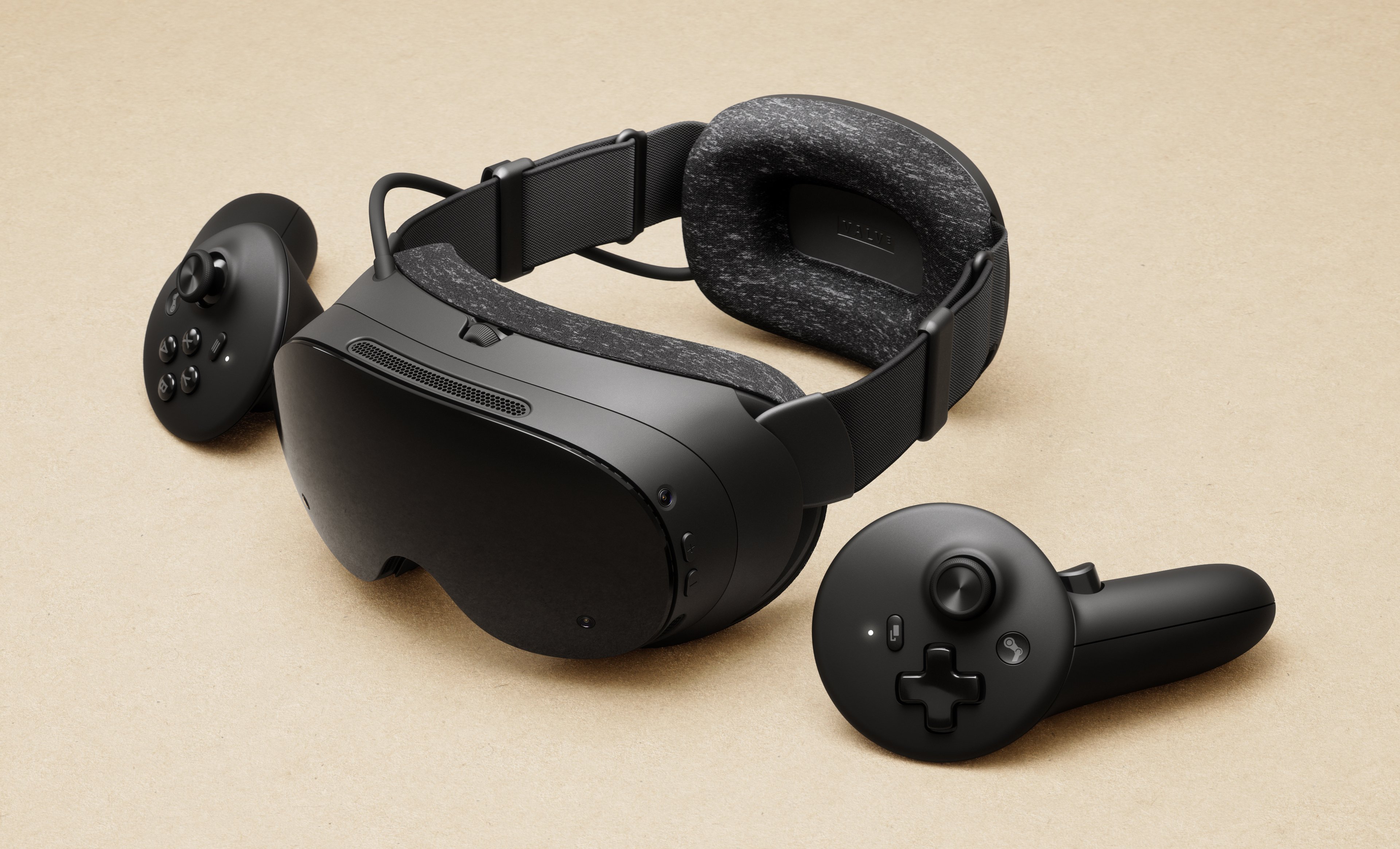
Lightweight, modular architecture
185g core440g with included headstrap(facial interface, audio, rear battery)
Specs
4nm Snapdragon 8 Gen 3 ARM64 processor16GB Unified LPDDR5X RAMWi-Fi 7, 2×2Dual 5Ghz/6Ghz streaming for simultaneous VR and Wi-Fi256GB / 1TB UFS storage optionsmicroSD card slot for extended storage
Optics
Pancake optics2160 x 2160 LCD (per eye)72-144Hz refresh rate (144Hz experimental)Large FOV (up to 110 degrees)
Tracking
4x outward facing monochrome cameras for controller & headset tracking2x interior cameras for eye trackingOutward IR illuminator (for dark environments)
Other features
Wireless Adapter includedWi-Fi 6E (6Ghz)Fast, direct, low-latency link between headset & PCFoveated StreamingEye-tracking drives video stream, sending highest resolution to where you’re looking.AudioDual speaker drivers (per ear), integrated into headstrapDual microphone arrayMonochrome camera passthroughUser accessible front expansion port( 2x 2.5Gbps camera interface / Gen 4 PCIe )Rechargeable 21.6 Wh Li-On BatterySteamOSSleep / wake, cloud saves, Proton
Steam Frame Controllers
Full 6-DOF tracking and IMU supportCapacitive finger sensingMagnetic thumbsticks (TMR) for improved precision, responsiveness and reliabilityHaptic feedbackInput parity with traditional game padReplaceable AA battery (40hr life)Optional straps
The Steam Machine isn’t Valve’s first attempt at bringing PC games to the couch. Back in 2015 it also announced a series of devices, also called Steam Machines, which were small form factor PCs designed to play SteamOS on the TV to provide a console-like experience. These were announced alongside the original Steam Controller, which offered a touchpad with haptic feedback instead of an analogue stick.
Steam Machines didn’t have a specific hardware configuration, but instead had a set of minimum specifications which PC manufacturers could use to make and release their own Steam Machines. At least 14 different companies showed off their own Steam Machine prototypes at the 2014 CES show, with prices ranging from $499 to $6,000.
Ultimately, the Steam Machine project didn’t really take off and it was estimated that, of the products that did actually make it to market, fewer than half a million units had been sold after seven months.
Valve also released the Steam Link in 2015. This hardware device plugged into a television and allowed the player to stream their Steam games from a PC to the device, allowing them to play them on TV. This obviously required the player to already have a gaming PC, however.