
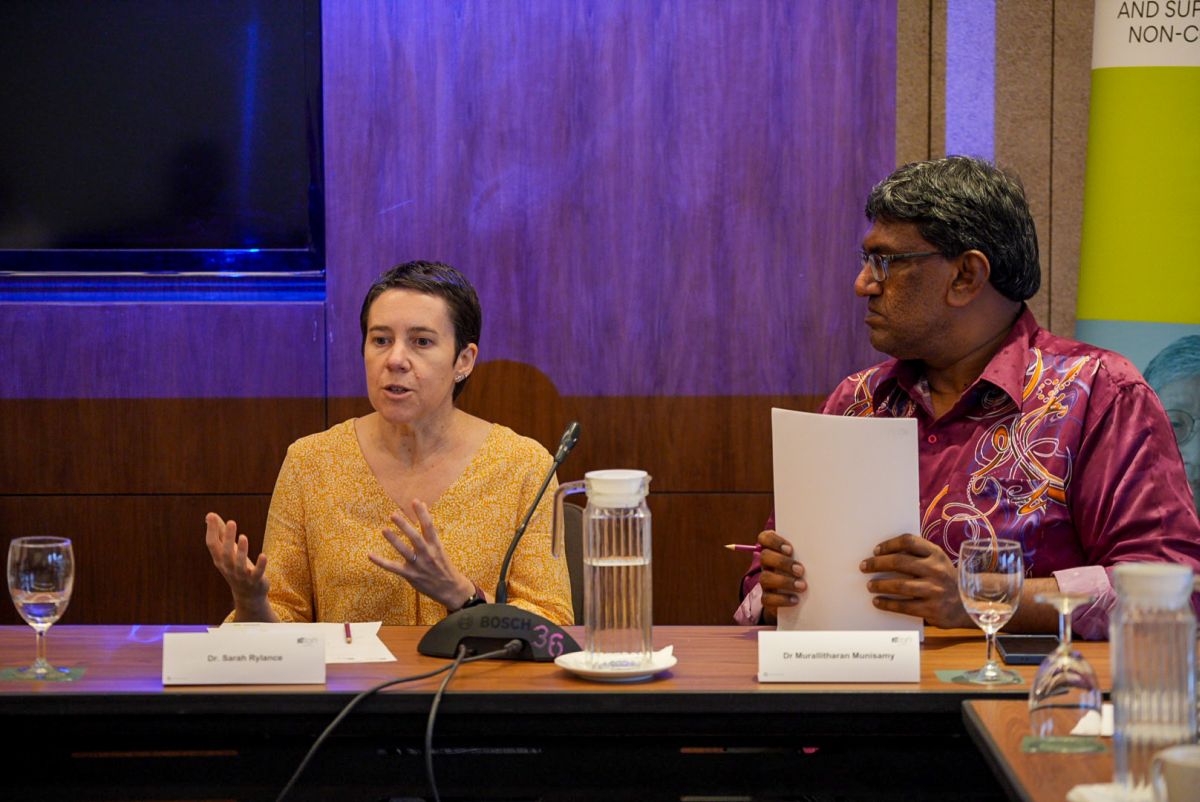
KUALA LUMPUR, Nov 18 — Clinicians say chronic obstructive pulmonary disease (COPD), a progressive lung disease that causes persistent breathing difficulties, often receives clinical attention only when it becomes life-threatening in patients with multiple non-communicable diseases (NCDs).
National Cancer Society Malaysia (NCSM) medical director Dr Murallitharan Munisamy said care for patients with multiple chronic conditions is typically shaped by immediate risk rather than overall disease burden.
“It’s always going to be what is going to kill me tomorrow,” Dr Murallitharan told reporters at the “Unpacking the Chronic Respiratory Disease Epidemic” media workshop here last Thursday (November 13).
COPD is a long-term lung condition characterised by persistent, not fully reversible airflow obstruction and progressive damage that worsens over time, usually from smoking, air pollution, and prolonged exposure to smoke from burning solid fuels like firewood or charcoal. Symptoms include chronic cough, phlegm, breathlessness, wheezing, and fatigue.
Unlike asthma, where treatment can often reopen narrowed airways, COPD causes lasting airway narrowing and lung tissue damage that cannot fully return to normal. Management focuses on slowing the decline of lung function through inhalers, pulmonary rehabilitation, smoking cessation, and reducing exposure to smoke and air pollution.
People may also hear COPD described as emphysema or chronic bronchitis. These were once treated as separate diseases, but research has shown they overlap heavily.
They share the same risk factors and they cause the same problem – persistent, irreversible airflow obstruction. Because they also respond to similar treatments, experts now group them under COPD as different forms of the same condition.
But managing COPD becomes far more complicated when it co-exists with other diseases.
Dr Murallitharan explained that when a patient with COPD also has lung cancer, diabetes, or sepsis, clinicians naturally prioritise the condition most likely to result in rapid deterioration.
“If I had COPD and I had lung cancer, but my lung cancer is in control, I’m on stable immunotherapy, and I have an acute exacerbation that’s going to kill me tomorrow, any clinician treating you is going to manage the COPD. That’s the most important thing.
“Similarly, if I have COPD on top of diabetes, but I’m going into septic shock driven by uncontrolled sugar and infection, anybody is going to treat the septic shock first. The urgent priority comes down to clinical need and what will cut off your blood circulation.”
The National Health and Morbidity Survey (NHMS) 2023 found that over two million people in Malaysia are living with three NCDs – typically combinations of diabetes, hypertension, and high cholesterol – while around half a million are living with four NCDs, including obesity.
Dr Murallitharan noted that the chronic aspects of COPD and other comorbidities often remain unaddressed during routine care due to system constraints, such as limited bed capacity and time-limited consultations.
“I think for us to be sensitive and proactive, to investigate while we have you, is to look at everything else at the same time. Unfortunately, do we have enough bed time? Can I keep you in bed for three weeks while we investigate all that?” he said.
Clinicians will often try to organise follow-ups for other underlying conditions, but comprehensive multimorbidity management is difficult within current system limitations.
“We try,” Dr Murallitharan said. “Very often when we send patients home, we’ll tell them: next month, please go to the diabetes clinic, get looked at, see how they can help. We try to organise that as best as we can. Are we doing a good job? We must do better.”
Dr Sarah Rylance, a medical officer in the NCD Management Unit at the World Health Organization (WHO), said the same pressures are felt on the patient’s side, where people living with several NCDs often focus on whichever condition feels most urgent or distressing.
“I think it depends on what matters most to the person. If I have hypertension and I don’t get any symptoms from it, but I’m really breathless, I might be inclined to pay for an inhaler rather than my antihypertensive medicine,” she said. “The more conditions that people have, the trade-offs and challenges become greater.”
Dr Rylance added that limitations in diagnostic capacity also affect how COPD is detected and managed, particularly in facilities without spirometry or trained respiratory personnel.
“Doctors work in the sector that they’re in. If they have the ability to diagnose some conditions and not others, then obviously you can only diagnose what you can diagnose,” she said.
According to the WHO’s 2023 NCD Country Capacity Survey, only 40 per cent of countries globally report having spirometry for chronic respiratory diseases available in public primary care. Spirometry is a simple breathing test where a patient blows forcefully into a device to measure how well their lungs move air. It is the standard way to diagnose COPD.
The lack of consistent diagnostic tools means COPD is often mislabelled as asthma, a “lung infection”, or general breathlessness, leaving many cases undetected until patients present with severe symptoms.
At an earlier press conference held in conjunction with the workshop, José Luis Castro, the WHO’s special envoy for chronic respiratory diseases, warned that COPD remains one of the most underestimated global health threats.
He said the disease kills more than three million people every year and affects hundreds of millions worldwide, yet receives far less attention than other major NCDs.
“Anyone who breathes can develop COPD. The world is at risk, and chronic respiratory diseases must be treated as both a global environmental and public health challenge,” Castro said, calling for stronger government action on smoking, air pollution, and indoor smoke exposure.
“Every breath someone takes in a polluted city, every child exposed to secondhand smoke – these are preventable harms.”