
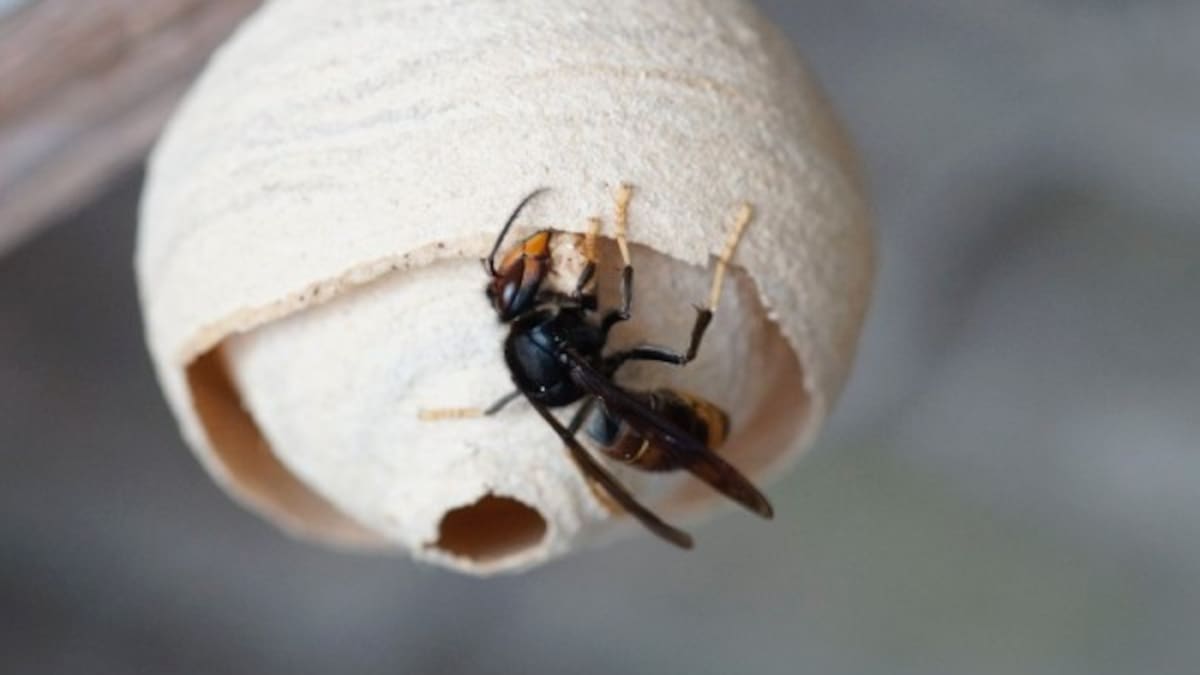
As of November 18, Biosecurity NZ has confirmed 12 queen hornets and seven nests, all in Glenfield and neighbouring Birkdale on Auckland’s North Shore, Inglis said.
Two suspected male hornets were reported in June and July, one of which was confirmed.
Critics, including Northland-based biosecurity worker and conservationist Brad Windust, claim Biosecurity NZ’s response has been too little, too late, and fear queen hornets – the nest builders – might already have “hitchhiked” on transport and cargo to other regions.
Inglis disputed this, saying Biosecurity NZ responded extremely quickly since the queens were first identified on October 17.
“ … We scaled the response up right from that point … We’ve got over 120 staff on this response … guided by scientific evidence.”
Inglis also disputed claims that it was not until the queen hornets were found that Biosecurity NZ sprang into action.
“We raised awareness in July with key stakeholders, Auckland Council, KVH [Kiwifruit Vine Health], Department of Conservation, government industry partners … and we shared a fact sheet with the National Apiculture Surveillance Programme.”
The blue spot in this chart shows the area of Auckland’s North Shore where Biosecurity NZ currently has traps laid for Asian hornets. Brad Windust suggests it should be extended to a radius of 30km around Glenfield – the distance queen hornets can fly. NZME graphic
Inglis said MPI’s Technical Advisory Group (TAG) of overseas experts had guided new measures:
expanding trapping to a five-kilometre radius, with carbohydrate and protein traps introducing tracking technology from the Netherlands to trace hornets back to nests hosting a UK hornet specialist to train staff and advise on programme delivery increasing staff on the ground to accelerate hornet detection and removal
Windust believed those measures fell short and that contingency plans in case hornets were found outside the existing detection area should already be formulated.
He warned that if even two nests survived summer, the hornets would inevitably spread to other regions, reaching Northland within two years or sooner if they hitch-hiked.
Windust believed the trapping radius should be extended immediately to 30km – the distance queen hornets can disperse – and tracking devices and thermal drones should have been deployed.
“Regional councils, DoC and iwi biosecurity teams should have formally engaged much sooner,” he said.
“Beekeepers and orchardists across the North Island should be provided free VespaCatch traps to monitor for spread of the hornets … MPI should have formed the TAG immediately after the male hornets were found.”
Inglis rejected claims of complacency.
“We want to eradicate this pest alongside our community partners and we’ll continue to do so,” he said.
“ … The public play an absolutely vital part … just like it was with our successful eradication of fruit fly earlier this year and also the bird flu down in Otago.”
Inglis, who until joining MPI in 2019 was exclusively involved in prison management, rejected leadership criticism.
“I’ve dealt with leadership events for MPI in a wide range of things from the Covid response to Cyclone Gabrielle recovery … I led the response in the North Island for that … I led the response in terms of the two fruit fly incursions,” he said.
“The main thing for every leader as well [is] that I’ve got an unbelievable team around me. We’re very, very blessed at MPI to have a range of entomologists, science-based individuals, technical people, a whole range of individuals that make sure it’s right. I’ve also ensured that my connections and relationships with a range of stakeholders are in a good space.”
Reports of suspected hornets or nests can be made at report.mpi.govt.nz or by calling 0800 80 99 66. Clear photos or a specimen are needed.
Sarah Curtis is a news reporter for the Northern Advocate, focusing on a wide range of issues. She has nearly 20 years’ experience in journalism, most of which she spent court reporting in Gisborne and on the East Coast.