
Are you still frustrated with low-light photography, where your night shots turn out dark and noisy? Let’s explore easy adjustments to improve your camera’s ability in darkness and help you take beautiful nighttime photos.
Jason Vong, a talented photographer and educator based in Los Angeles, explains how to master low-light photography by focusing on the optimal camera settings for shooting in the dark and takes us through a step-by-step process with visual demonstrations.
There are two points worth mentioning here. Although the first one seems obvious, it’s critical.
The most impactful point to me is the emphasis on manipulating the aperture as the first and most critical adjustment. Jason stresses that aperture is the number one setting you should change when shooting handheld to combat darkness and noise. By opening the aperture (lowering the f-number), you allow the maximum amount of light to reach the camera’s sensor, which immediately improves exposure and reduces the need to push the ISO too high, thereby minimizing digital noise.
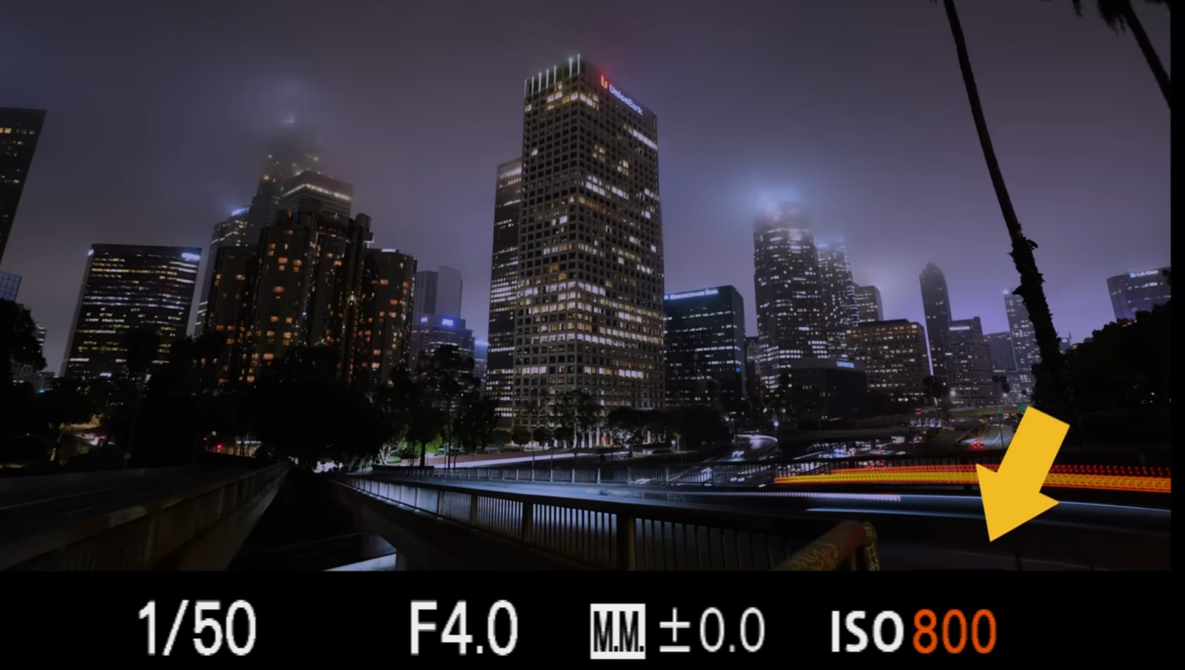
The second point is something I have personally learned the hard way in handheld night shooting for street photography. Jason highlights that when shooting in low light without a tripod, setting an appropriate shutter speed is crucial to avoid camera shake and motion blur. For full frame cameras, the shutter speed should be at least equal to the focal length used, such as 1/50th second for a 50 mm lens. For APS-C cameras, he recommends doubling the focal length for a faster shutter speed, like 1/50th second for a 24 mm lens. This step is second in his recommended sequence for handheld shooting, following the setting of the widest aperture to maximize light intake. Keeping this minimum shutter speed helps produce sharp images, even if it requires slightly increasing ISO to balance the exposure.
The video also highlights the significant advantage of prime lenses here, as they often have wider maximum apertures (e.g., f/1.8 or f/1.4) compared to standard kit lenses. By maximizing the light gathered through a wide aperture, you create a foundational image that is brighter and cleaner, setting you up for success before even touching the ISO or shutter speed. Watch the video with examples and learn many tips in the practical session from start to finish.