
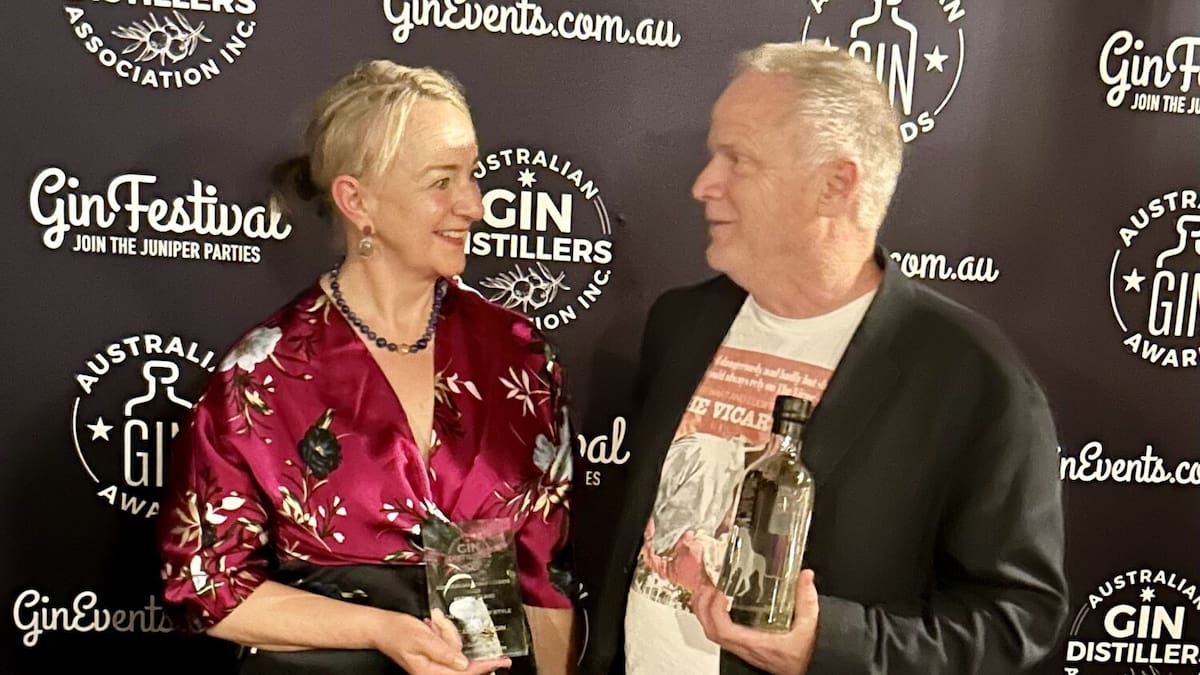
There’s been a boon in commercial distilleries in New Zealand in the past five to 10 years. Where there was once just a dozen, there are now about 150 and around 85% of those specialise in gin.
Most are small, family or mate-owned businesses and many, including several in Northland, have also won accolades.
What sets The Vicar’s Son apart is not just its awards but its scale. The couple describe their operation as “the smallest grain-to-glass commercial distillery in the world” because they only make seven bottles of gin per batch.
Bigger brand commercial distilleries typically make about 2000 bottles per batch, with a run of 100 considered “small”.
Unlike many distilleries, which buy in base ethanol and then add botanicals, Martel and Hrdina make their own base alcohol using barley sourced from Canterbury.
The process takes four to six weeks in total – fermenting, quadruple distilling, and resting the spirit for weeks to allow added botanicals, such as saffron, lemons, grapefruit, limes, or NZ’s own lemonades (all sourced fresh) to fully integrate. The result is a gin that enthusiasts say tastes distinctively different from mass-produced brands.
The name itself carries a personal story. Martel is a vicar’s son and the brand reflects that heritage.
What began as a hobby during the Covid lockdown has grown into a fully licensed business, though still a “hobby business” at heart.
Hrdina, originally from Switzerland, first suggested they try making gin after they noticed the growing popularity of the spirit overseas.
Martel, 62, a software sales manager, and Hrdina, 55, a diabetes midwife, began experimenting at home with distilling.
Their small-scale approach has remained deliberate. “From day one, we wanted to have a really high-quality product,” Martel said.
“We’ve invested in top-end equipment, but that means we can only make small amounts.”
A tiny caravan is all that’s needed to serve visitors a sample of the some of Australasia’s winning gin. Photo / Supplied
Northlanders and visitors can see the process up close. Whangārei District Council has granted The Vicar’s Son a licence to open for gin tastings and distillery tours every Sunday from noon-5pm, until May 2026.
The price of the product, $134 a bottle, reflects the craftsmanship, the couple said. Although The Vicar’s Son might be at the premium end of the market, customers keep coming back. Martel said he knows many of them by name, with repeat orders from people who appreciate the difference in taste and the story behind the product.
And there’s more to come – a whisky they call The Monk, which they’ll release this month if it meets their standards. It’s been ageing for the past two years – half of that time in Auckland and 12 months in Mangapai.
The whisky has been maturing in a 20-litre cask, far smaller than the 500-litre barrels typically used, the couple said.
The smaller-sized cask accelerates the ageing process – two years in it is the equivalent to a decade in a larger one.
The couple have been tasting the whisky as it matures and said it’s nearly ready.
“We think it’s going to be a real winner,” Martel said. “It tastes fantastic.”
Only 35 bottles will be produced, with special labels and packaging to mark the occasion.
For Martel and Hrdina, the dream doesn’t stop at gin and whisky.
They hope one day to grow their own juniper (an ingredient in gin) on their 5ha property and are keeping a close eye on trials under way in New Zealand to establish the plant locally.
For now, though, they’re content with their new Northland lifestyle, their tiny batches of spirits, their loyal customers and the chance to share their passion with more visitors.
Sarah Curtis is a news reporter for the Northern Advocate, focusing on a wide range of issues. She has nearly 20 years’ experience in journalism, most of which she spent reporting on the courts in Gisborne and on the East Coast.