
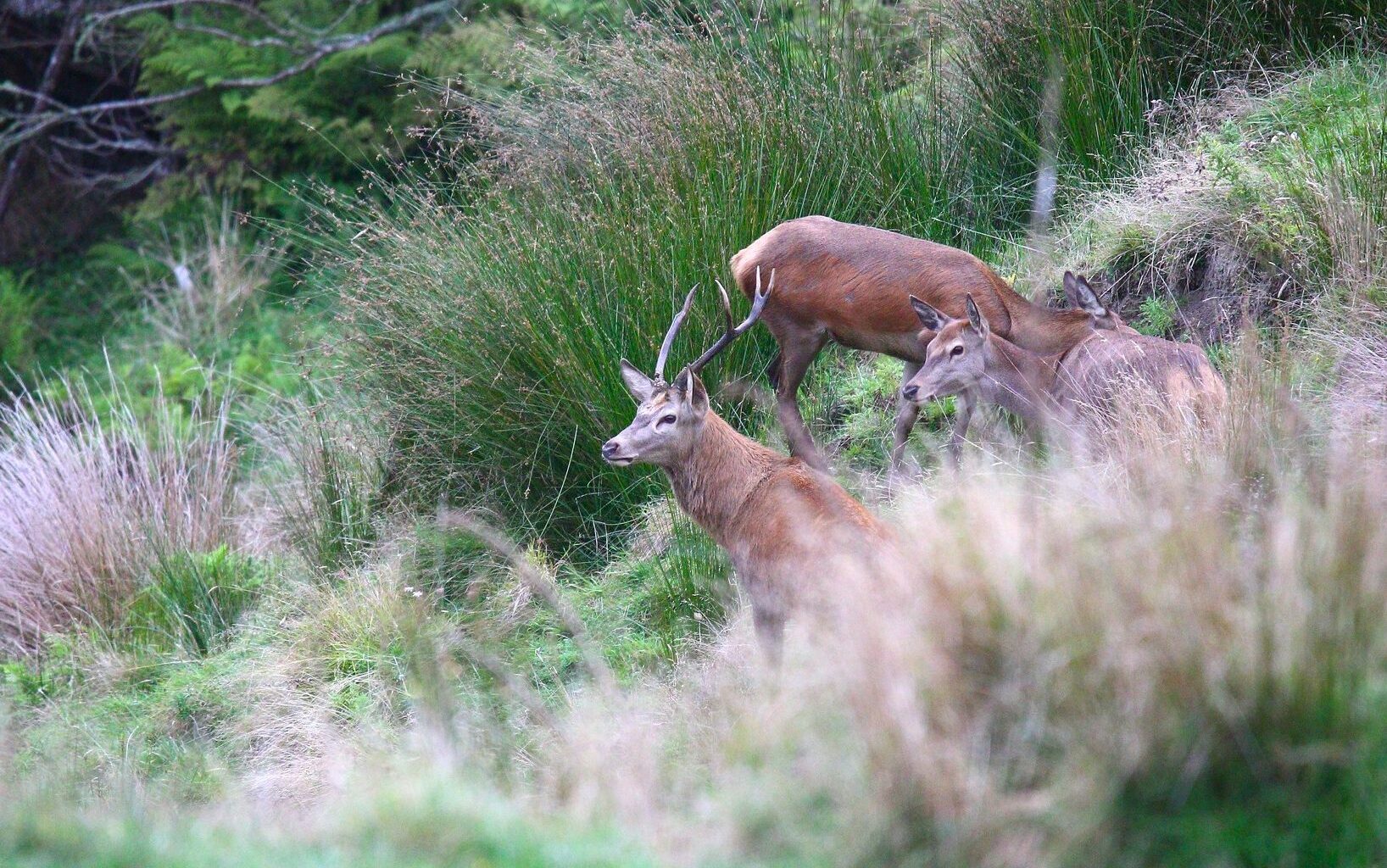
In 1904 by the Dart River near Kinloch, locals watched as eight deer, set free from a horse-drawn buggy, bounded into the forest and quickly disappeared.
The animals had been brought across Lake Wakatipu by steamer, Bryant family descendant Doreen McKenzie writes in her book ‘The Road to Routeburn’.
Proving too awkward to transport further inland as originally planned, they were released near the township by the Acclimatisation Society.
“There were mutterings that this was far too close to the pastures and gardens at Kinloch,” she wrote. “All agreed that they should do well in this part of the country, especially as a fine of five pounds plus costs, faced anyone harming them.”
A few short decades later, Kinloch farmer Huntly Groves had resorted to tying his working dogs around hay piles at dusk to deter the large mobs of deer coming out of the bush each night to eat it.
Over time, deer releases nationwide had collectively set in motion a population explosion followed by mass culling work, a boom-and-bust venison trade and the establishment of commercial deer farming. They also allowed generations of recreational hunting and food gathering that has become a hugely valued part of New Zealand culture.
Over the past decade modern variables have aligned and deer are again breeding faster than they are being removed. New Zealand is staring down the barrel of another explosion and while plans are being hatched to get on top of it – which will likely take years – biodiversity is taking a beating.
Combined with a surge in feral pig and goat numbers, deer are causing severe, possibly permanent damage to native forest on public and private land. Pasture is also being invaded with mobs regularly raiding winter crop paddocks and eating grass meant for stock.
Deer are quiet animals with a gentle grace about them, as they browse through the forest, long eyelashes batting and pretty ears twitching. Cautious and watchful, they vanish into the trees like shadows at the first sign of danger.
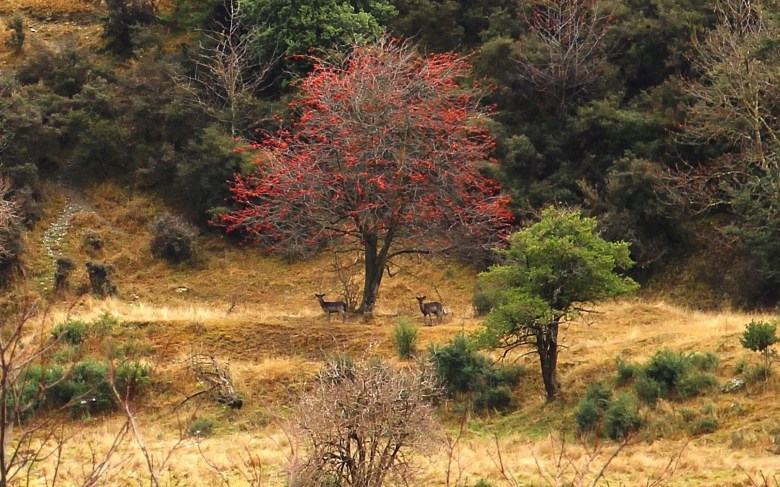 Fallow deer rest in the shade on an Otago farm. Photo: Jill Herron
En mass, however – especially combined with feral pigs and goats – they can be almost as destructive as bulldozers, stripping vegetation, killing trees and exposing the ground to erosion. The resulting mess leaves nothing for the native birds, reptiles, insects and plants that previously thrived there.
On farms, both feral pig and deer numbers were reported to be growing, with the latter moving into areas they had not been seen “in generations”, Federated Farmers Meat and Wool Industry chair, Richard Dawkins, says.
Farmers nationwide were now spending $74 million or more annually on pest control. The figure was attained through a survey of 700 members, which also found another $139m was being lost through damaged fencing, pasture and trees.
“There is a clear and consistent message from our members right across the country. That is, that mobs of feral animals are getting bigger and more frequent. These mobs are devastating on expensive crops, they damage fencing and can attack livestock.”
He says the organisation was hearing incidents of pig attacks “more and more frequently”.
“Most recently, one Otago farmer lost around 50 percent of his lambs in one mob, with clear evidence of pigs killing newborn lambs.”
Deer are impacting native plantings on farms as well as pasture, including on his own property, Dawkins says.
“We recently lost 5ha of freshly planted trees with deer crossing the road and coming in at night. Active management is required, but when wild animals don’t respect boundaries, it’s almost impossible. I am hearing more frequently that catchment groups and farmers are installing deer fencing to protect their trees, at significant cost.”
Mike Perry, wild animals manager for the Department of Conservation says national monitoring data from 2013 to 2020 shows wild animals increasing their range from occupying 63 percent of conservation sites surveyed, to 83 percent.
“Anecdotally too, we are hearing lots of reports throughout the country of deer increasing on private land.”
He believes a primary driver of the increase is the drop in commercial venison-harvesting due to market forces.
“At its peak it was around 135,000 or 140,000 animals removed every year, that’s dropped down to the average over recent years probably more in the 20,000 range.”
Recreational hunting also removed a lot of animals but recently the combined effort of the two, plus culling work, was not keeping up with the increase in numbers.
In places, there was serious erosion where deer had trampled the ground and instances where the animals had “changed the forest ecosystem,” Perry says.
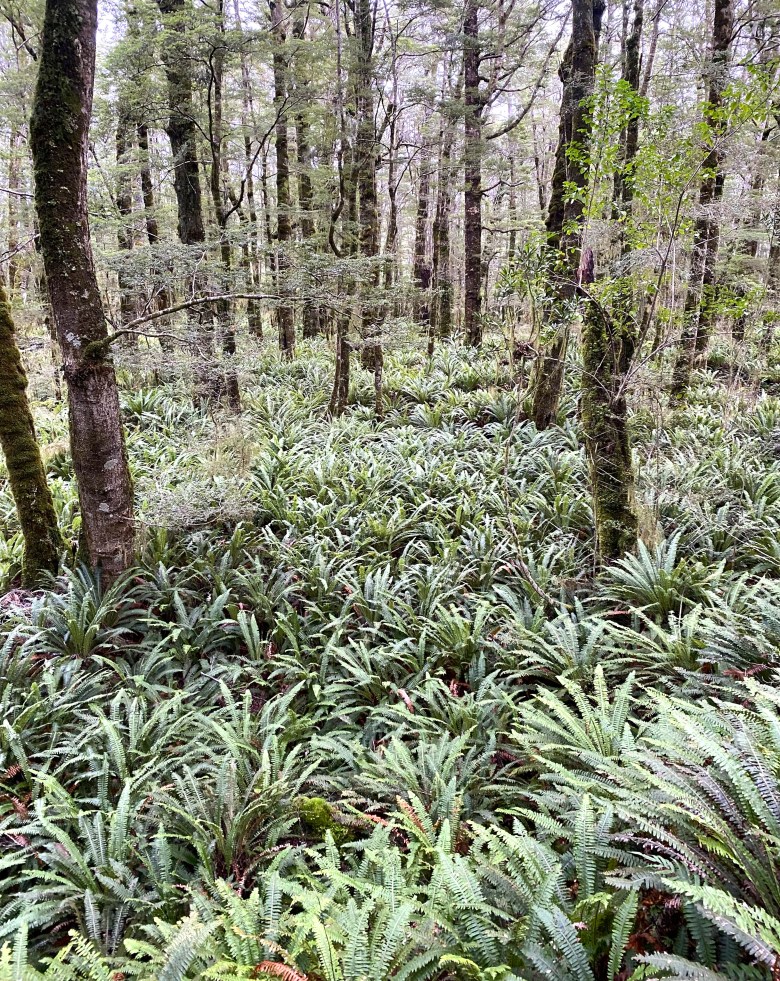 Silver beech forest lacking palatable species after deer browsing. This image was taken near the Arawhata River in South Westland in August this year. Photo: David Norton
An example in the North Island was in the Kaimanawa Ranges where canopy collapse was occurring and regeneration being prevented by deer removing the understorey. Local hunting group The Sika Foundation were now working with the conservation department to management the issue.
To make the best use of resources, the department focused on deer-free areas, rather than those with high densities of deer, to prevent further spread and protect highly valued, vulnerable species, Perry says.
In the Fiordland region, funded culling work is done in the Murchison mountains to protect takahe, in Cleddau Valley and on deer-free island sanctuaries but elsewhere the department sought ways to get rid of deer at a reduced cost or free.
Perry says work is ongoing with the Ministry of Primary Industries to try and ease commercial harvesting rules and get helicopters and shooters back in the air.
The department works increasingly with groups like the New Zealand Deerstalkers Association and Wapiti Foundation, which remove deer in good numbers across the country. A popular goat-hunting competition had been set up and a system where farmers could register and be matched up with vetted hunters to help control numbers on their properties.
Assisting farmers to set up deer traps could be another good tool to bring back into use, he says, as the venison harvested could help pay for the fencing.
“We need to look for smart solutions. We’d all like to have funding but what can we do with the commercial hunters and how can we support and grow recreational hunting.”
Statutory control of feral deer, pigs and goats is spread across central and regional agencies, each working under different legislation.
Perry says the primary industries ministry is looking at the legislative set-ups to see if regional councils might be given more powers in terms of feral ungulate management, although there are flies in that ointment too.
“Even if they were, obviously regional pest management plans are consulted with the community and there’s a huge range of views around deer, in particular, but around all wild animals, from people who think they should be totally eradicated in New Zealand to people who absolutely love them and are not as concerned about the impact on the bush.”
Practical management is tricky too as deer can travel between three different properties in the space of one night’s grazing activity.
He says over the past two years a national wild animals coordination group had been working to bring efforts together and recently a national management strategy had been discussed.
“The thing is you could write a plan but how do you encompass the different values. Also how do you make something that’s not just going to sit on a shelf.”
Federated Farmers is working on various initiatives and believes commercial incentives drive the most effective change. Dawkins is pleased the ministry has a new Feral Browsing Animal Programme underway.
Whatever the plan, however, a reprieve for farm and forest is not going to happen in a hurry. He says estimates predict 300,000 more animals would need to be eradicated every year for the next five years to rein in the current population boom.
“The problem ultimately affects New Zealanders from all walks of life – farmers and foresters lose production, native vegetation, whether in conservation areas or on farms, is damaged. So, the simple answer is, that anyone who cares about the land and the bush has a stake in addressing the problem.”