
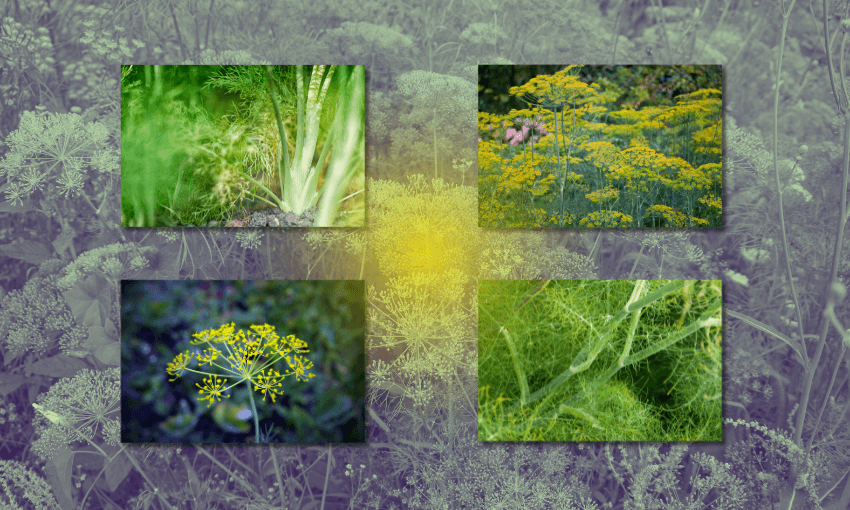
Summer is the perfect time to begin foraging for wild fennel. Charlotte Muru-Lanning explains how to find the edible weed, and how to use it in the kitchen.
When you’re next out roaming around in the great outdoors, keep an eye out for wild fennel. It’s hard to miss once it’s on your radar: a beautiful plant crowned with billowy feathered fronds. As the seasons shift, it acquires brilliant firework-like sprays of yellow, which eventually dry into something more skeletal and gloomy-looking. When in doubt, let scent be your guide – wild fennel has an unambiguously sweet, liquorice-like fragrance.
Wild fennel does particularly well in rough, coastal settings, but also likes taking up residence at the fringes: along roadsides, in wild gardens, beside train tracks and, less romantically, around waste areas (obviously, don’t forage here). These feral varieties won’t look identical to the Florence fennel you buy at the shops – notably they lack the familiar swollen bulb commonly used in cooking. But it’s hardly a loss because nearly every part of the wild plant is usable, from the fibrous stalks to the delicate fronds, the pollen and the seeds. And each of these, from plant to plant, carries subtly different flavours – though always underscored by the distinctive anise and liquorice notes.
For some, fennel and other liquorice-adjacent ingredients are an acquired taste (Auckland mayor Wayne Brown, for example, once told me that it was his least favourite food). But if you’re a fennel fan, seeking it out and then using it in your kitchen is immensely satisfying. This is especially true as food prices continue in their upward creep. Foraging wild fennel won’t replace your weekly grocery staples, but it will give you a completely free way to add brightness, intrigue and creativity to your cooking.
Even better, because fennel is an invasive species that reproduces wildly, you should feel free to harvest as much as you like – you are, essentially, helping to control this country’s weed population.
As always, when you’re foraging, avoid areas that may have been sprayed with pesticides or weed killers, or places close to polluted areas like busy roads. And when using the green parts of the plant, make sure to give everything a generous wash (or two) before using.
Here’s a rundown of wild fennel inspiration to get you on your way, from very straightforward to more elaborate.
Garnish
An obvious, but still very pleasing, way to begin your wild fennel journey would be to scatter the softest, most verdant parts of the plant into an entirely green salad. Soups, roast vegetables, seared fish, boiled potatoes, seafood stews and dips also make terrific canvases to artfully shower some chopped leaves.
Pickled
A wonderful way to use both the flavourful stems and feathery fronds of the plant is to pickle them. Stuff bite-sized bits into a sterilised jar (alongside your choice of mustard seeds, peppercorns, fennel seeds, coriander seeds and bay leaves) and top with a slightly cooled, stovetop-simmered mix of 1 cup of white vinegar, half a cup of water and a quarter cup of sugar. Seal and store in a dark cupboard. And refrigerate once opened. Over time, the initial vibrancy of the green will, sadly, fade to something a little more muted – but the flavours will only get more lively.
 Pickled fennel.
Simple syrup
In a saucepan combine two cups of water and one cup of sugar, mixing over a low heat until the sugar dissolves. Once the liquid comes to the boil, remove from the heat and add half a cup of fennel fronds. Once completely cooled, strain the liquid into a jar or glass bottle. Keep in the fridge to add depth to citrus-imbued cocktails and vodka sours.
Pesto
A staple of any forager’s recipe kit is the ever-adaptable pesto. If you track down some wild fennel, blend the fronds with walnuts, cashews, roasted pumpkin seeds or sunflower seeds, olive oil, parmesan, salt and pepper.
Compound butter
The name sounds technical, but compound butter is simply a mix of butter and other ingredients. All you need to do is leave whatever portion of butter you like in a bowl at room temperature until it’s soft, but not melted. Then add chopped fennel fronds, and, if you like, other varieties of chopped herbs, minced garlic, citrus zest or honey. Combine with a food processor or by hand. Roll into a log shape using plastic wrap or baking paper and chill. Slice discs off to melt onto grilled proteins, boiled potatoes or whole corn. Perhaps the most delicious way to consume this stuff is to spread it onto toast.
Green oil
Blitz a cupful of fronds with half a cup of a neutral oil (like sunflower or peanut oil) until the mix is totally blended and you can’t see any flecks of green. Ideally, this should take no longer than a minute so as to avoid warming the mix. Pour this into a cold dish and chill, covered, overnight. Then, resisting the urge to apply any pressure, strain the oil through cheesecloth or a paper towel-lined sieve. The end product should be an emerald-coloured oil ready to be whisked into vinaigrettes, stirred into soups or splashed onto a dinner plate before serving for a little fine-dining finesse. You can also blanch the fronds beforehand for a brighter oil.
Fennel oil.
Pasta
Wild fennel is ubiquitous in parts of Italy, so some of the greatest applications of the herb are in pasta dishes. A fantastic format to return to is this four-ingredient recipe which uses spicy sausages, fennel fronds, olive oil and any form of tubular pasta noodle. Pasta con le sarde – a combination of spaghetti, sardines, anchovies, pine nuts, sultanas and wild fennel – is also a brilliant option, albeit a little more involved in terms of ingredients.
Fritters
Combine a cup each of chopped fennel fronds and chopped onion with a cup of flour, one teaspoon of baking powder and salt and pepper. Break in two eggs and mix. Add a tablespoon or two of water to the batter. In a pan, heat oil until hot and pour in a tablespoon of the batter at a time. Cook until golden. Not quite a fritter, but worth attempting are marathopites, a Cretan flat pie that spotlights wild fennel fronds.
The not-so humble umbel
As summer progresses you’ll start to see the cheery yellow umbels (flower clusters) appear on wild fennel plants. This is a sign of perhaps the most magical part of the plant, the pollen – edible gold. This should be collected on a dry day by vigorously shaking the clusters into a bag or container, straight from the plant. Alternatively you can store the whole flower in a bag and wait for the pollen to naturally fall off. Once you’ve gathered your pollen, store in jars or airtight containers in a dry, dark part of your house. The pollen is sought after for its slightly sweeter, citrusy and more rounded profile, but also because it looks especially charming on the plate.
You can use this however you would ordinarily use fennel, but it’s best shown off dusted onto mashed potatoes, pork dishes or baked cheese. On the sweet side of the spectrum, it adds additional froufrou to cakes, biscuits, ice cream – or adorning the vodka sour mentioned earlier. Oh, it’s also very good on popcorn.
The pungent seeds can be collected in the months that follow from the dried floral heads, using an identical technique to how you harvest the pollen. If you manage to collect both the flowers and the seeds, you could use them to make the Italian fennel digestif finocchietto, which involves steeping the dried flowers and seeds in alcohol for a period, before mixing in a sugar syrup. Here’s a recipe from someone who knows what they’re doing.
Summer brings firework-like sprays of yellow to the plant.
Dumplings
If you have the nimble hands for it, the ideal place for your foraged fennel is encased in a dumpling. To do so, you can make whatever your favourite filling is (but pork is recommended here), finely chop both the fronds and stalks of the fennel into the mix and continue. Potentially laborious, but very much worth it.