
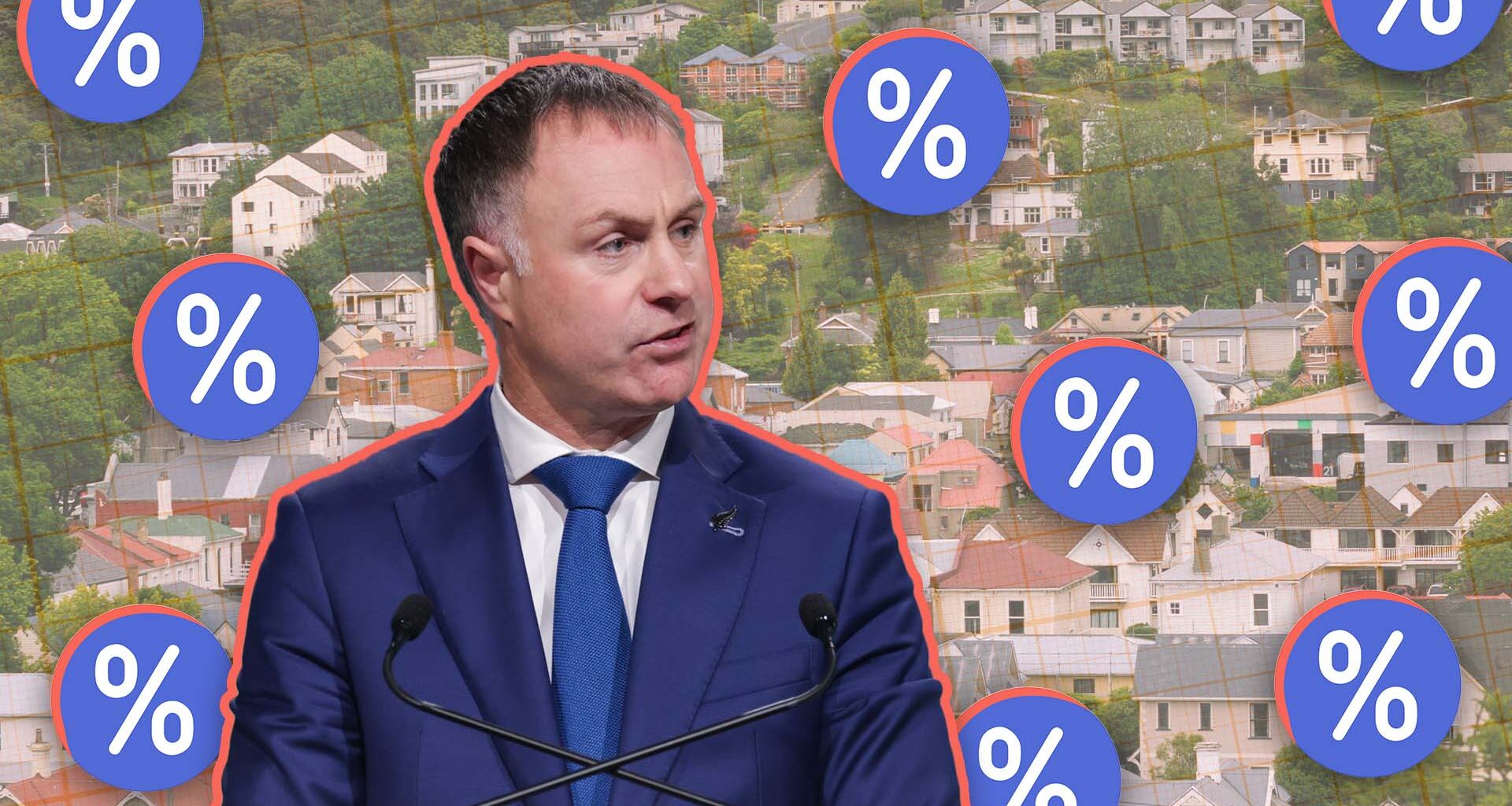
Local Government Minister Simon Watts says the Government is progressing a rates cap for local councils, with analysis suggesting a target range of 2% to 4% increases per capita, per year.
“This means rates increases will be limited to a maximum of 4%,” Watts said on Monday.
Rates have been an ongoing, contentious topic – there has been public pushback against rate increases and the Government has made no secret that it was considering options when it came to controlling rate rises.
Back in July, ANZ economists said council rates inflation hit a record high last year – averaging 12.2% across Aotearoa. This came after three years of annual increases between 7% and 10% – up from the 4.7% average per year between 1992 and 2019.
And while council rates are likely to increase over the next few years, this would be at a slowing pace, according to ANZ economists.
Watts said; “our message to councils is clear: focus on the basics, live within your means and be more transparent and accountable to the communities in which you serve.”
Ratepayers deserve councils who live within their means, he said.
“The Government’s decision to introduce a cap on rates will support that ambition and protect local government’s social license for the long-term.”
How will the rates cap system work?
The Government said the proposed model will set a target range for annual rates increases, based on long-term economic indicators like inflation at the lower end and GDP (Gross Domestic Product) growth at the higher end.
The lower end of the range is designed to ensure councils can maintain essential services, while the upper end balances “the need for sustainable growth with keeping rates increases affordable,” the Government said.
Watts said analysis suggests a target range of 2% to 4% per capita per year. “This means rates increases would be limited to a maximum of 4%.”
“A minimum increase is necessary so councils can continue to provide essential services like rubbish collection, council roads maintenance and the management of parks and libraries,” Watts said.
The cap will apply to all sources of rates – general rates, targeted rates and uniform annual charges – but will exclude water charges and other non-rates revenue like fees and charges.
Councils won’t be able to increase rates beyond the upper end of the range, unless they get permission from a regulator that is appointed by the central government.
The Government said permission would only be granted under extreme circumstances such as a natural disaster, and councils will need to show how they plan to return to the target range.
The Government said if councils need to raise revenue to pay for things outside of extreme circumstances – for example, catching up on past underinvestment in infrastructure – they will need to apply to a regulator for approval.
Councils, again, would need to give justification and show how they plan to return to the target range over time, the Government said.
‘We are capping inefficiency’
Speaking to reporters on Monday afternoon about the proposal, Watts said an independent reference group was set up to advise on the design of the rate caps policy.
When asked about reports from councils in places like Australia and the UK that have had to cut back on services due to rate caps, and how a rates cap system would work in New Zealand, Watts said; “we’ve taken considerable learnings from other jurisdictions of where it hasn’t been effective”.
Watts said the model they were going with, to their knowledge, was one of the first in the world to adopt a target range basis.
The target range would provide a “credible, long run guide for sustainable council revenue growth – 2% aligns with the midpoint for inflation and 4% reflects long-term economic growth”, he said.
“We expect that the review of that band will occur every three years.”
Asked about a 0% rates increase, Watts said the independent reference group looked into this.
By having this target range, Watts said: “It is simply acknowledging that actually there is a requirement for councils to invest and maintain assets that they have, and campaigning on 0% in the context of asset renewal was not necessarily going to be in the best interest of our long term renewal.”
When asked if the Government could guarantee that the services councils provide wouldn’t be impacted or diminished as a result of rate caps, Prime Minister Christopher Luxon said: “Ultimately that’s a decision for each council to make.”
“In the same way that families have had to make do with the budgets that they’ve got and the revenue that comes in, and the income that comes in, they have to deal with their expenses the same way that [central] government is doing that … We expect local governments to do the same thing.”
Asked about infrastructure and how this would be a change to councils’ budgets, Luxon said there needed to be better management.
“Stop doing dumb stuff.”
Luxon said there were good mayors running their councils well and doing a great job.
“But there are others that need to step up their game, build their financial literacy, manage their balance sheets better and think about where that money goes.”
Watts said “nobody here is capping infrastructure. We are capping inefficiency.”
‘A blow to the infrastructure sector’
Infrastructure New Zealand’s Nick Leggett said any form of rate capping must not come at the expense of building new infrastructure that is needed, and maintaining the crucial assets local governments already own.
Infrastructure NZ said the Government’s proposed policy; “risks weakening councils at a time when the country urgently needs stronger, better-resourced local government to maintain and build the infrastructure communities rely on”.
Leggett said: “This is a blow to the infrastructure sector … If the Government is going to keep beating councils with a stick, they need to start handing out some carrots.”
“How are councils going to pay for new infrastructure or fix what they’ve already got when their primary funding tool is being restricted without any credible alternatives being offered?”
Local Government New Zealand (LGNZ) – an organisation that advocates for local councils – said having a targeted rates band promises greater flexibility but would restrict investment in core services like roads, bridges and public transport.
LGNZ interim chief executive Scott Necklen said: “We need a common-sense, fast-track process for exemptions that enables investment in key infrastructure in economic growth in the regions, or when responding to natural disasters.”
“[Watts has] taken a pragmatic route and we want the same pragmatism to apply to exemptions.
“We will be working through the policy detail and with our members – and taking that feedback to the Government.”
‘Distraction tactic’
Labour would be voting against the rates cap legislation, its local government spokesperson Tangi Utikere told reporters on Monday afternoon.
Utikere acknowledged there was a consultation to process to go through but as it was currently drafted, it’s not something the party would consider.
“The money for essential services, like water and waste, libraries, parks and footpaths, has to come from somewhere,” Utikere said.
“Councils will be left with no other option but to hike fees or start charging for services that have always been free. Or they’ll have to cut services altogether – either way, communities lose.
“People rely on their rubbish being taken away, clean water from their taps, rural roads being repaired and parks and footpaths being maintained. When that stuff stops happening, remember this decision by Christopher Luxon,” Utikere said.
“We don’t support a rates cap, what we do support is working alongside local government to give them the tools and the support to work hard for their communities.”
The Green Party’s local government spokesperson Celia Wade-Brown said the Government has “effectively scapegoated local councils” and called the proposal a “distraction tactic”.
“Capping rates does nothing to fix the decades of significant underinvestment in local infrastructure, or the lack of alternative funding models across successive governments,” Wade-Brown said.
“This blunt instrument will almost certainly lead to increasing fees and charges which will be regressive for those on lowest incomes.”
‘Councils now need to step up’
ACT leader David Seymour says the Government’s proposal reflects the real strain households have been facing, but warns that a cap won’t fix councils that refuse to control their own spending.
“ACT has consistently called on councils to find a rates solution because the pressure people are feeling is real,” Seymour said.
“The Government recognises that ratepayers need relief, but councils now need to step up … Councils need to tighten their belts like ratepayers have done for years.”
Timeline
A targeted consultation starts on Tuesday and runs until February 2026, and relevant legislation will be enacted during 2026 and be law from January 1, 2027.
Watts said there will be a transition period from January 1, 2027.
“From 2027, councils will be required to consider the impact of rates caps on their long-term plans and report on areas of financial performance, like the cost of wages and salaries, council rates as a percentage of local house prices and estimates of local infrastructure deficits,” he said.
The full regulatory model will be in place by July 1, 2029.
“However, officials will be monitoring rates rises nationwide as soon as the legislation is enacted,” Watts said.
“Where councils propose increases beyond the proposed cap, this may present grounds for intervention under the Local Government Act.”
“Councils should not wait for the full enactment of the rates capping model before controlling rates increases for their constituents,” Watts said.
The rates cap announcement follows another Government proposal released last Thursday which involves removing regional councils and replacing these councillors with combined territories boards.
These boards would be made up of mayors from the region’s city and district councils, and they would take the lead on regional issues.