
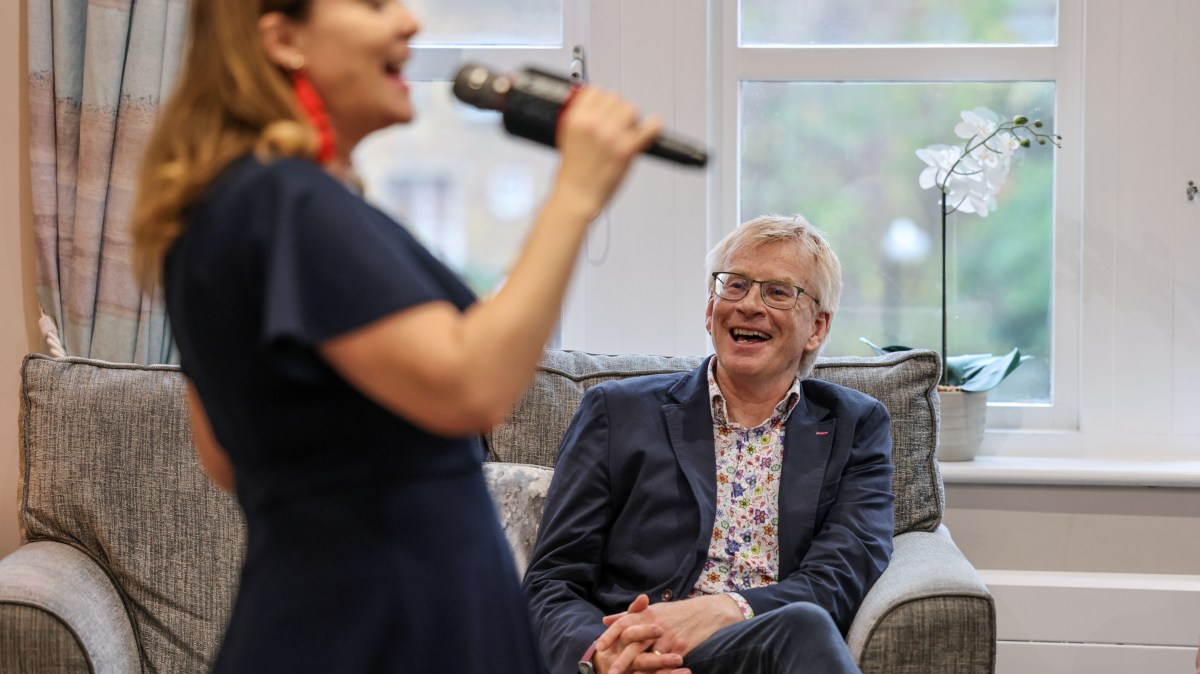
At a care home in a quiet part of north London, residents are debating whether Bob Crosby’s When the Red, Red Robin came out in the 1920s or the 1950s. Helen, an 88-year-old resident ambassador at Cheverton Lodge, guesses almost to the year, which was 1926.
Before long, a singalong of When I’m 64 is under way, being led by Kissing it Better, one of the three charities supported by this year’s The Times and the Sunday Times Christmas Appeal. Daisy Bell proves a favourite; a resident named Liz says she does not remember the words, but is transported back to her old music lessons by the tune.
Matthew, the care home’s newest resident, needs no invitation — he is on his feet and dancing the moment Nicola Gossip, the charity’s music coordinator, starts singing Hound Dog.
• Donate to The Times and Sunday Times Christmas Appeal
Kissing it Better’s projects, which also include poetry readings and fashion shows, form part of a broader movement in health and social care aiming to offer more community-based, non-clinical support.
More than one million people a year are now being referred by GPs to social prescribing services, non-medical referrals which aim to improve wellbeing by connecting people with activities such as arts groups, befriending schemes, exercise classes, and volunteering opportunities.
For Dr Phil Hammond, broadcaster, former GP and patron of Kissing it Better, this is “the way forward” for an NHS and care system that he says is “falling to pieces”.
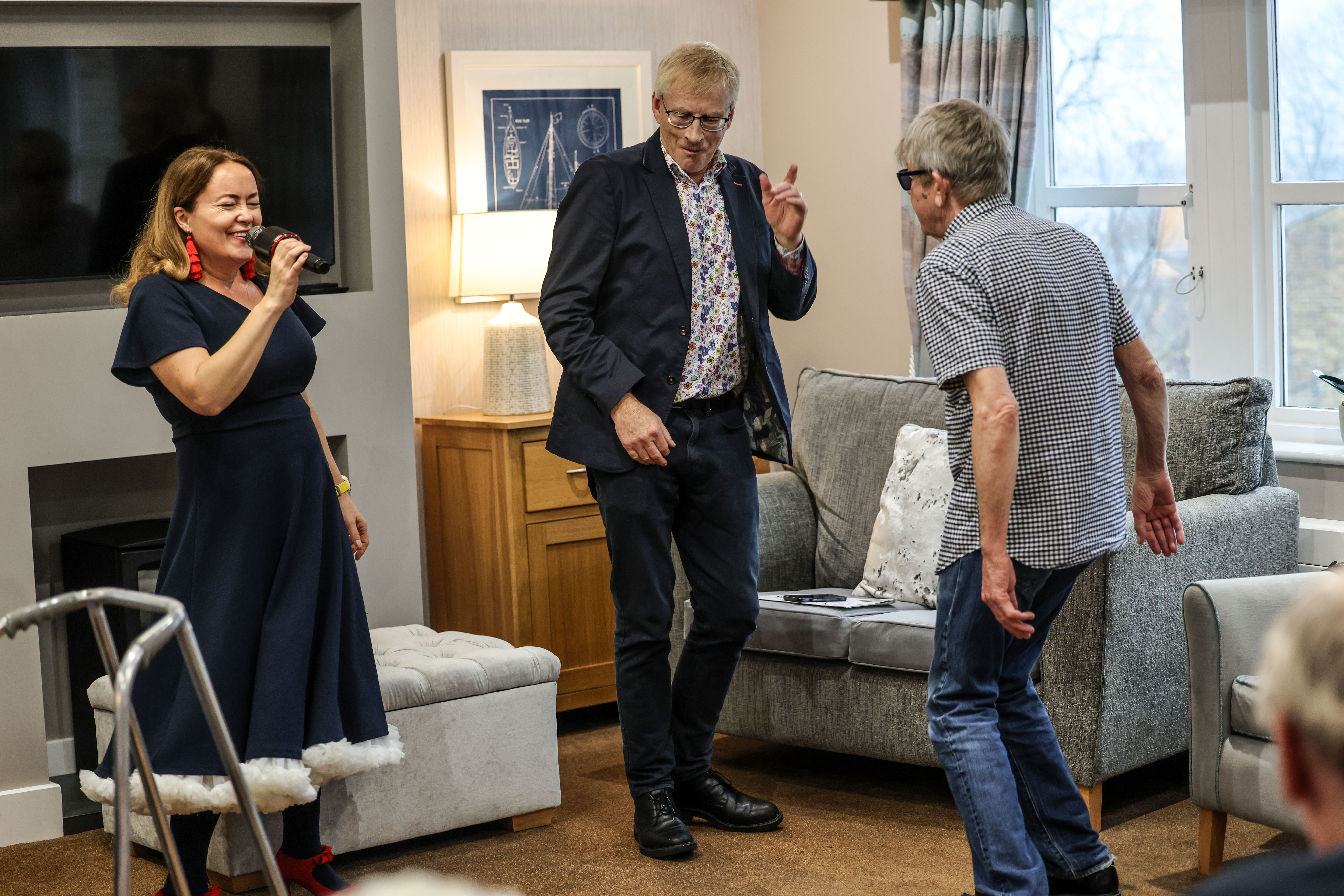
Nicola Gossip sings old favourites as Dr Phil Hammond joins residents for a dancing
TIMES PHOTOGRAPHER RICHARD POHLE
He first became involved with the charity while working in paediatrics, where he was tasked with explaining health to young people. He created the acronym CLANGERS — Connect, Learn, be Active, Notice, Give back, Eat well, Relax, Sleep — to convey the idea that wellbeing is rooted in daily “joys”.
When Hammond was approached by Jill Fraser, a former St Thomas’ nurse and the charity’s founder and chief executive, he recognised that Fraser’s concept of “creative thoughtfulness” was CLANGERS brought to life. Both, he says, place human connection at their centre.
Of the actions in his acronym, “the single most important one is connect,” Hammond says. Connection, Hammond points out, is backed by the longest-running health study in the world. The study, by Harvard University, found friendships to be the strongest predictor of long-term wellbeing. Social prescribing taps into that, Hammond argues, by using community assets such as hairdressers, musicians, craft volunteers, and interactions with schoolchildren as a “Trojan horse” for human connection.
What stands out, Fraser says, is the moment the room changes — when music, craft or shared memories tip into conversation. “What I like most is that they are now chatting,” she says. “The music has forced them to focus and have a conversation.”
Kissing it Better specialises in enlivening care settings using imaginative projects. The charity also encourages young people to volunteer their talents by organising events such as pandemic car park concerts, fashion shows, and arts and crafts sessions which bring together children and the elderly.
“Jill just finds a way of going under the radar and forming these constructive relationships in an NHS that is falling to pieces and a care sector that hasn’t got enough staff,” Hammond says. “But to prioritise friendship and kindness and connection, particularly in troubled times, I think is a genius idea.”
Hammond says it also confronts prejudices about older people, especially those living with dementia. He recalls watching as elderly people told children stories about surviving polio in an iron lung, or about wartime postings. “It is extraordinary what comes out,” he says.
“You play something like Scrabble and a resident is brilliant, he knows all the two-letter words.
“You find a way of unlocking a memory from 30,40 years ago which could be through music, through Lego or play and you’re thinking this chap was just sitting silently in the corner of the care home saying nothing and suddenly he’s talking.”

Music can bring joy and unlock memories
TIMES PHOTOGRAPHER RICHARD POHLE
Hammond recently witnessed this in his own family when his 89-year-old mother spent time in a care home for rehabilitation after breaking a hip. “She said, ‘I can’t talk to people with dementia,’” he recalled. When he took her to lunch, she found herself opposite a woman called Jill, a former medical secretary whose husband had been in the RAF. They talked about all the places they had been.
“The next day the same woman looked at Mum and goes, ‘I know you, don’t I?’ So Mum starts the conversation again and they go and have another really meaningful conversation. You just needed to kick-start it.”
Kissing it Better is one of the three charities supported by this year’s Christmas appeal
Kissing it Better also compiles a local “what’s on” calendar, a guide to community activities designed to support care homes and isolated older people. Staff say that many of the available activities are difficult to find, especially for people who struggle with technology, and demand for printed copies is rising.
For Hammond, who writes regularly about failures in the health system, Kissing it Better offers something less tangible, but just as important. “It restores your faith in humanity,” he says.
Find out more about the Christmas appeal and donate by calling 0151 286 1594 or by clicking the button below: