
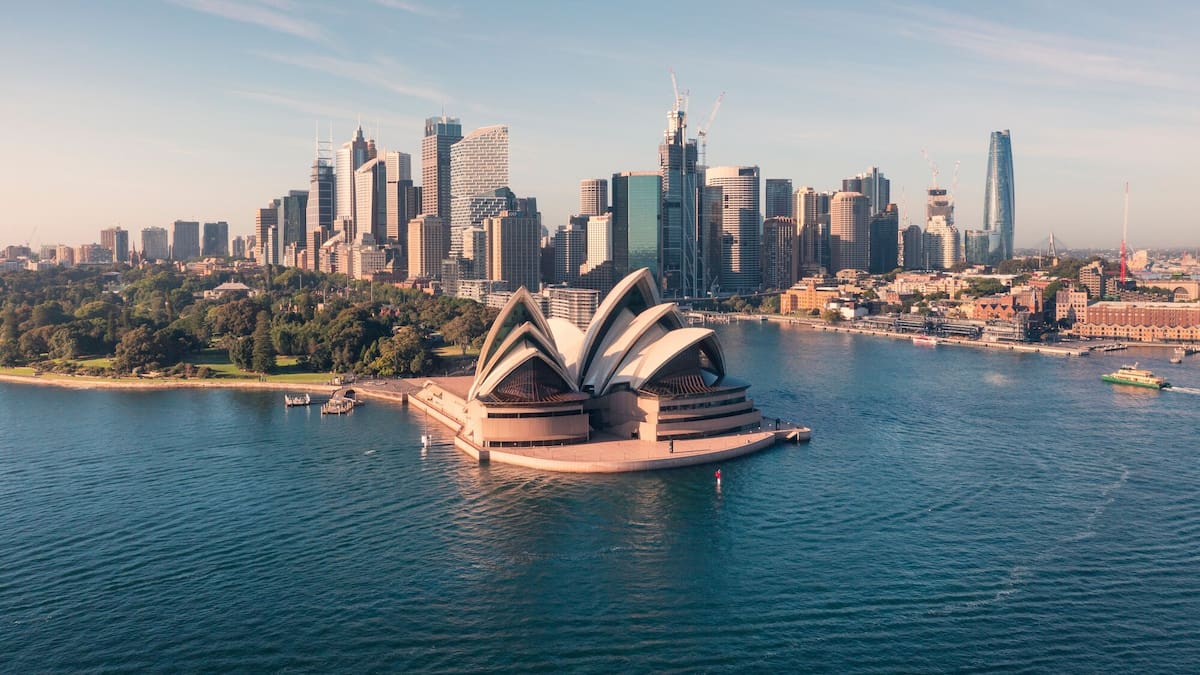
But my questioner doesn’t want to go to the Pilbara. He wants to move to Sydney. I told him that for someone who has struggled with drugs, Sydney would be a very bad choice. It is a glittering city with very sharp edges.
For all the political talk about the “brain drain” and despite surveying everything from household spending to how much P we consume, no government agency has ever run a proper survey on why New Zealanders leave.
All we have is anecdotal evidence. Young people say they are being pushed out by high living costs, low wages, poor job prospects and the belief that home ownership is easier in Australia.
Australia’s average fulltime weekly earnings in May 2025 were A$2011.40 ($2303.12). In New Zealand, it was $1679 for the year to June.
Last week, Australia’s annual inflation was reported at 3.8%, driven largely by soaring electricity prices. Over the year to October, Australian electricity costs rose by 37.1%.
New Zealand’s power prices increased by 11.8% in the year to October. Our inflation is now 3% and trending down.
Housing affordability is where perception diverges most from reality. On the international “median multiples” scale – house prices measured against median incomes – New Zealand sits at about 8.2, firmly “severely unaffordable”.
Australia sits at 9.7, which Demographia calls “impossibly unaffordable”.
New Zealand house prices have moderated; Australian prices are rapidly rising.
Then there is productivity.
Economists agree that productivity growth is the foundation of rising living standards.
For many years, Australia enjoyed stronger productivity growth. Not now. For five years Australia’s labour productivity has almost flatlined, with average annual growth of 0.66% over the last five years.
New Zealand’s productivity growth is also low – about 0.2% per annum over the last 10 years.
Interest rates have diverged between the two countries.
The Reserve Bank of Australia (RBA) has kept its cash rate at 4.35%.
The RBA says “inflation has picked up”, “the unemployment rate rose to 4.5%” and “the outlook remains uncertain”.
By contrast, the Reserve Bank of New Zealand has cut the Official Cash Rate to 2.25% and stated that “economic indicators are recovering and economic activity is expected to strengthen through 2026″.
The case for moving to Australia on economic grounds is surprisingly weak.
Yet New Zealanders who do go there tend to do extremely well. New Zealand-born Australians earn more on average than Australian-born Australians.
Why?
Economists call it “positive selection”. Those with the motivation to leave home and start again are more driven, work harder and adapt more easily. No one wants to write home and say they have failed.
I have a relative who once worked for a power board running their computers. He is clever. He had programmed the system so he could operate it from the pub.
His wife insisted they move to Australia before he became an alcoholic. In Australia, he couldn’t get a job in computers, so he started his own business. He is now a multimillionaire.
Positive selection has a dark side. Some of Australia’s worst criminals were born in New Zealand. They are an export we wish Australia would keep.
Migration decisions are never simple.
If the reason is getting into the housing market, the picture becomes clearer.
The median new house in Sydney costs about A$1.58 million ($1.8m). Australian first-home buyers can purchase with a 5% deposit; the upfront cost is A$79,000 ($90,458).
In Auckland, a new house is about $995,000, but banks expect a 20% deposit – roughly $199,000.
The deposit barrier in Australia is lower, but the mortgage bill is higher.
Australia makes it easier to get into a house but much harder to stay in one.
Migration is often for life, but predicting even the next 12 months is a guess.
Next year, Australia seems stalled with persistent inflation; New Zealand seems poised for growth and improving affordability.
For young people, the choice is ultimately personal.
Unless they are willing to work in regional Australia, they may be better off doing an OE and coming home.
Having been to the Outback, I can report that not only is the grass not greener – there is no grass.
Catch up on the debates that dominated the week by signing up to our Opinion newsletter – a weekly round-up of our best commentary.