
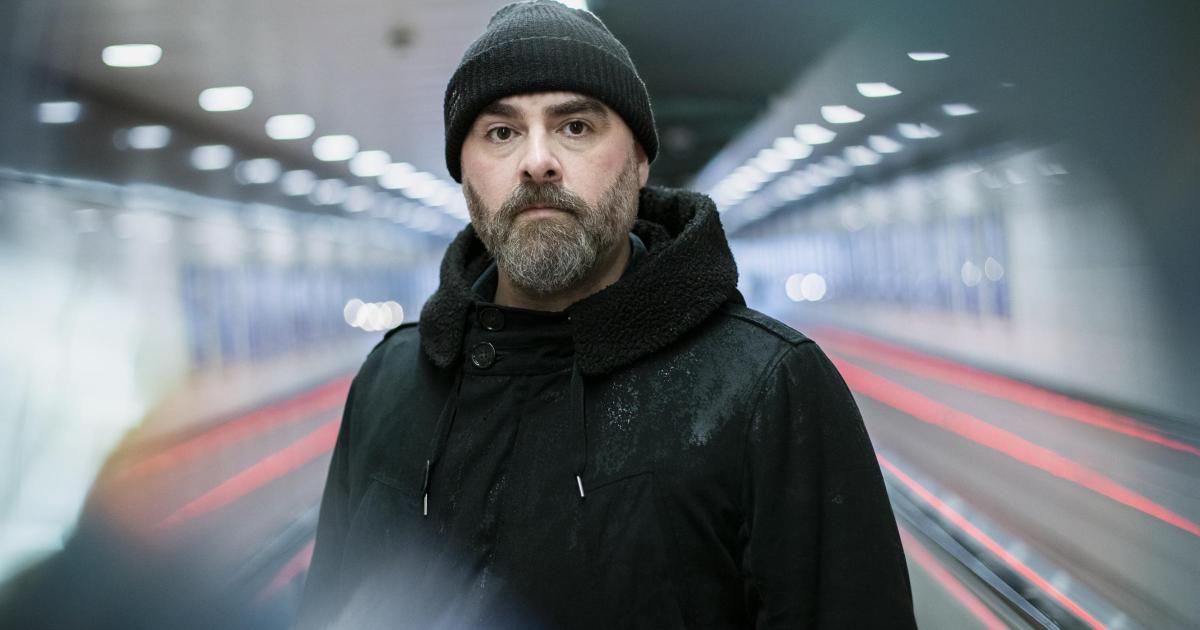
McAll, who has regularly been in contention for the Scottish Album of the Year Award, has accused the BBC of speaking in one language in internal documents and speaking in another in letters to politicians and media statements in response to controversy over its decision-making.
Read More:
The Stirling-based musician said it was “hard to escape the conclusion” that the BBC was damaging “Scotland’s cultural heart” with the introduction of a new late-night programme commission after launching a search for a new show with “broad mainstream appeal”.
The Herald revealed last month that the Radio Scotland shows by Billy Sloan, Iain Anderson and Natasha Raskin Sharp would be wound up at the end of the year under a new drive to ensure late-night programmes have “broad mainstream appeal”.
Stephen McAll performs and records under the name Constant Follower.
McAll has accused new Radio Scotland head Victoria Easton-Riley of “short-sighted and culturally damaging” decision-making over the shake-up.
Commercial radio DJ Lynne Hoggan is being brought in by to present a new show, Up Late, between Monday and Thursday, from 10pm till midnight, with comic and actress Ashley Storrie remaining in her Friday night slot to present Up Late.
Up Late is being launched after BBC Scotland put out a tender for ideas for producers for a new nightly show with a focus on “more mainstream, easy listening tracks which will appeal to audiences aged 45 and over”.
The Radio Scotland shake-up, which also involved the ending of Roddy Hart’s mid-week show, was criticised by a number of singers and musicians, including Iona Fyfe, Eddi Reader, Dean Owens, Findlay Napier, James Grant, Kim Edgar, Carol Laula and Kris Drever.
The Scottish Music Industry last week launched a campaign to demand the BBC put the Radio Scotland overhaul on hold amid claims it will create a “significant gap” in its coverage of Scottish culture. It has expressed fears that the shake-up could see Scotland’s creative identity could be “diluted through homogenised programming”.
However the BBC has since announced that Roddy Hart will be two new weekend shows, on a Saturday and Sunday evening
It has insisted that specialist music will remain a “cornerstone” of Radio Scotland’s programming.
In a letter responding to MSPs who have contacted BBC Scotland to complain about the shake-up, the broadcaster said it had a “broad and sustained commitment to music in Scotland, including supporting our home-grown emerging artists”.
The BBC’s response states: “Lynne will present Up Late Monday to Thursday and the music playlist will feature a curated blend of well-known classics from the 1970s to the present day, alongside emerging artists.
“The selection will highlight a strong Scottish influence, showcasing both Scotland’s most established musicians and its rising talent.
“It will be a warm, welcoming late-night mix of big familiar tracks, listener requests, and hidden gems all brought together with Lynne’s easy style and a natural conversation with her listeners in the late hours.
“At weekends, Mixtape Side A with Roddy Hart on Saturdays and Mixtape Side B with Roddy Hart on Sundays will continue BBC Radio Scotland’s commitment to feature the best from Scotland’s music industry, including unsigned bands.
“Ashley will present Up Late on Friday with a lively, weekend-leaning escape packed with favourite tunes and curveballs, all stirred together with her sharp humour and playful late-night rapport with her listeners.”
Writing in The Herald, McAll said: “As a Scottish musician whose career began on BBC Radio Scotland, I know exactly what is at stake here. My first real support as Constant Follower came from Vic Galloway and Roddy Hart on late-night Radio Scotland.
“Those presenters and producers did much more than tick a ‘Scottish content’ box. They joined the dots between older and newer music.
“They stayed with artists over years. They gave you the feeling that someone was actually listening.
“A single mention from one of those shows has done more for my audience than months of paid social media promotion ever have.
“The BBC can still point to Vic Galloway and a handful of specialist shows, but the centre of gravity has shifted from open, exploratory late-night listening towards safe, passive familiarity.
“There is a similar sleight of hand in the way the BBC talks about the independent production companies whose shows are being axed. They were sent a tender that defines an entirely new remit: mainstream, easy listening, 45-plus, ‘broad mainstream appeal’ and ‘improved flow’.
“If you have spent years making open, free-form, late-night music radio, that is not an invitation to carry on. It is an instruction to replace what you do with something fundamentally different. To then tell MSPs, ‘they did not bid, so we had no choice,’ is a half-truth at best. Or an appalling redirect of blame to the established teams they had effectively fired.”
McAll said late-night specialist music programmes were needed to give the “next wave of Scottish artists” their fairly airplay, adding: “It is where listeners who care about music, not just noise, go to sit and listen”.
He said: “The BBC is entitled to evolve. It is allowed to make difficult choices. But what it should not do is speak one language in its internal documents and another in its letters to MSPs and the Press.
“If the real strategy is to move late-night radio towards mainstream, easy listening for 45-plus, the BBC should say that openly and take responsibility for the cultural loss.
“Then we can have an honest argument about whether that is compatible with being Scotland’s national public service broadcaster.
“Instead, we are being asked to accept Scotland’s most important late-night music programmes can be scrapped, their presenters and production teams removed, the remit rewritten around ‘mainstream, easy listening tracks,’ and yet somehow ‘specialist music remains a cornerstone’.
“For musicians and listeners who have built their lives around these shows, that claim does not ring true.
“It is hard to escape the conclusion that something important is covertly being taken away from Scotland’s cultural heart, and that the BBC does not yet feel able to say so out loud.”
A spokesman for BBC Scotland said: “It’s not unusual for radio stations to undergo changes, particularly in an increasingly competitive audio market and, whilst we understand some audiences may be disappointed, it is important that Radio Scotland continues to listen to audience feedback and evolve its offer.
“Last week we announced the details of our new weekend programmes, Roddy Hart’s Mix Tape, which will continue our long-held tradition of championing and discovering new music and artists in Scotland and beyond.
“BBC Radio Scotland remains proud to showcase the full breadth of Scotland’s musical talent, from established performers to the next generation of artists, across its schedule.
“From Another Country to Travelling Folk, Take the Floor to Vic Galloway, specialist music has always been a vital part of what we do, alongside our Young Trad, Jazz and Classical Musician and BBC Introducing Artist of the Year awards. We remain deeply committed to celebrating it all.