
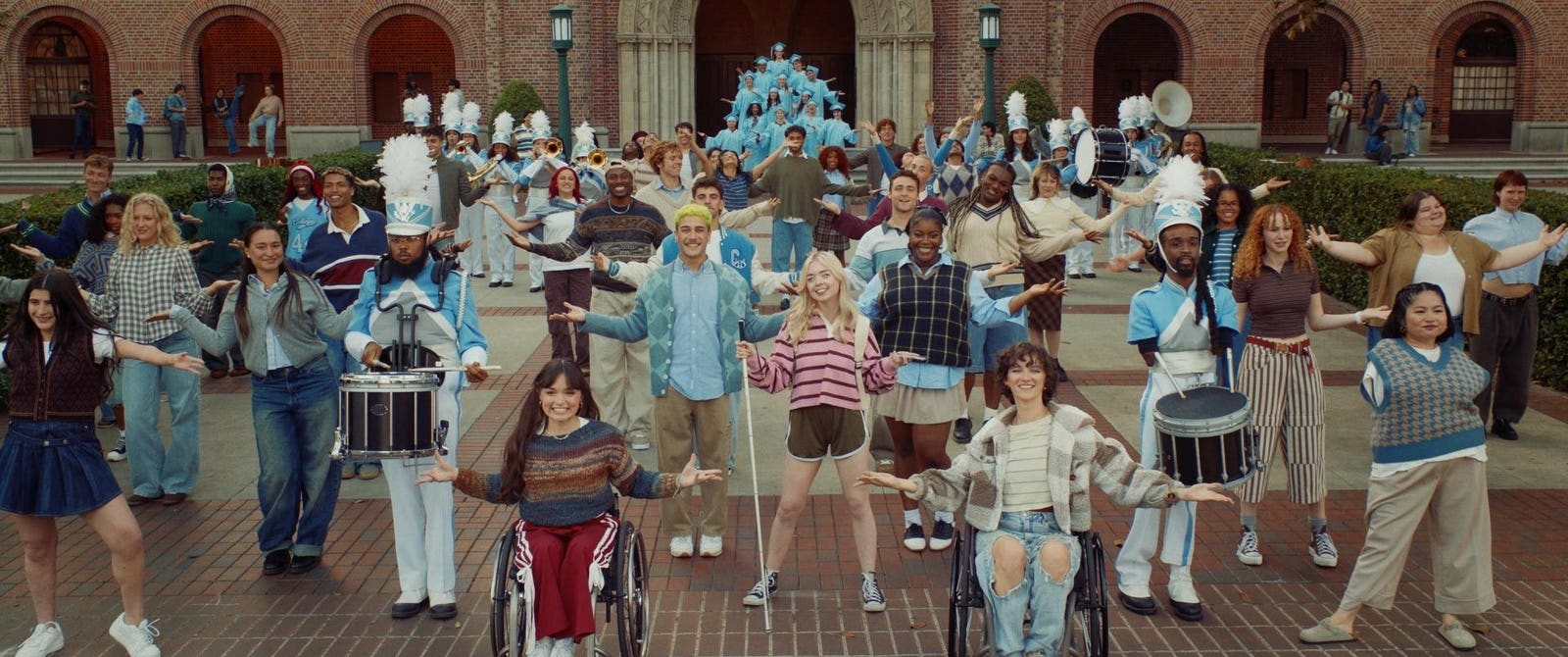
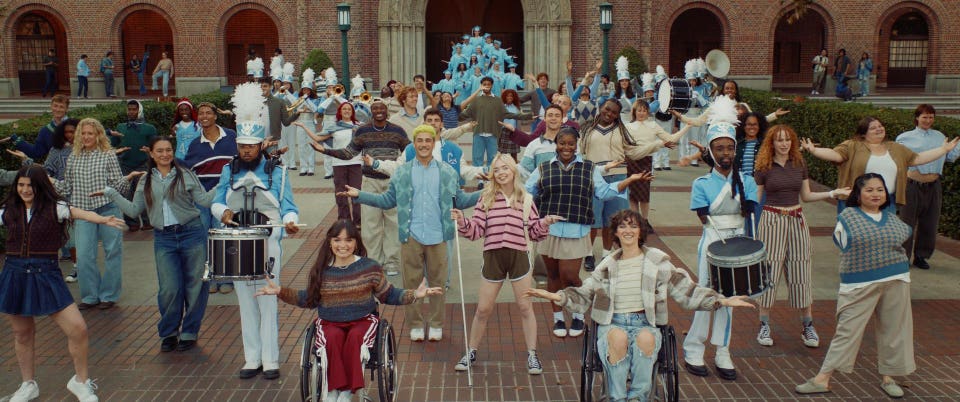
Students gather on campus in a moment of joy and belonging from Apple’s “Designed for Every Student” film.
AppleA Defining Moment in High School
I felt something unexpected while watching Apple’s new “Designed for Every Student” film. It touched a nerve that has stayed with me since high school. Back then, I wore analog hearing aids, and the Special Education department treated me like a problem to be managed rather than a young man trying to become himself. After ten years of speech therapy, they called an emergency meeting to insist that I continue. I had reached my limit. I told them I was done. I would not sit through another session, and I would not let others dictate how I should navigate the world. My mother sat beside me, listened to both sides, and said the words that changed everything. “This is Billy’s decision, and I support him.”
That day became my first act of independence. I was a teenager trying to understand who I was and who I wanted to become. Bob Dylan’s “The Times They Are A-changin’” captured precisely what I felt in that moment. The song calls on adults to stop resisting what they do not understand and to recognize that young people are finding their own paths. If you cannot support that growth, step aside and allow them to move forward. Years later, when I shared this moment on Jay Moon Fields’s “Hey, Wait” podcast, I realized how much that decision shaped the person I became.
When the Music Brings the Past Back
The music in Apple’s film brought that memory back. The song carries a message about showing up as you are and trusting the path you are building. It celebrates the everyday parts of college life that help students discover who they are: studying late, walking across campus with friends, and trying something new because you want to see what might come next. The tone reminds students that they belong in every space they enter and that they have the tools to shape their own experience. Hearing it felt like the encouragement I needed at fifteen. A reminder that you can trust yourself and define your life on your terms.
The song also repeats an idea that stayed with me. A line in the lyric says, “I am not remarkable,” meaning I am just like you. Do not treat me as fragile, and do not elevate me as a hero for navigating the world with challenges I never asked for. That line speaks to something many of us feel but rarely voice. We do not want to be defined by struggle or framed as inspiration. We want to belong without being placed on a separate track. We want to move through the world as ourselves, not as exceptions.
Students Who Belong Everywhere
The film brings that spirit to life through students who use accessibility features across the Apple ecosystem. They move across campus, learn new skills, communicate, socialize, and imagine what their future might look like. These students are not framed as exceptions. They are framed as full participants in campus life, supported by tools that meet them where they are.
One of the most meaningful decisions in the film is that Apple does not present these features as accommodations. They are simply part of daily life. Tools like VoiceOver, Magnifier on Mac, Braille Access, AssistiveTouch on Apple Watch, and Live Captions appear as natural extensions of how students read, move, communicate, and participate. These features do not define anyone. They allow students to participate fully and confidently.
For anyone who grew up in a time when support often meant being pulled out of class, this shift feels meaningful. Independence does not come from being placed in a program you never wanted. It comes from having the right tools built in from the beginning. Tools that support the life you choose to live. Tools that let you learn, socialize, commute, collaborate, and explore without asking for permission.
Four Decades of Apple’s Commitment
This year also marks forty years of Apple’s work in accessibility. That longevity matters. It is the difference between a marketing message and a design philosophy that has shaped products for generations.
Students today also have real choice in the tools they use. Apple’s accessibility platform opens the door to an entire ecosystem of third-party solutions that build on what Apple provides. Screen readers, hearing devices, mobility tools, communication apps, specialized learning aids, and physical apparatus such as adaptive grips, mounts, switchers, and prostheses all integrate with the devices students already rely on. This choice matters. It allows each student to build a toolkit that reflects their needs and their identity, not someone else’s assumptions. Innovation in accessibility comes from a community of developers, educators, designers, and students shaping what independence looks like today.
The Real Meaning of Progress
The film stands out because it shows the students as creators of their own futures. Director Kim Gehrig and composer Tim Minchin have shaped a piece that centers on ownership. These students do not appear grateful for access. They appear confident and expressive. They move through campus with intent and energy. This matters. It shifts the narrative from ‘being helped’ to ‘being empowered’. That distinction elevates the film beyond marketing.
This film also reflects something broader happening in higher education. Colleges are being asked to rethink what student support looks like in real life, not just on paper. Significant buildings and ambitious strategies do not guarantee that students feel included or respected. What matters is whether students can fully participate in the everyday rhythm of campus life and build confidence through relationships, academic challenges, and big dream conversations that point toward a future they have not yet imagined.
The message is simple. Students thrive when they can control how they learn, communicate, and participate in campus life. When tools are integrated and intuitive, they remove the quiet barriers that often go unnoticed. They support independence rather than managing differences.
Watching this film, I saw the teenager I once was. I saw the moment my mother stood up for me. I saw a young person trying to claim ownership of his life in a world that did not always know how to make space for him. And I saw a generation of students who now have something I never had at that age. Tools that respect them. Tools that meet them. Tools that let them walk across campus with their head up and their identity intact.
Progress is not measured only by new features or new devices. It is measured by whether people feel seen, supported, and respected. Today’s students have powerful tools that help them take ownership of their lives with pride. They are discovering who they are and what is possible for them. They are building futures that reflect their strengths, not their limits. And when I watch this film, I feel something I wish I had felt at their age. I feel hopeful. The video is about dignity and respect.