
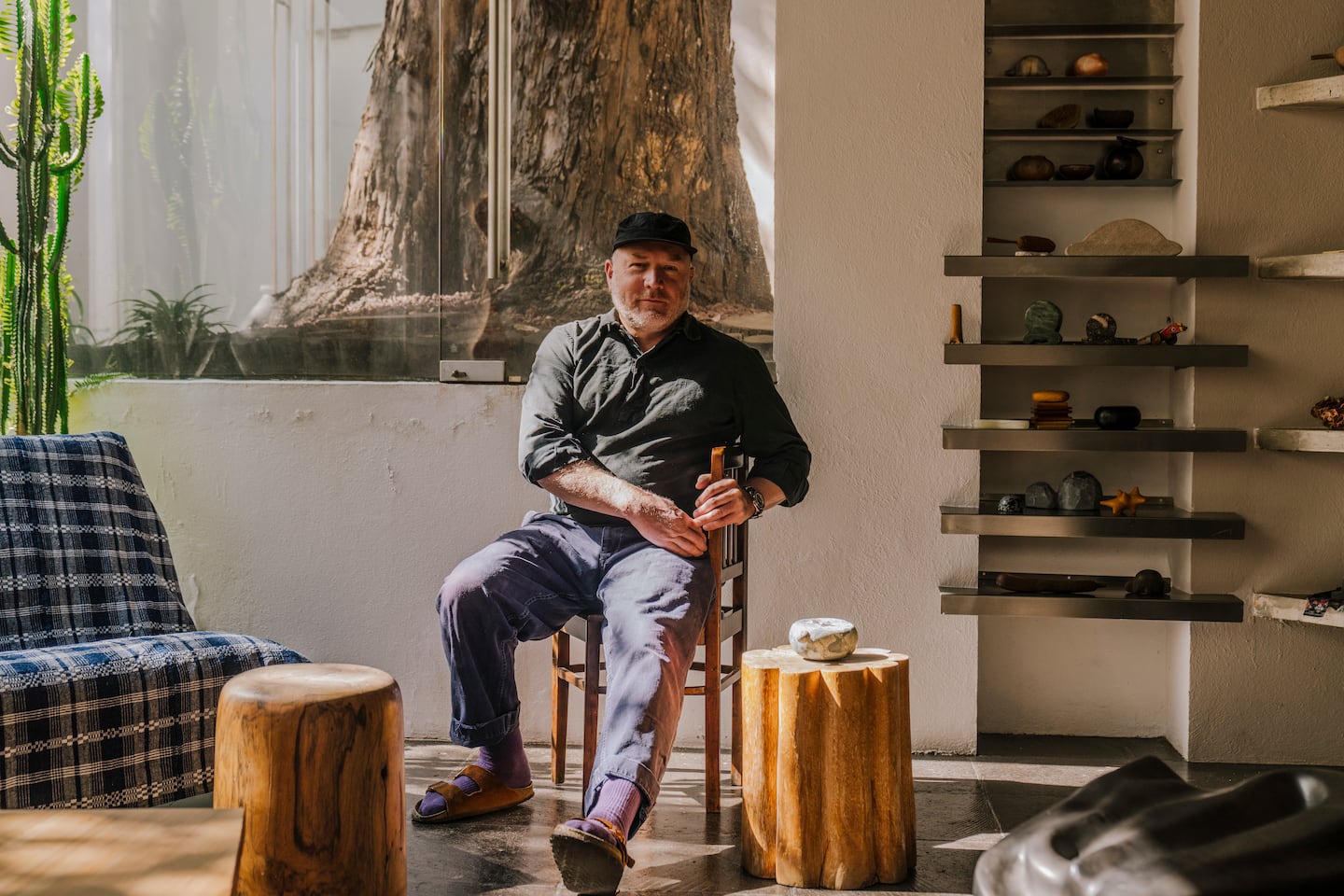
Alma Allen is the United States’ official emissary to the Venice Biennale next year. If your first question is “Who?,” that’s fair. Allen, a Mexico-based American sculptor of esoteric semi-organic forms, isn’t exactly the kind of A-list art star the United States typically enlists for what’s widely seen as the most important contemporary art event in the world.
But it matters well beyond that: As a showcase for dozens of countries and how they present themselves to the world, it’s a key element of what diplomats call “soft power”: How nations craft positive perception on the international stage through nonpolitical means. And so there are other questions worth asking, too.
For starters, “When?” Allen was confirmed just last week; the Biennale opens in May. Entrants are usually picked more than a year in advance, to prepare for what’s typically the most important event of their lives. Which brings us to “What?” All that time is used — and needed — to conceive and make a new body of work for an occasion that demands freshness, and at grand scale. Each of Allen’s half-dozen or so predecessors transformed the very pavilion where US artists are displayed in Venice, in addition to filling it with new and bold work. Allen, with about 16 weeks to work with — shipping takes a while — will almost surely have to repurpose existing work into a (hopefully) novel frame.
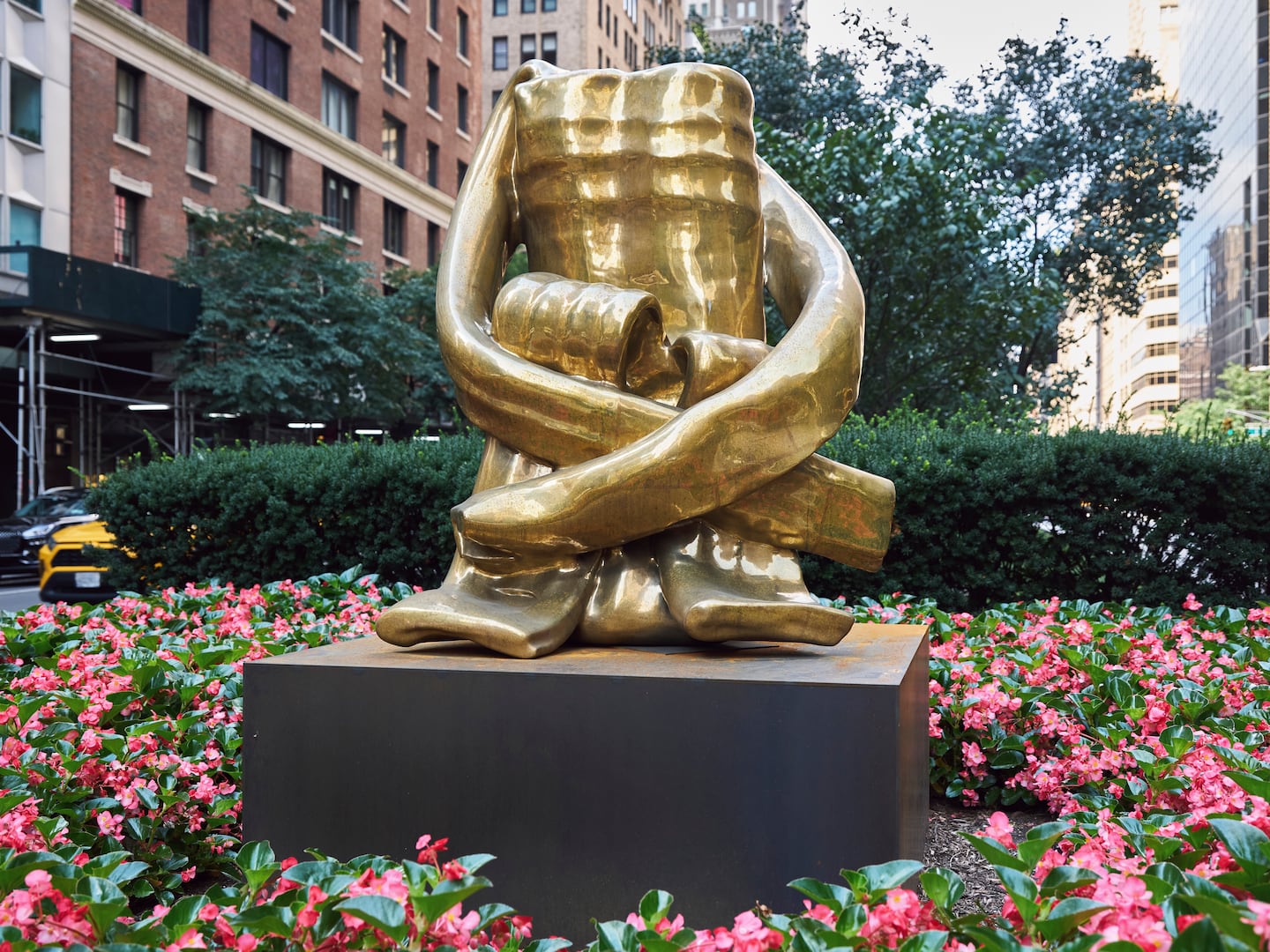 Alma Allen, “Not Yet Titled,” 2025, one of several sculptures installed on Park Avenue in New York in the summer of 2025. Charlie Rubin
Suffice to say that by any recent standard, Allen’s entry is aiming low, through no fault of his own. As time crept forward all year with no word from the State Department, which administers the Venice entry, many wondered if the United States would simply take a pass on the Biennale, leaving its pavilion standing dark and empty for the first time since the Biennale’s inaugural 1895 installation. It might even have been fitting, given the administration’s general antipathy to global approval-seeking, a giant middle finger to the international cultural elite.
Which prompts the last and maybe most important question: “Why?” Allen, it needs to be said, is not a bold pick. His immediate predecessors as US representatives to the biennale, Jeffrey Gibson in 2024 and Simone Leigh in 2022, used their Venice platforms, respectively, to champion contemporary Native American culture (Gibson is Choctaw-Cherokee), and to explore and ultimately honor the unseen labor, suffering, and determination of Black women throughout American history.
Allen’s work, by contrast, is an array of capably-made abstract-organic forms mostly in bronze and stone, and sits comfortably within the realm of anodyne ambiguity. Several of his sculptures were installed outdoors on Park Avenue in New York last summer, but his work hasn’t appeared at an American museum in years. His selection can’t help but feel like something of an intentional dodge by the State Department of the typically-issues driven contemporary art shown at events like the Biennale.
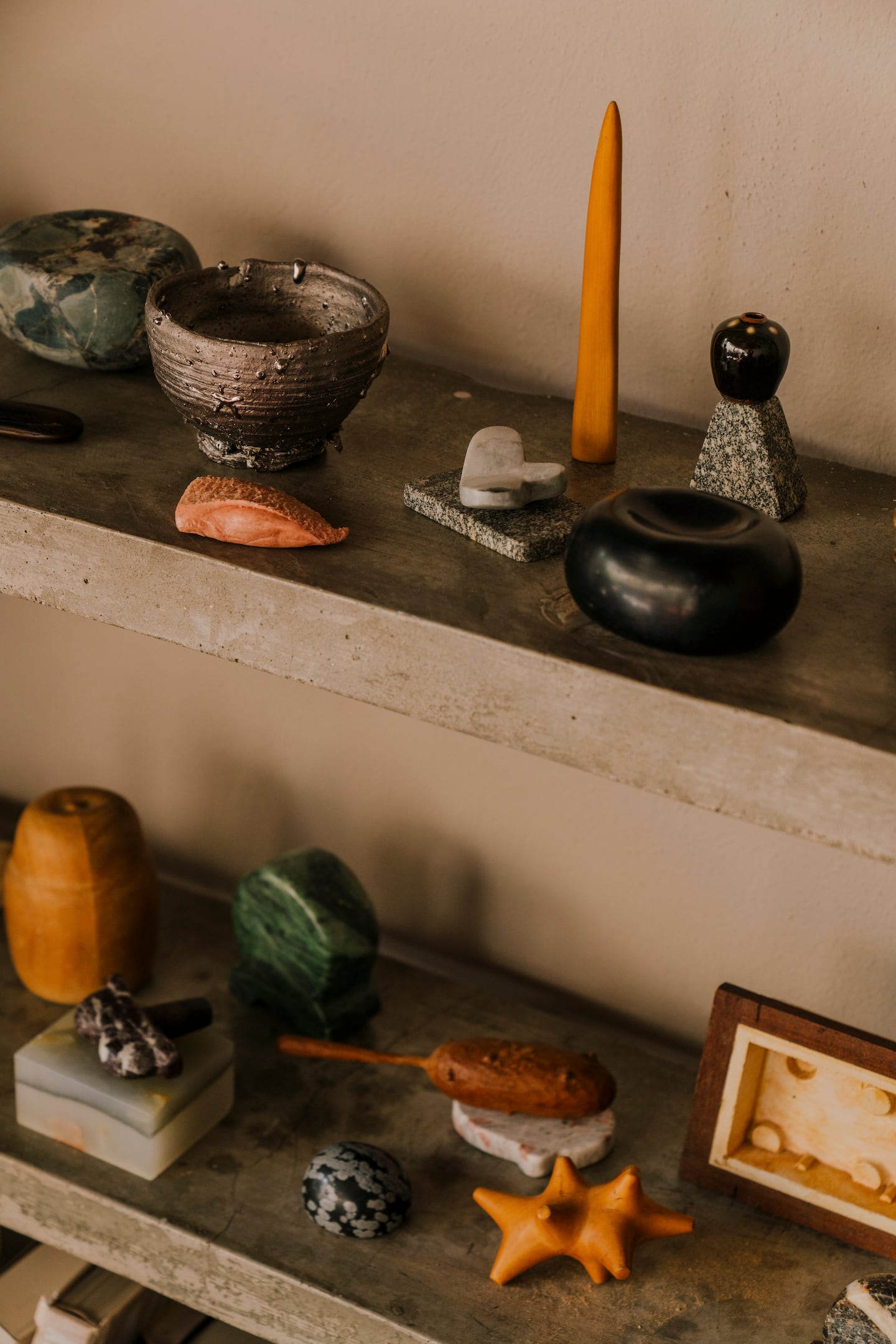 Pieces by the artist Alma Allen in Mexico City, Nov. 17, 2025. Allen, 55, will exhibit nearly 30 sculptures at the US pavilion of the 2026 Venice Biennale starting in May, organized by the curator Jeffrey Uslip. Allen lives and works in Mexico.Jake Naughton/The New York Times
But it’s no small thing that Allen — someone real, and legitimate — will be in Venice, holding space in the global cultural community. It means that, amid all the carnage of an administration hostile both to art and international standing, this gesture matters.
In the soft power toolbox, visual art will never have quite the reach of popular music or movies — both of which have been far more important to any of the country’s positive global presence than political diplomacy could hope for. But an event like this, at a time like this, really does matter. Allen, even with no grand statement about the state of the nation, is mostly a placeholder. But that space has always been important to fill.
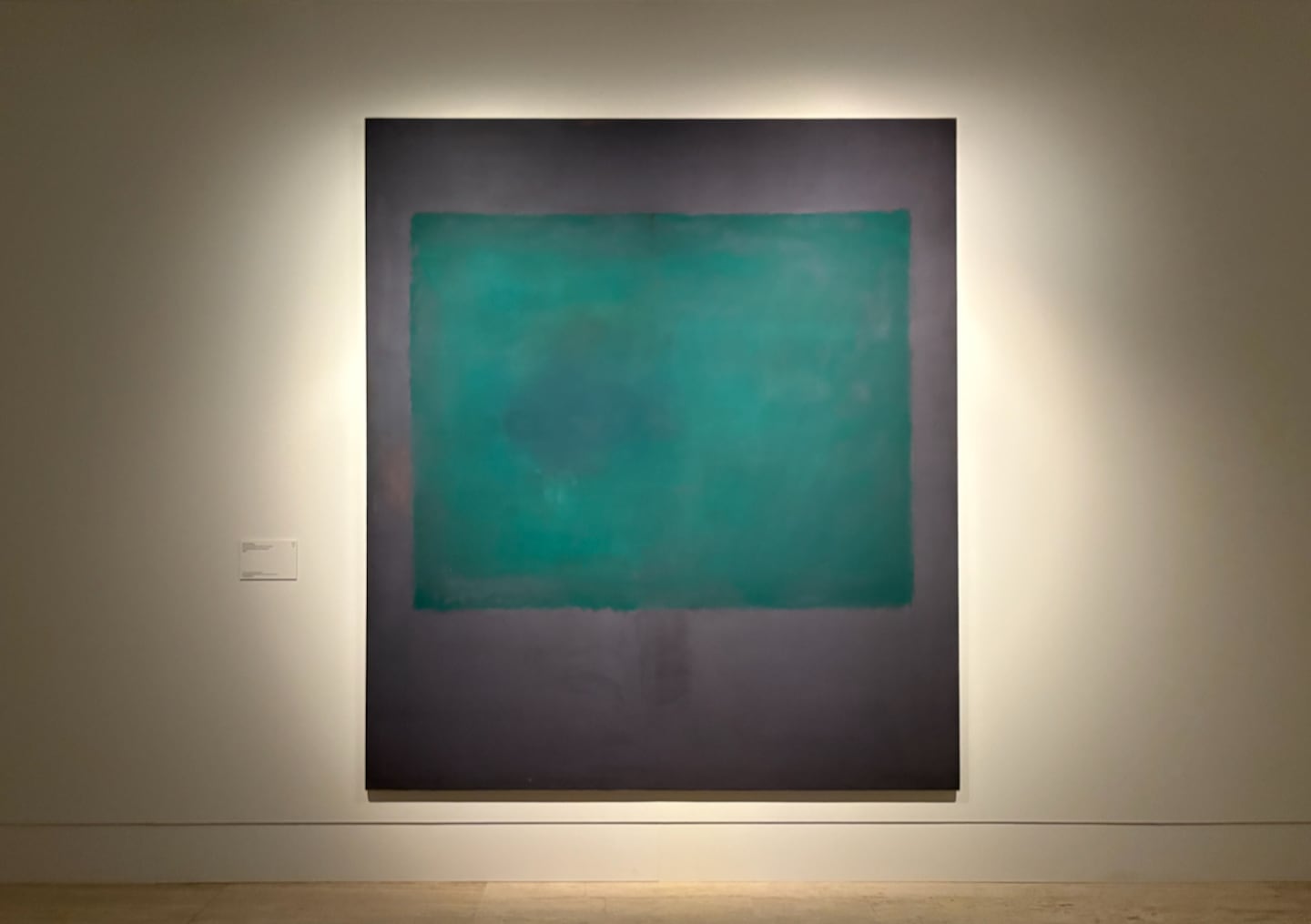 A painting by Mark Rothko at the “Warhol/Pollock” exhibition at Madrid’s Thyssen Bornemisza National Museum in late November.Murray Whyte/Globe Staff
Consider: At the height of the Cold War the CIA covertly built a robust international exhibition schedule of Abstract Expressionist painters like Jackson Pollock and Mark Rothko, among many others, putting on public view a vision of American liberty in its most unrestrained creative glory.
It’s a great — and very strange — story, but it’s not a one-off. Those kinds of efforts, though none quite so covert, continue to bear fruit in every corner of the globe, holding up an essential view of Americanness as audacious, innovative, and furiously creative. I was in Madrid earlier this month, where I saw an exhibition that paired Andy Warhol and Jackson Pollock, two American giants, in the Thyssen Bornemisza National Museum, a sprawling contemporary and Modern art museum all but overflowing with Picassos.
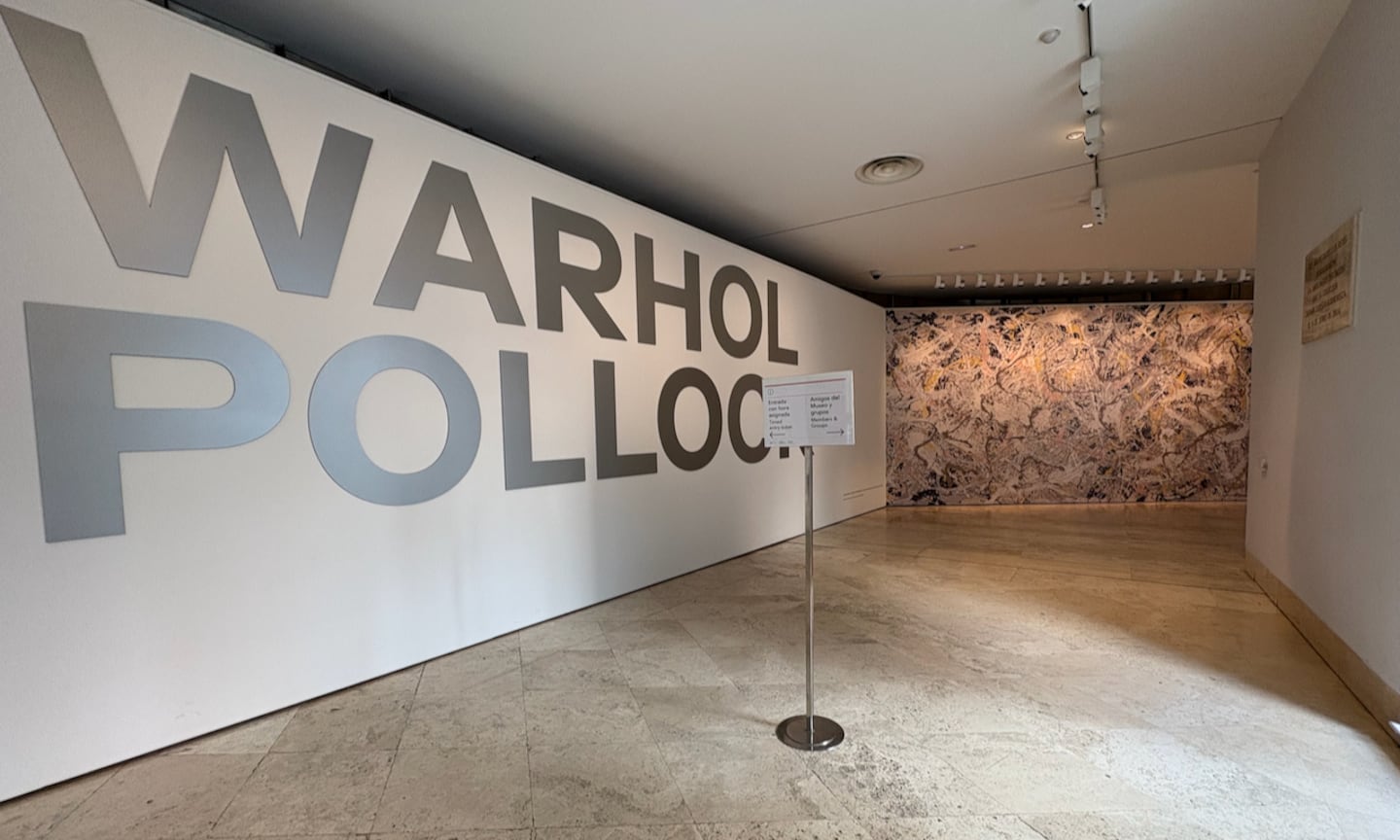 The entrance of the “Warhol/Pollock” exhibition at Madrid’s Thyssen Bornemisza National Museum in late November.Murray Whyte/Globe Staff
Warhol and Pollock were at the top of the marquee — not to be taken for granted, especially here, right across the street from the Prado, Spain’s Louvre, bursting as it does with almost too many Velazquezs and Rubenses to count. But it was all I could do to dodge the tour groups being hustled through Warhol-Pollock, jamming the low-lit galleries where the title duo were joined by a who’s who of American art superstardom: Rothko, Robert Rauschenberg, Helen Frankenthaler, Willem de Kooning, to name a few.
The crowds were there not because of the current chaos that dominates any news of American politics, which is inescapable in Europe or anywhere else, but in spite of it. And, I like to think, because American culture is more durable and foundational than any one administration’s ability to undermine and unravel it.
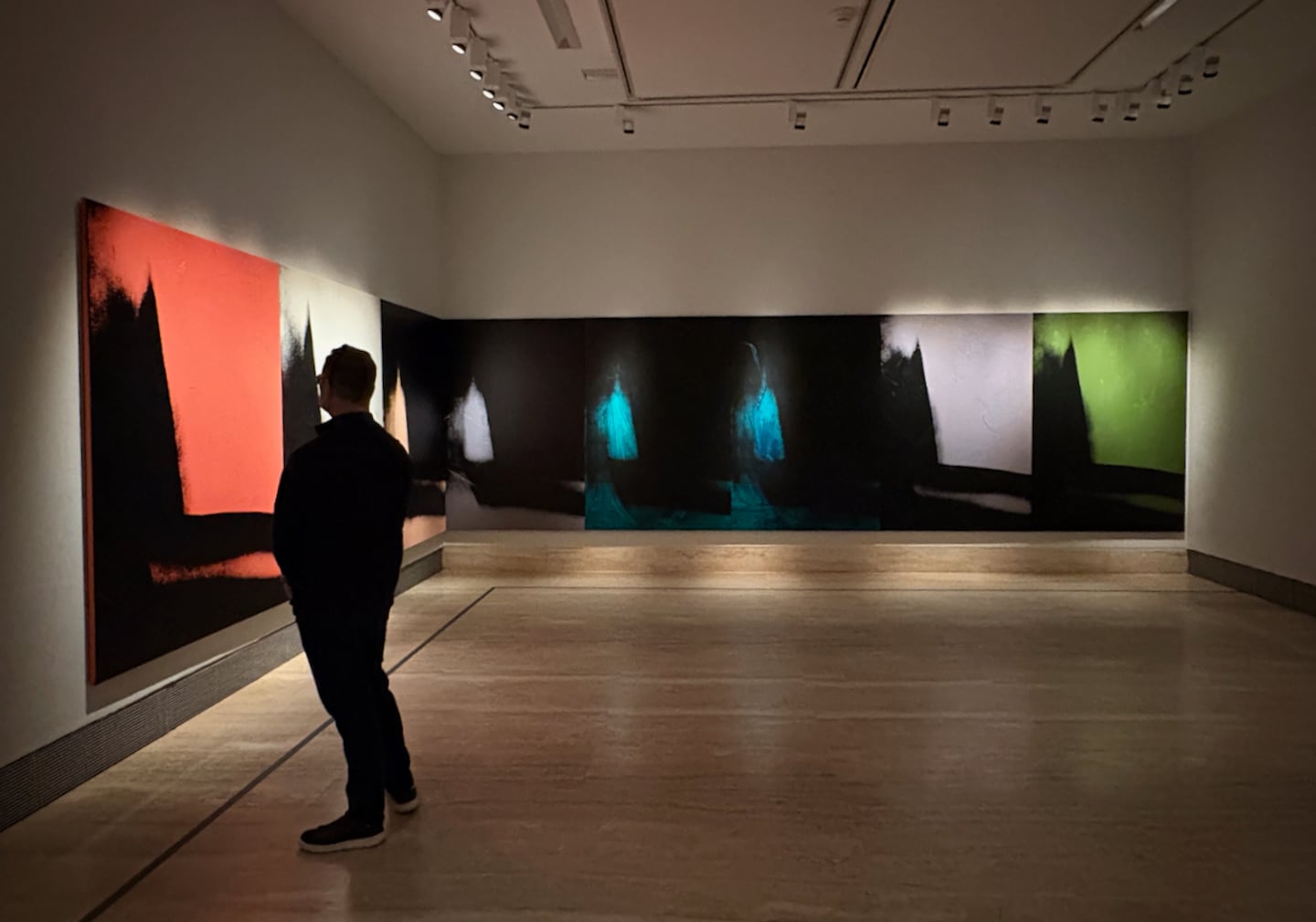 Works from Andy Warhol’s “Shadows” series from the late 1970s, at the “Warhol/Pollock” exhibition at Madrid’s Thyssen Bornemisza National Museum in late November.Murray Whyte/Globe Staff
It’s part of the canon — like Picasso, or Monet, or any other name you’d care to mention. That’s not by accident. It’s the product of generations of the free exchange of ideas among international peers of the best any of us have to offer, and it’s never been more important to the American reputation than it is right now. Amid the fury, American culture remains a bedrock export, a beacon of enlightenment; it’s our best ambassador in fraught times, and a powerful reminder that a nation’s identity isn’t defined by an election cycle.
That doesn’t mean reputations can’t be broken, and good work undone. The current administration is certainly trying. But in Venice next year, America can at least be marked “present,” holding steady until the wheel turns again.
Murray Whyte can be reached at murray.whyte@globe.com. Follow him @TheMurrayWhyte.